Department of Informatics, University of Pretoria, Pretoria, South Africa.
JMIR Infodemiology. 2023 Sep 20;3:e48620. doi: 10.2196/48620.
The use of social media platforms to seek information continues to increase. Social media platforms can be used to disseminate important information to people worldwide instantaneously. However, their viral nature also makes it easy to share misinformation, disinformation, unverified information, and fake news. The unprecedented reliance on social media platforms to seek information during the COVID-19 pandemic was accompanied by increased incidents of misinformation and disinformation. Consequently, there was an increase in the number of scientific publications related to the role of social media in disseminating health misinformation and disinformation at the height of the COVID-19 pandemic. Health misinformation and disinformation, especially in periods of global public health disasters, can lead to the erosion of trust in policy makers at best and fatal consequences at worst.
This paper reports a bibliometric analysis aimed at investigating the evolution of research publications related to the role of social media as a driver of health misinformation and disinformation since the start of the COVID-19 pandemic. Additionally, this study aimed to identify the top trending keywords, niche topics, authors, and publishers for publishing papers related to the current research, as well as the global collaboration between authors on topics related to the role of social media in health misinformation and disinformation since the start of the COVID-19 pandemic.
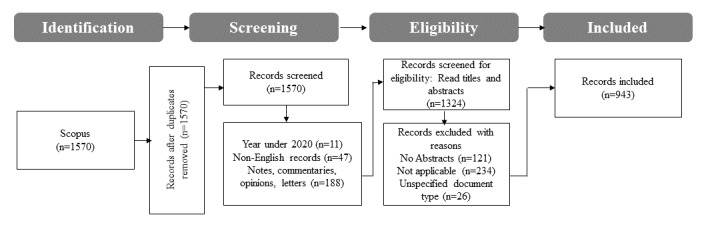
The Scopus database was accessed on June 8, 2023, using a combination of Medical Subject Heading and author-defined terms to create the following search phrases that targeted the title, abstract, and keyword fields: ("Health*" OR "Medical") AND ("Misinformation" OR "Disinformation" OR "Fake News") AND ("Social media" OR "Twitter" OR "Facebook" OR "YouTube" OR "WhatsApp" OR "Instagram" OR "TikTok") AND ("Pandemic*" OR "Corona*" OR "Covid*"). A total of 943 research papers published between 2020 and June 2023 were analyzed using Microsoft Excel (Microsoft Corporation), VOSviewer (Centre for Science and Technology Studies, Leiden University), and the Biblioshiny package in Bibliometrix (K-Synth Srl) for RStudio (Posit, PBC).
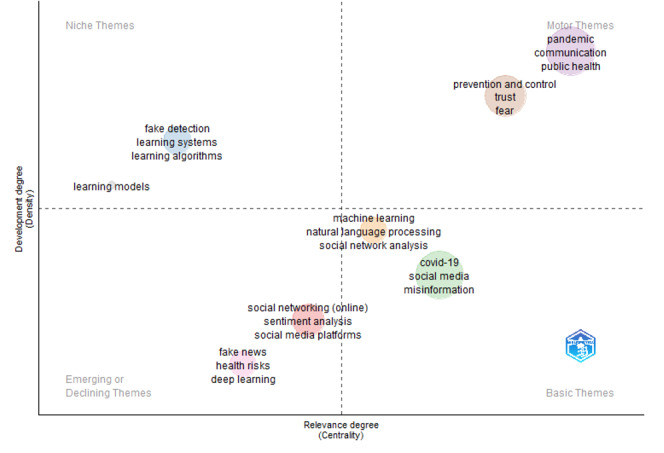
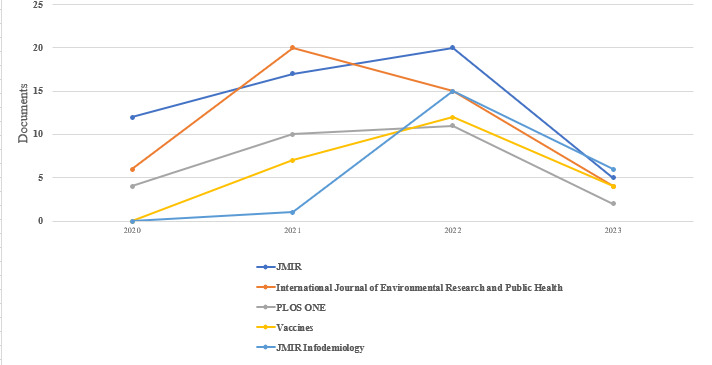
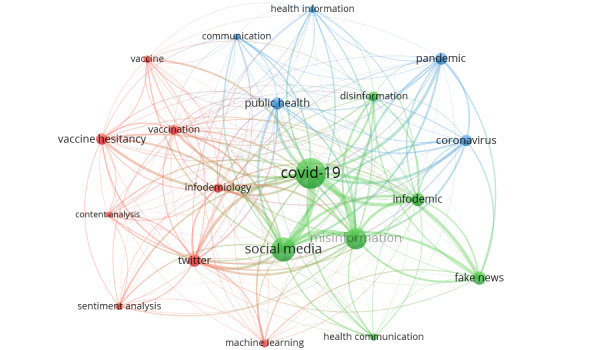
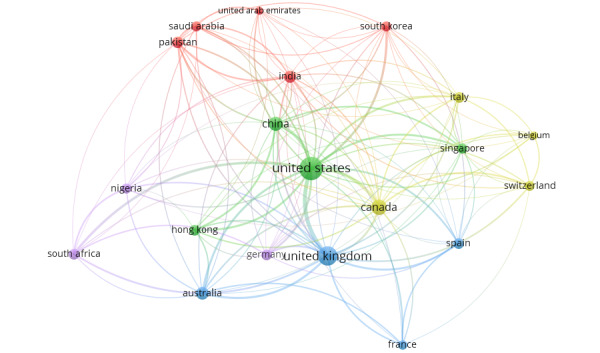
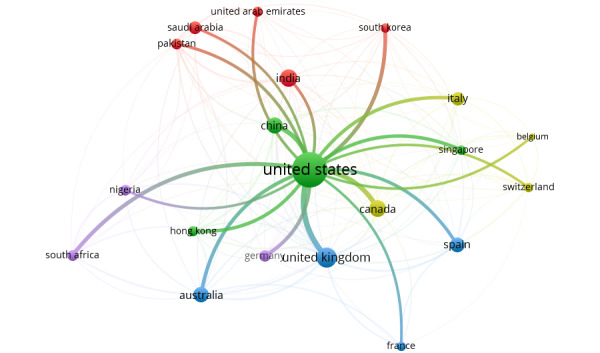
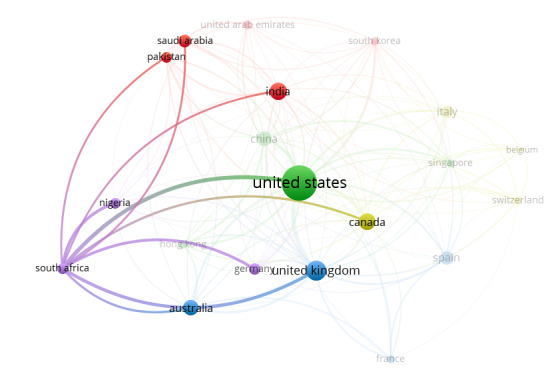
The highest number of publications was from 2022 (387/943, 41%). Most publications (725/943, 76.9%) were articles. JMIR published the most research papers (54/943, 5.7%). Authors from the United States collaborated the most, with 311 coauthored research papers. The keywords "Covid-19," "social media," and "misinformation" were the top 3 trending keywords, whereas "learning systems," "learning models," and "learning algorithms" were revealed as the niche topics on the role of social media in health misinformation and disinformation during the COVID-19 outbreak.
Collaborations between authors can increase their productivity and citation counts. Niche topics such as "learning systems," "learning models," and "learning algorithms" could be exploited by researchers in future studies to analyze the influence of social media on health misinformation and disinformation during periods of global public health emergencies.
社交媒体平台的使用继续增加。社交媒体平台可以用来向全世界的人们即时传播重要信息。然而,它们的病毒式传播性质也使得分享错误信息、虚假信息、未经证实的信息和假新闻变得容易。在 COVID-19 大流行期间,人们前所未有地依赖社交媒体平台来获取信息,同时错误信息和虚假信息的数量也有所增加。因此,在 COVID-19 大流行期间,与社交媒体在传播健康错误信息和虚假信息方面的作用相关的科学出版物数量有所增加。健康错误信息和虚假信息,尤其是在全球公共卫生灾难期间,最多只能导致对决策者的信任受损,最坏的情况下可能会导致致命后果。
本研究报告了一项文献计量分析,旨在调查自 COVID-19 大流行开始以来,与社交媒体作为健康错误信息和虚假信息传播驱动力相关的研究出版物的演变。此外,本研究旨在确定当前研究相关论文的顶级热门关键词、利基主题、作者和出版商,以及自 COVID-19 大流行开始以来,作者在社交媒体在健康错误信息和虚假信息方面的角色方面的全球合作。
于 2023 年 6 月 8 日使用医学主题词和作者定义的术语访问 Scopus 数据库,创建以下搜索短语,以针对标题、摘要和关键词字段进行搜索:("Health*" 或 "Medical") AND ("Misinformation" 或 "Disinformation" 或 "Fake News") AND ("Social media" 或 "Twitter" 或 "Facebook" 或 "YouTube" 或 "WhatsApp" 或 "Instagram" 或 "TikTok") AND ("Pandemic*" 或 "Corona*" 或 "Covid*")。共分析了 2020 年至 2023 年 6 月期间发表的 943 篇研究论文,使用 Microsoft Excel(Microsoft Corporation)、VOSviewer(莱顿大学科学技术研究中心)和 Bibliometrix 中的 Biblioshiny 包(K-Synth Srl)在 RStudio(Posit,PBC)中进行分析。
发表的论文数量最多的是 2022 年(387/943,41%)。大多数论文(725/943,76.9%)为文章。JMIR 发表的研究论文最多(54/943,5.7%)。来自美国的作者合作最多,共有 311 篇合著研究论文。“Covid-19”、“社交媒体”和“错误信息”是排名前 3 的热门关键词,而“学习系统”、“学习模型”和“学习算法”则是 COVID-19 爆发期间社交媒体在健康错误信息和虚假信息中的利基主题。
作者之间的合作可以提高他们的生产力和引用次数。在未来的研究中,研究人员可以利用“学习系统”、“学习模型”和“学习算法”等利基主题,分析社交媒体在全球公共卫生紧急情况下对健康错误信息和虚假信息的影响。