Tianjin Medical University, Tianjin, China.
Tianjin University of Traditional Chinese Medicine, Tianjin, China.
PLoS One. 2024 Mar 21;19(3):e0298443. doi: 10.1371/journal.pone.0298443. eCollection 2024.
Increasing evidence suggests that alterations in gut microbiota are associated with a variety of skin diseases. However, whether this association reflects a causal relationship remains unknown. We aimed to reveal the causal relationship between gut microbiota and skin diseases, including psoriasis, atopic dermatitis, acne, and lichen planus.
We obtained full genetic association summary data for gut microbiota, psoriasis, atopic dermatitis, acne, and lichen planus from public databases and used three methods, mainly inverse variance weighting, to analyze the causal relationships between gut microbiota and these skin diseases using bidirectional Mendelian randomization, as well as sensitivity and stability analysis of the results using multiple methods.
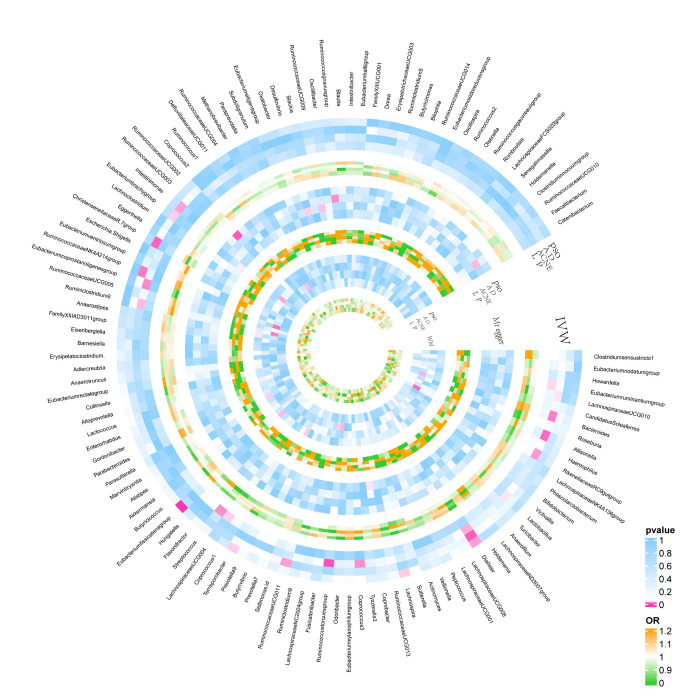
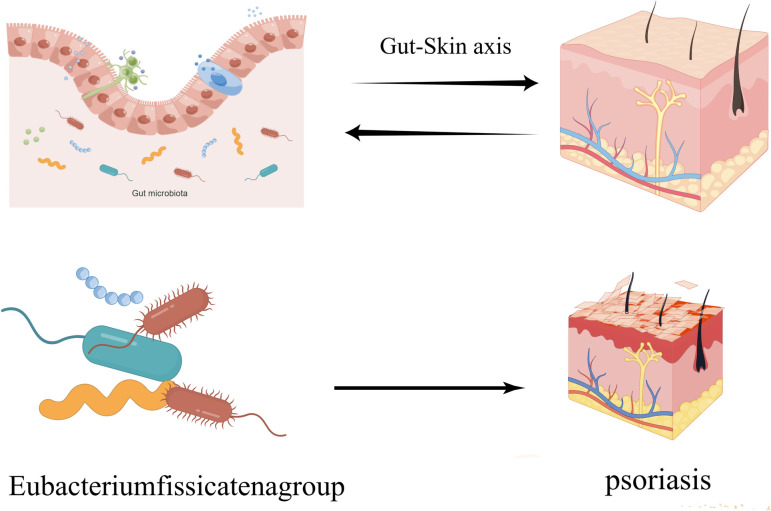
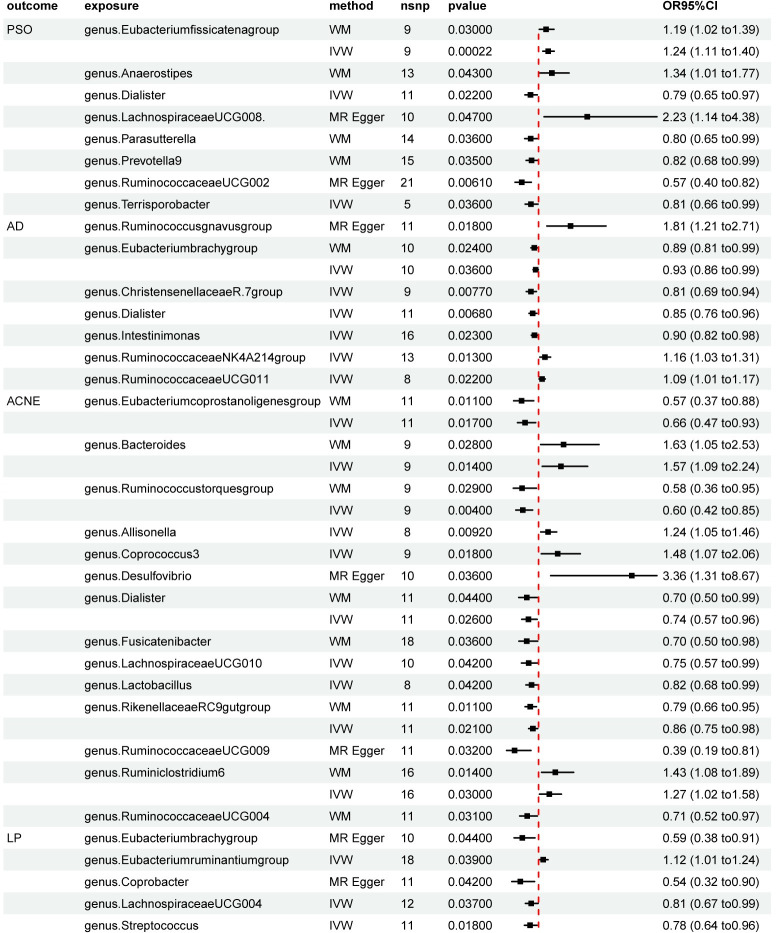
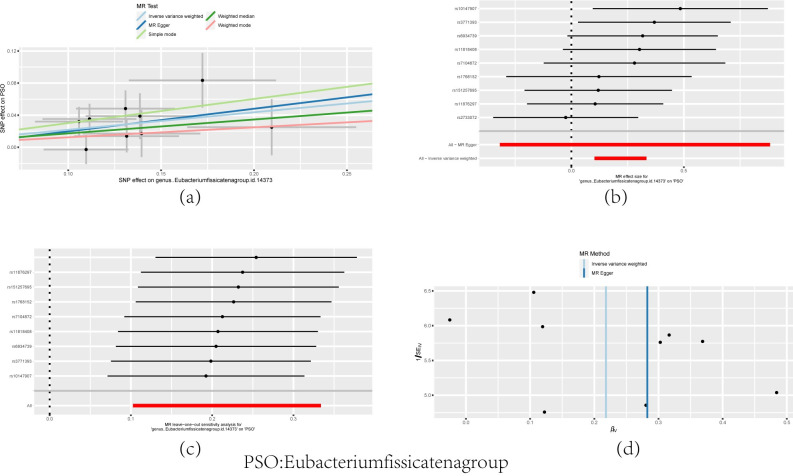
The results showed that there were five associated genera in the psoriasis group, seven associated genera were obtained in the atopic dermatitis group, a total of ten associated genera in the acne group, and four associated genera in the lichen planus group. The results corrected for false discovery rate showed that Eubacteriumfissicatenagroup (P = 2.20E-04, OR = 1.24, 95%CI:1.11-1.40) and psoriasis still showed a causal relationship. In contrast, in the reverse Mendelian randomization results, there was no evidence of an association between these skin diseases and gut microbiota.
We demonstrated a causal relationship between gut microbiota and immune skin diseases and provide a new therapeutic perspective for the study of immune diseases: targeted modulation of dysregulation of specific bacterial taxa to prevent and treat psoriasis, atopic dermatitis, acne, and lichen planus.
越来越多的证据表明,肠道微生物群的改变与多种皮肤疾病有关。然而,这种关联是否反映了因果关系尚不清楚。我们旨在揭示肠道微生物群与包括银屑病、特应性皮炎、痤疮和扁平苔藓在内的皮肤疾病之间的因果关系。
我们从公共数据库中获得了肠道微生物群、银屑病、特应性皮炎、痤疮和扁平苔藓的全基因组关联汇总数据,并使用三种方法,主要是逆方差加权法,通过双向孟德尔随机化分析肠道微生物群与这些皮肤疾病之间的因果关系,以及使用多种方法对结果进行敏感性和稳定性分析。
结果显示,银屑病组有 5 个相关属,特应性皮炎组有 7 个相关属,痤疮组共有 10 个相关属,扁平苔藓组有 4 个相关属。经 False Discovery Rate 校正的结果显示,Eubacterium fissicatena 属(P = 2.20E-04,OR = 1.24,95%CI:1.11-1.40)与银屑病仍存在因果关系。相比之下,在反向孟德尔随机化结果中,这些皮肤疾病与肠道微生物群之间没有关联的证据。
我们证明了肠道微生物群与免疫性皮肤疾病之间存在因果关系,并为免疫性疾病的研究提供了一个新的治疗视角:靶向调节特定细菌分类群的失调,以预防和治疗银屑病、特应性皮炎、痤疮和扁平苔藓。