Department of Molecular Medicine, University of Pavia, Pavia, 27100, Italy.
CELLINK Bioprinting AB, Gothenburg, 41276, Sweden.
Adv Sci (Weinh). 2024 May;11(18):e2308276. doi: 10.1002/advs.202308276. Epub 2024 Mar 21.
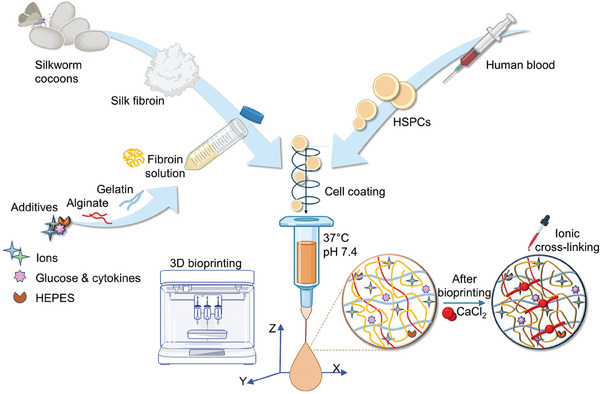
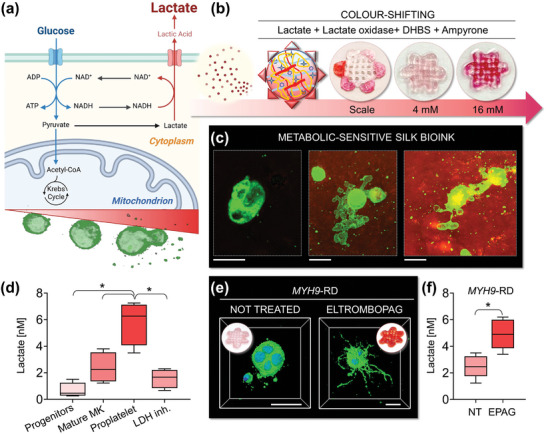
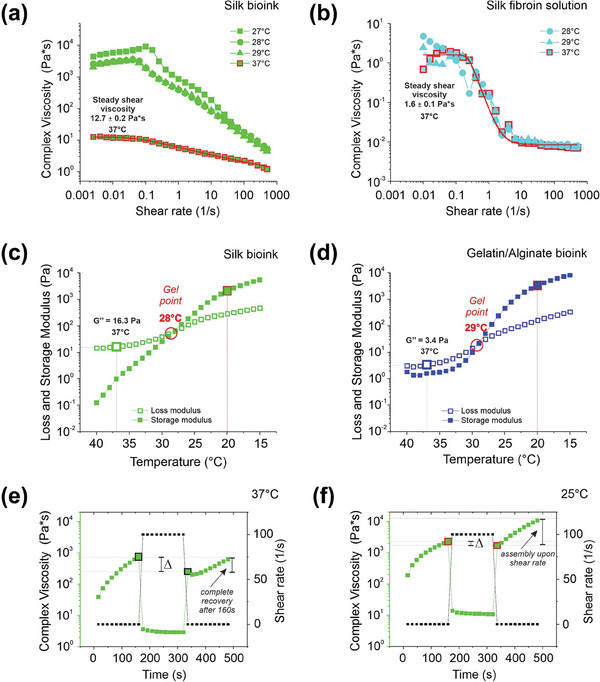
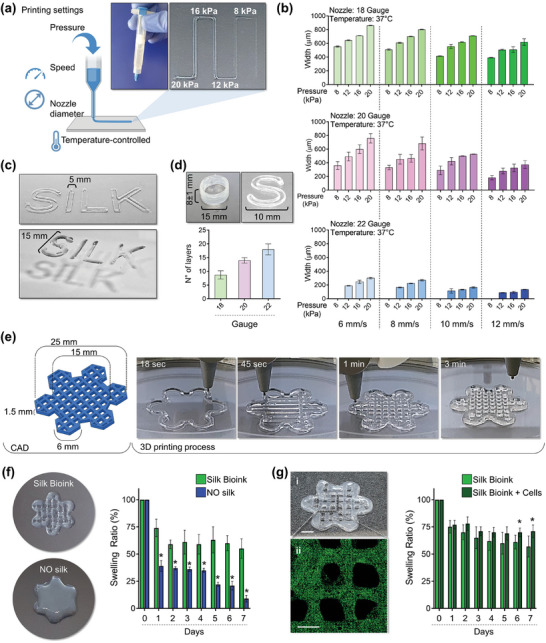
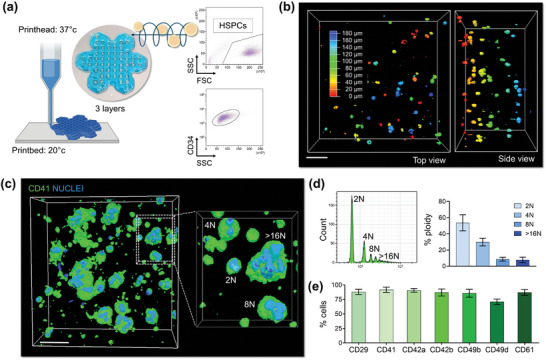
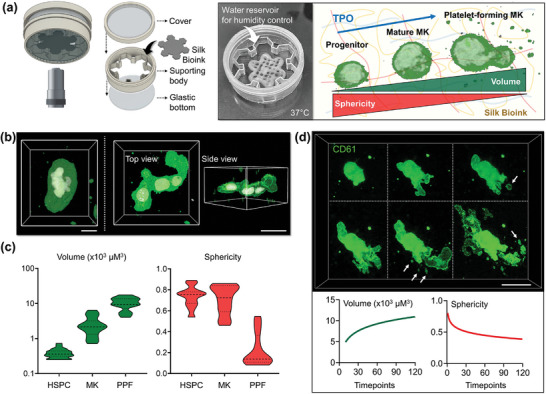
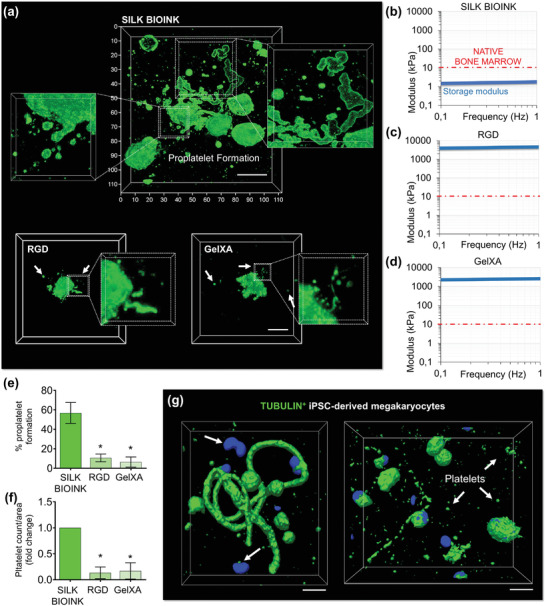
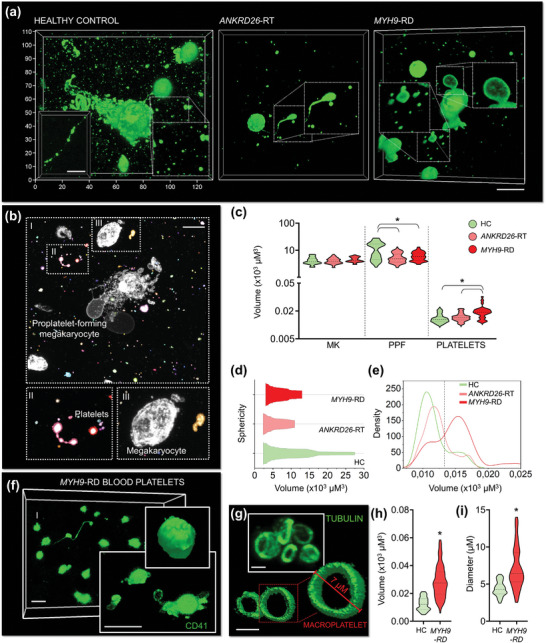
Hematopoietic stem and progenitor cells (HSPCs) continuously generate platelets throughout one's life. Inherited Platelet Disorders affect ≈ 3 million individuals worldwide and are characterized by defects in platelet formation or function. A critical challenge in the identification of these diseases lies in the absence of models that facilitate the study of hematopoiesis ex vivo. Here, a silk fibroin-based bioink is developed and designed for 3D bioprinting. This bioink replicates a soft and biomimetic environment, enabling the controlled differentiation of HSPCs into platelets. The formulation consisting of silk fibroin, gelatin, and alginate is fine-tuned to obtain a viscoelastic, shear-thinning, thixotropic bioink with the remarkable ability to rapidly recover after bioprinting and provide structural integrity and mechanical stability over long-term culture. Optical transparency allowed for high-resolution imaging of platelet generation, while the incorporation of enzymatic sensors allowed quantitative analysis of glycolytic metabolism during differentiation that is represented through measurable color changes. Bioprinting patient samples revealed a decrease in metabolic activity and platelet production in Inherited Platelet Disorders. These discoveries are instrumental in establishing reference ranges for classification and automating the assessment of treatment responses. This model has far-reaching implications for application in the research of blood-related diseases, prioritizing drug development strategies, and tailoring personalized therapies.
造血干细胞和祖细胞(HSPCs)在人的一生当中持续生成血小板。遗传性血小板疾病影响全球约 300 万人,其特征是血小板生成或功能缺陷。这些疾病的鉴定存在一个关键挑战,即缺乏能够促进体外造血研究的模型。本研究开发了一种基于丝素蛋白的生物墨水,并将其设计用于 3D 生物打印。这种生物墨水复制了一个柔软且仿生的环境,能够控制 HSPC 向血小板分化。丝素蛋白、明胶和藻酸盐组成的配方经过精心调整,以获得具有粘弹性、剪切稀化和触变特性的生物墨水,该生物墨水具有在生物打印后迅速恢复的显著能力,并在长期培养过程中提供结构完整性和机械稳定性。光学透明度允许对血小板生成进行高分辨率成像,而酶传感器的掺入则允许对分化过程中的糖酵解代谢进行定量分析,这可以通过可测量的颜色变化来表示。对患者样本的生物打印揭示了遗传性血小板疾病中代谢活性和血小板生成的降低。这些发现对于建立分类的参考范围以及自动化评估治疗反应具有重要意义。该模型对于血液相关疾病的研究、优先考虑药物开发策略以及定制个性化治疗具有深远的意义。