School of Physical Education, Soochow University, Suzhou, 215021, China.
Changzhi University, Changzhi, 046000, China.
BMC Musculoskelet Disord. 2024 Mar 22;25(1):229. doi: 10.1186/s12891-024-07278-4.
To evaluate the effect of mind-body exercise on improving knee osteoarthritis (KOA) and thereby informing osteoarthritis exercise rehabilitation.
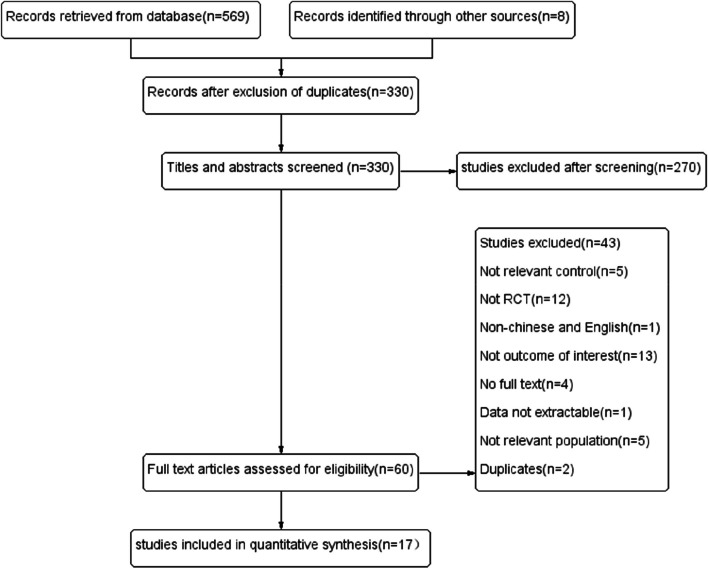
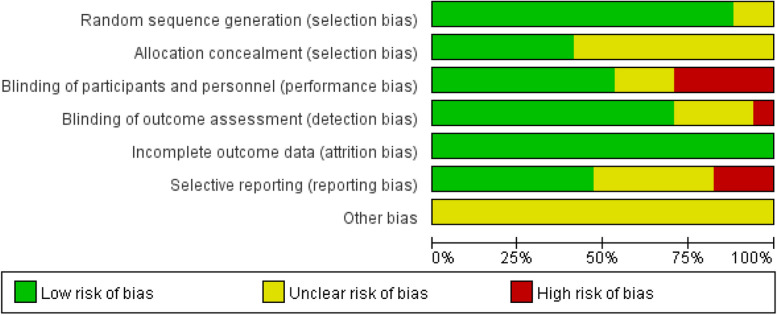
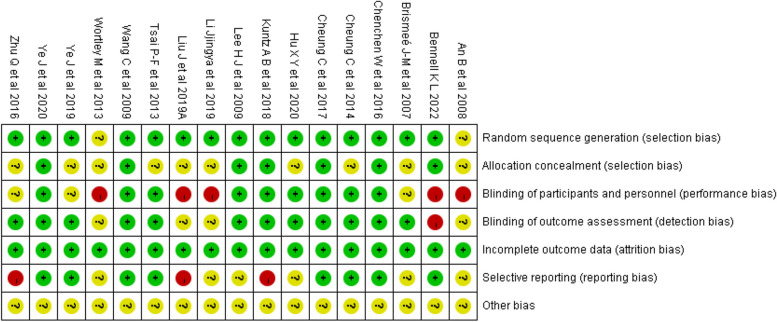
The China National Knowledge Infrastructure (CNKI), Wanfang, PubMed/Medline, Cochrane Library, Web of Science, EBSCO, Embase, Scopus, and ProQuest databases were searched to identify randomized controlled trials (RCTs) that involved tai chi, yoga, and baduanjin interventions for KOA. The search period ranged from inception to October 25, 2022. The methodological quality of the included studies was evaluated by the Cochrane risk of bias assessment tool, and the included data were statistically analyzed and plotted using Review Manager 5.3 and Stata 14.0 software.
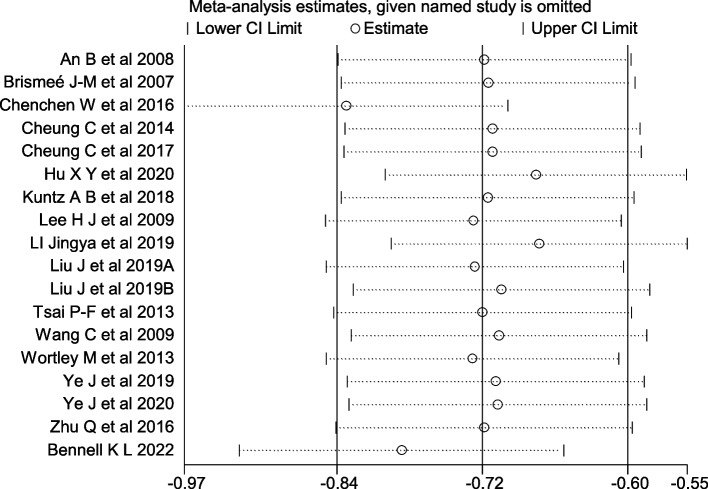
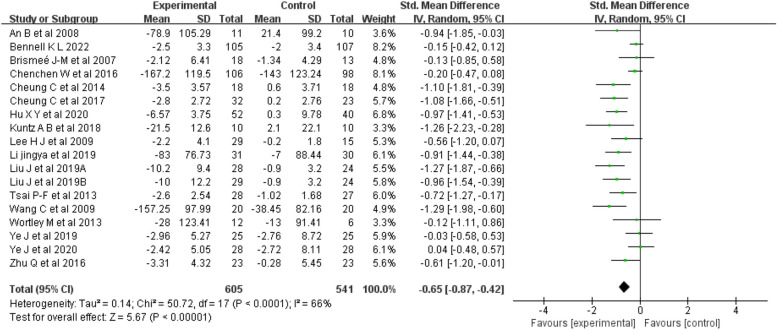
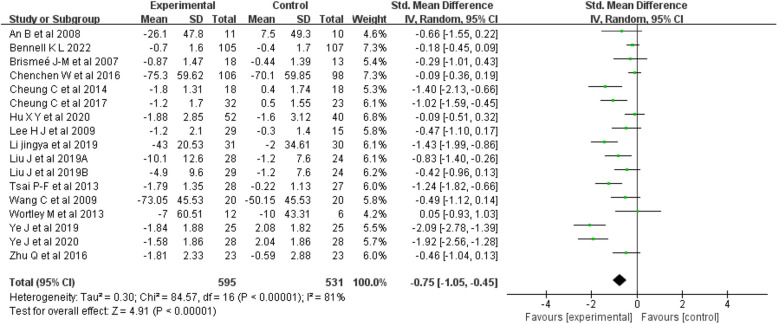
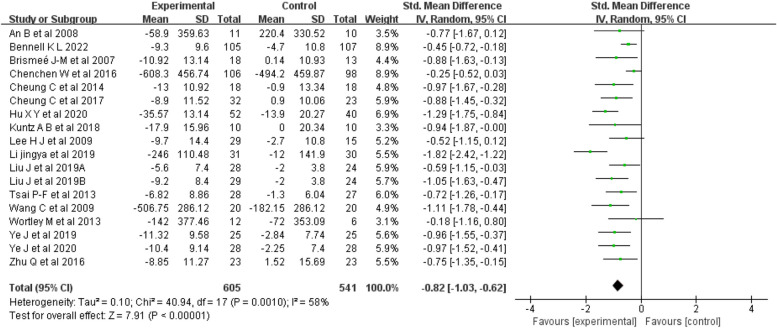
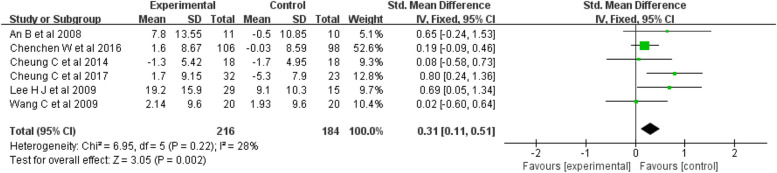
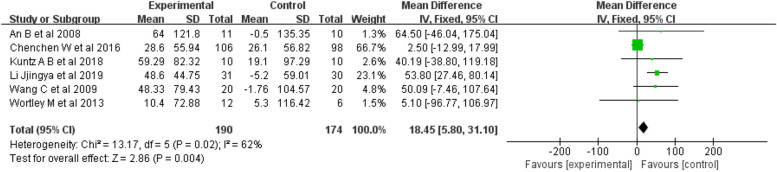
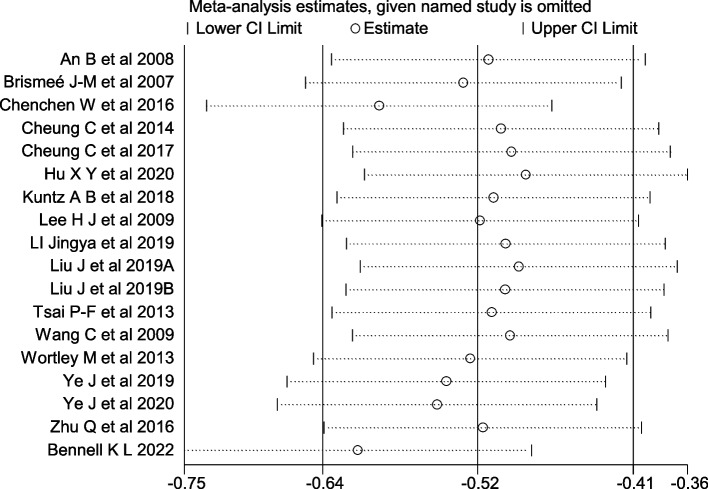
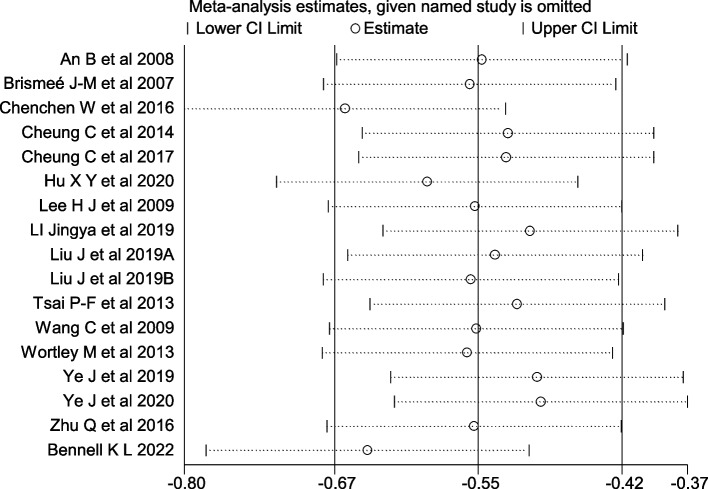
We included 17 articles with a total of 1122 patients. Compared with the control group, mind-body exercise significantly improved patient pain (standardized mean difference (SMD) = -0.65, 95% confidence interval (CI) [-0.87, -0.42], p < 0.00001), stiffness (SMD = -0.75, 95% CI [-1.05, -0.45], p < 0.00001), physical function (SMD = -0.82, 95% CI [-1.03, -0.62], p < 0.00001), mental health (SMD = 0.31, 95% CI [0.11, 0.51], p = 0.002), and depression (SMD = -0.32, 95% CI [-0.50, -0.15], p = 0.0003). In terms of motor ability, mind-body exercise significantly increased the 6-min walking distance (SMD = 18.45, 95% CI [5.80, 31.10], p = 0.004) and decreased timed up and go test time (SMD = -1.15, 95% CI [-1.71, -0.59], p < 0.0001).
The current study showed that mind-body exercise is safe and effective for KOA patients. However, given the methodological limitations of the included studies, additional high-quality evidence is needed to support the conclusions of this study.
评估身心锻炼对改善膝骨关节炎(KOA)的效果,从而为骨关节炎运动康复提供信息。
在中国知网(CNKI)、万方、PubMed/Medline、Cochrane 图书馆、Web of Science、EBSCO、Embase、Scopus 和 ProQuest 数据库中检索涉及太极、瑜伽和八段锦干预 KOA 的随机对照试验(RCT)。检索时间范围为建库至 2022 年 10 月 25 日。使用 Cochrane 偏倚风险评估工具评估纳入研究的方法学质量,并使用 Review Manager 5.3 和 Stata 14.0 软件对纳入数据进行统计分析和绘制。
我们纳入了 17 篇文章,共计 1122 名患者。与对照组相比,身心锻炼显著改善了患者的疼痛(标准化均数差(SMD)=-0.65,95%置信区间(CI)[-0.87,-0.42],p<0.00001)、僵硬(SMD=-0.75,95%CI[-1.05,-0.45],p<0.00001)、躯体功能(SMD=-0.82,95%CI[-1.03,-0.62],p<0.00001)、心理健康(SMD=0.31,95%CI[0.11,0.51],p=0.002)和抑郁(SMD=-0.32,95%CI[-0.50,-0.15],p=0.0003)。在运动能力方面,身心锻炼显著增加了 6 分钟步行距离(SMD=18.45,95%CI[5.80,31.10],p=0.004),并缩短了计时起立行走测试时间(SMD=-1.15,95%CI[-1.71,-0.59],p<0.0001)。
本研究表明,身心锻炼对 KOA 患者是安全有效的。然而,鉴于纳入研究的方法学局限性,需要更多高质量的证据来支持本研究的结论。