School of Biological Sciences, University of Bristol, Bristol, UK.
Thermo Fisher Scientific, 3450 Central Expressway, Santa Clara, CA, USA.
Plant Biotechnol J. 2024 Aug;22(8):2235-2247. doi: 10.1111/pbi.14341. Epub 2024 Mar 23.
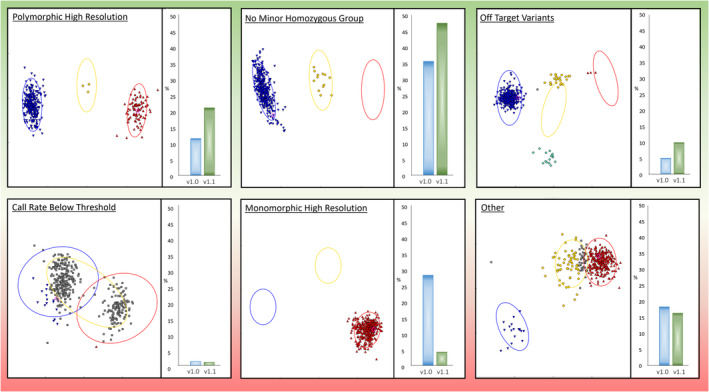
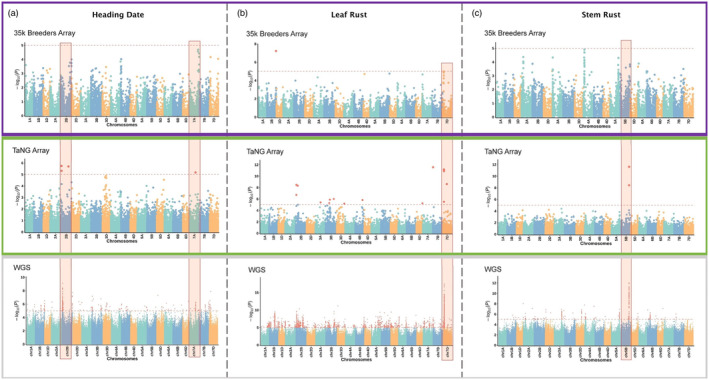
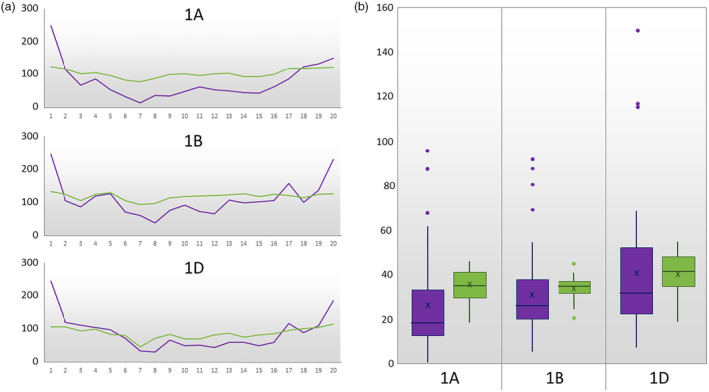
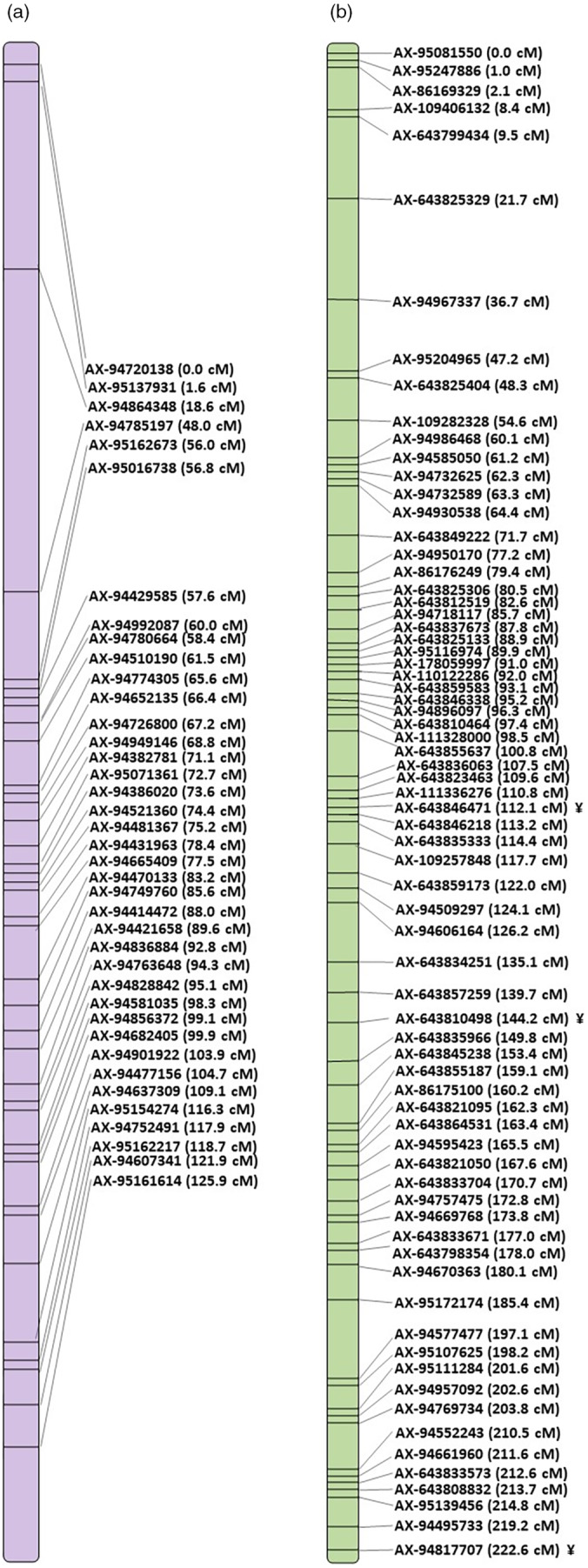
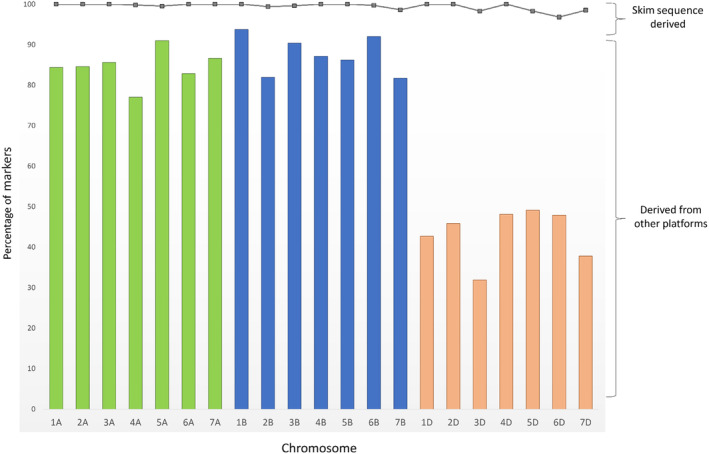
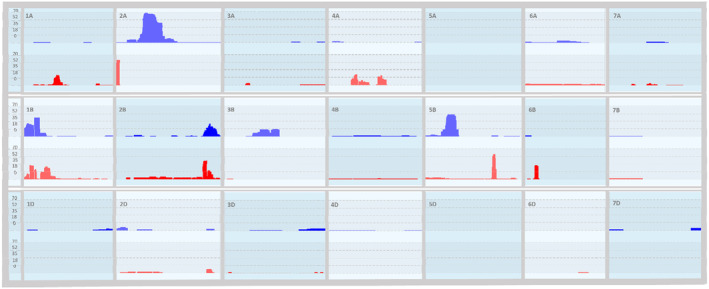
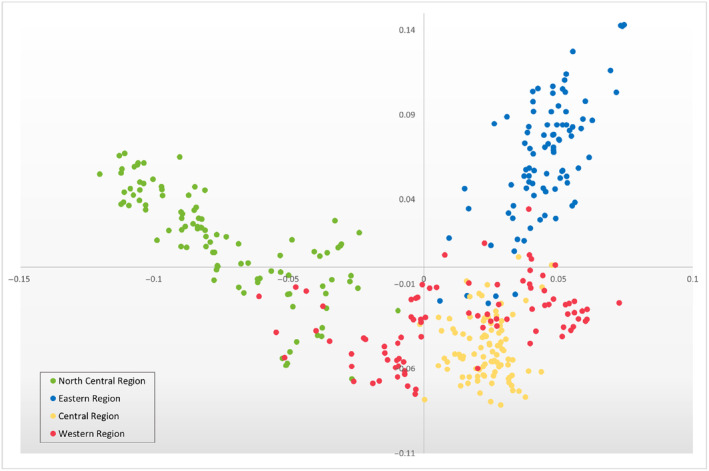
High-throughput genotyping arrays have provided a cost-effective, reliable and interoperable system for genotyping hexaploid wheat and its relatives. Existing, highly cited arrays including our 35K Wheat Breeder's array and the Illumina 90K array were designed based on a limited amount of varietal sequence diversity and with imperfect knowledge of SNP positions. Recent progress in wheat sequencing has given us access to a vast pool of SNP diversity, whilst technological improvements have allowed us to fit significantly more probes onto a 384-well format Axiom array than previously possible. Here we describe a novel Axiom genotyping array, the 'Triticum aestivum Next Generation' array (TaNG), largely derived from whole genome skim sequencing of 204 elite wheat lines and 111 wheat landraces taken from the Watkins 'Core Collection'. We used a novel haplotype optimization approach to select SNPs with the highest combined varietal discrimination and a design iteration step to test and replace SNPs which failed to convert to reliable markers. The final design with 43 372 SNPs contains a combination of haplotype-optimized novel SNPs and legacy cross-platform markers. We show that this design has an improved distribution of SNPs compared to previous arrays and can be used to generate genetic maps with a significantly higher number of distinct bins than our previous array. We also demonstrate the improved performance of TaNGv1.1 for Genome-wide association studies (GWAS) and its utility for Copy Number Variation (CNV) analysis. The array is commercially available with supporting marker annotations and initial genotyping results freely available.
高通量基因分型芯片为六倍体小麦及其近缘种的基因分型提供了一种具有成本效益、可靠且可互操作的系统。现有的、高度引用的芯片,包括我们的 35K 小麦育种者芯片和 Illumina 90K 芯片,都是基于有限的品种序列多样性和 SNP 位置的不完善知识设计的。最近小麦测序的进展使我们能够获得大量的 SNP 多样性,而技术的改进使得我们能够在一个 384 孔格式的 Axiom 芯片上安装比以前更多的探针。在这里,我们描述了一种新的 Axiom 基因分型芯片,即“Triticum aestivum Next Generation”(TaNG)芯片,它主要来源于 204 个优质小麦品系和 111 个来自 Watkins“核心收集”的小麦地方品种的全基因组 skim 测序。我们使用了一种新的单倍型优化方法来选择具有最高品种间区分能力的 SNP,并进行了设计迭代步骤来测试和替换无法转化为可靠标记的 SNP。最终的设计有 43372 个 SNP,包含了单倍型优化的新型 SNP 和跨平台的遗传标记的组合。我们表明,与以前的芯片相比,该设计具有改进的 SNP 分布,并且可以用于生成具有比我们以前的芯片更高数量的独特-bin 的遗传图谱。我们还展示了 TaNGv1.1 对全基因组关联研究(GWAS)的改进性能及其在拷贝数变异(CNV)分析中的应用。该芯片已商业化,支持标记注释,初始基因分型结果免费提供。