Department of Internal Medicine and Geriatrics, School of Medicine, University of Bari, Bari, Italy.
Aging Clin Exp Res. 2024 Mar 23;36(1):78. doi: 10.1007/s40520-023-02686-3.
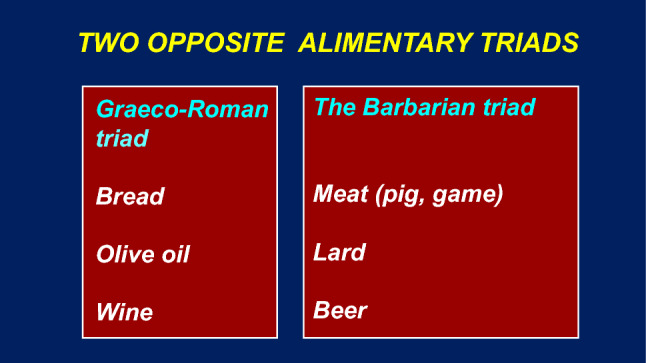
The Mediterranean diet, which was born in the Mediterranean basin, was initially quite poor and simple, essentially based on the products that grew almost spontaneously along the shores of the Mediterranean, i.e., olives, grapes, and wheat, which were long cultivated in the Mediterranean region. The invasions of the Roman Empire by barbarian populations, between 400 and 800 AD, made the diet enriched with products from wild uncultivated areas, meat from game and pigs, and vegetables. With the arrival of the Arabs in southern Italy in the ninth century, the focus of the diet shifted to carbohydrates, particularly to dried pasta and to other new ingredients. The Arabs primarily brought a new imaginative spirit to the kitchen by introducing and using an infinity of condiments and seasonings. The discovery of the Americas and the arrival of new ingredients from the New World brought the final adjustments to the Mediterranean diet: new meat (turkey), new vegetables (potatoes, broad beans, corn, tomatoes,) new fruits (strawberries, pineapples, coconuts, peanuts), chocolate, coffee and sugar completed the list of components of the Mediterranean diet as we know it today.
地中海饮食起源于地中海盆地,最初非常贫穷和简单,基本基于在地中海沿岸几乎自然生长的产品,即橄榄、葡萄和小麦,这些产品在地中海地区长期种植。公元 400 年至 800 年间,蛮族对罗马帝国的入侵使饮食中增加了来自野生未开垦地区的产品、野味和猪肉以及蔬菜。随着阿拉伯人在 9 世纪抵达意大利南部,饮食的重点转向碳水化合物,特别是干面条和其他新成分。阿拉伯人通过引入和使用无数的调味料和调味品,为厨房带来了新的创造性精神。美洲的发现和来自新世界的新食材的到来,为地中海饮食带来了最后的调整:新的肉类(火鸡)、新的蔬菜(土豆、蚕豆、玉米、西红柿)、新的水果(草莓、菠萝、椰子、花生)、巧克力、咖啡和糖,完成了我们今天所知道的地中海饮食的成分清单。