PhysioLab, University of Florence, Sesto Fiorentino, FI, Italy.
Department of Physics and Astronomy, University of Florence, Sesto Fiorentino, FI, Italy.
Commun Biol. 2024 Mar 23;7(1):361. doi: 10.1038/s42003-024-06033-8.
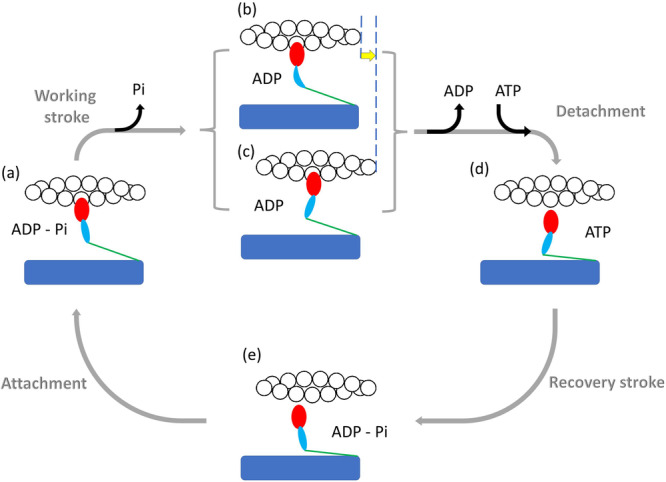
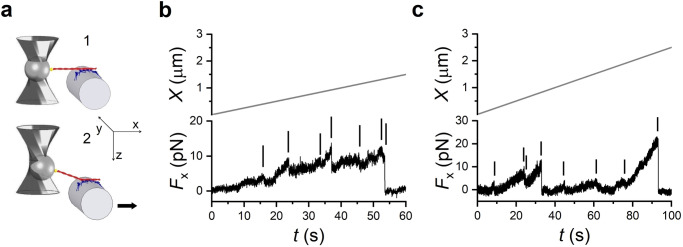
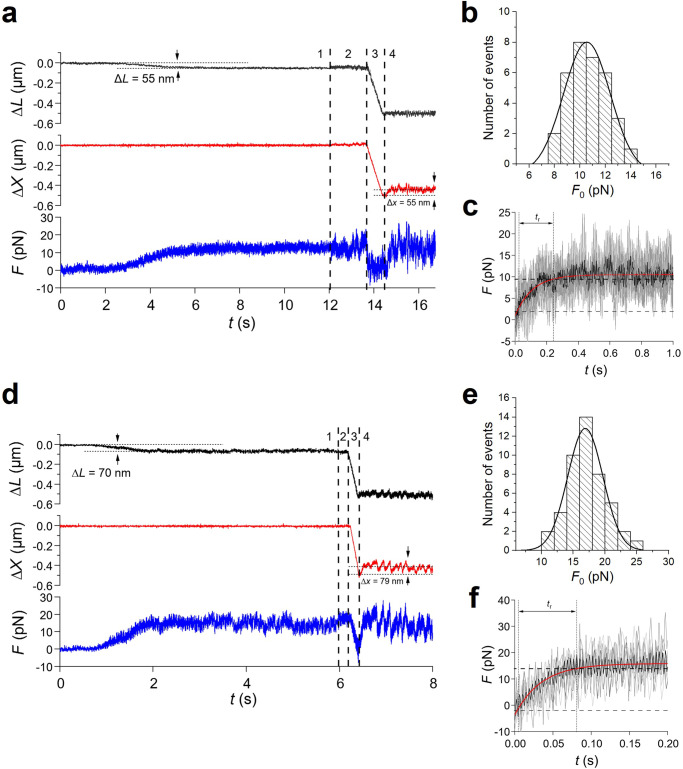
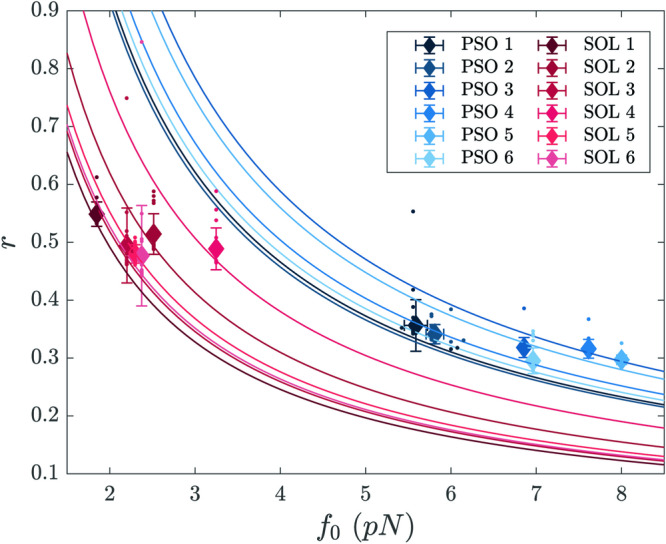
Myosin II is the muscle molecular motor that works in two bipolar arrays in each thick filament of the striated (skeletal and cardiac) muscle, converting the chemical energy into steady force and shortening by cyclic ATP-driven interactions with the nearby actin filaments. Different isoforms of the myosin motor in the skeletal muscles account for the different functional requirements of the slow muscles (primarily responsible for the posture) and fast muscles (responsible for voluntary movements). To clarify the molecular basis of the differences, here the isoform-dependent mechanokinetic parameters underpinning the force of slow and fast muscles are defined with a unidimensional synthetic nanomachine powered by pure myosin isoforms from either slow or fast rabbit skeletal muscle. Data fitting with a stochastic model provides a self-consistent estimate of all the mechanokinetic properties of the motor ensemble including the motor force, the fraction of actin-attached motors and the rate of transition through the attachment-detachment cycle. The achievements in this paper set the stage for any future study on the emergent mechanokinetic properties of an ensemble of myosin molecules either engineered or purified from mutant animal models or human biopsies.
肌球蛋白 II 是一种肌肉分子马达,在横纹肌(骨骼肌和心肌)的每一条粗肌丝中都以两个双极阵列工作,通过与附近的肌动蛋白丝的周期性 ATP 驱动相互作用将化学能转化为稳定的力和缩短。骨骼肌中的肌球蛋白马达的不同同工型解释了慢肌(主要负责姿势)和快肌(负责随意运动)的不同功能要求。为了阐明这些差异的分子基础,本文使用来自慢肌或快肌兔骨骼肌的纯肌球蛋白同工型驱动的一维合成纳米机器,定义了支撑慢肌和快肌力量的同工型依赖性力学动力学参数。通过随机模型进行的数据拟合提供了对包括马达力、附着肌动蛋白的马达分数和通过附着-脱附循环的转换速率在内的整个马达集合的力学动力学特性的一致估计。本文的研究结果为未来研究工程化或从突变动物模型或人类活检中纯化的肌球蛋白分子集合的新兴力学动力学特性奠定了基础。