Department of Health Sciences, University of Milan, Milan, Italy.
Animal Care Unit, University of Milan, Milan, Italy.
Autophagy. 2024 Aug;20(8):1879-1894. doi: 10.1080/15548627.2024.2334111. Epub 2024 Mar 27.
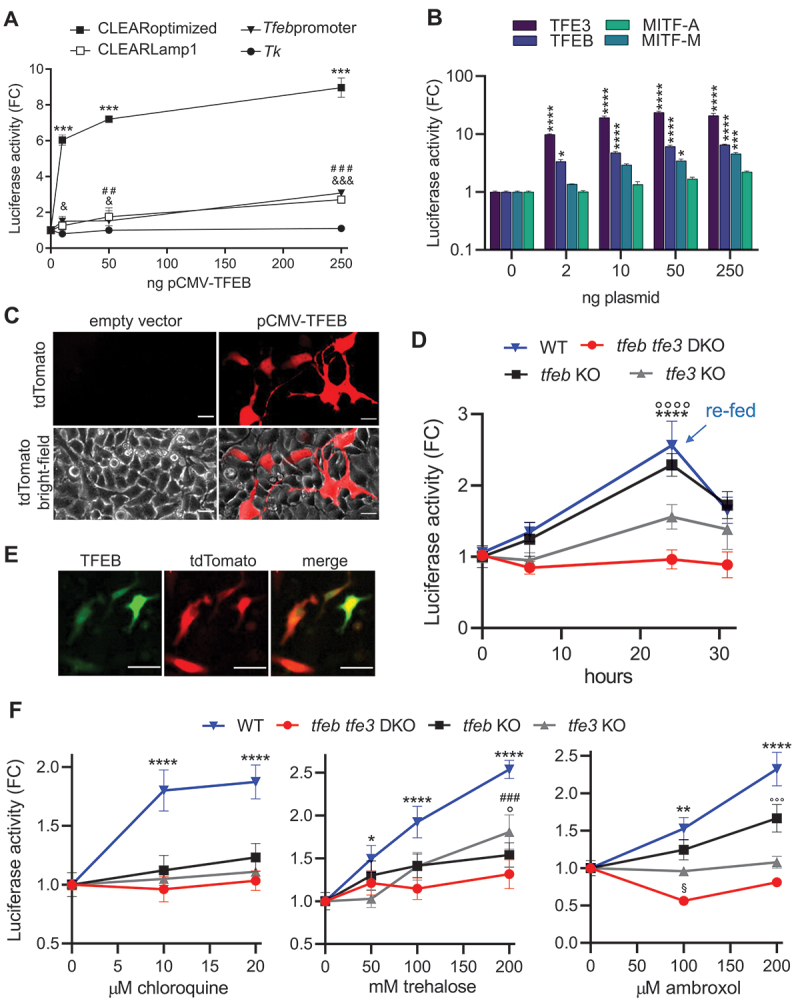
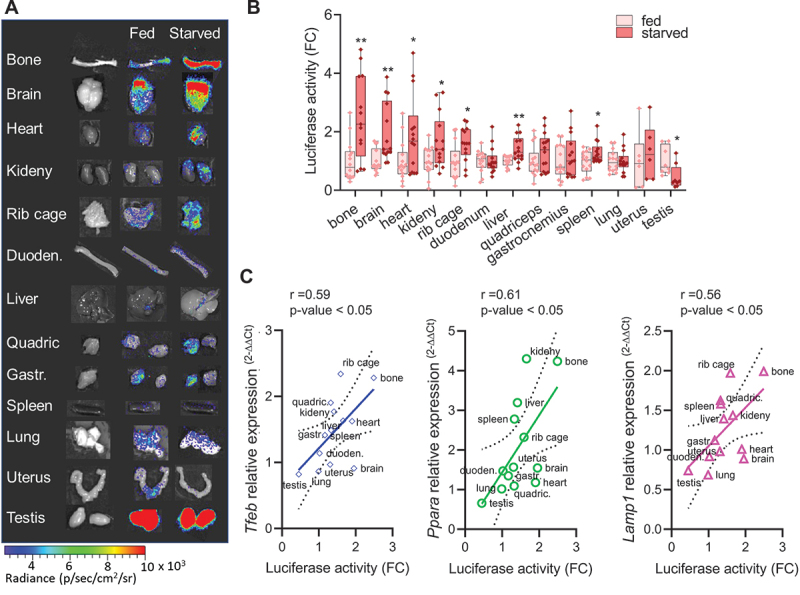
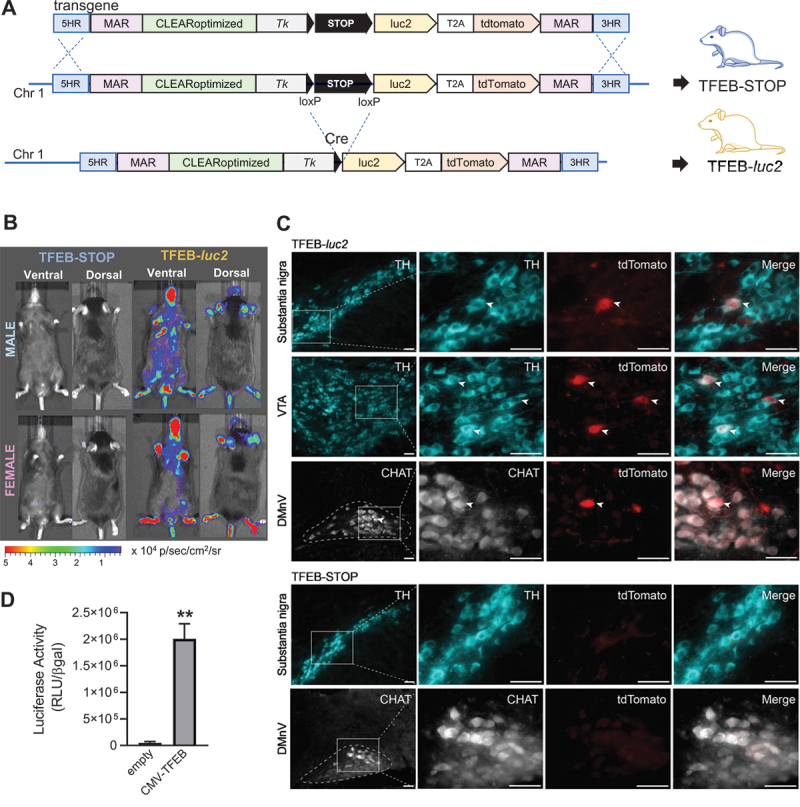
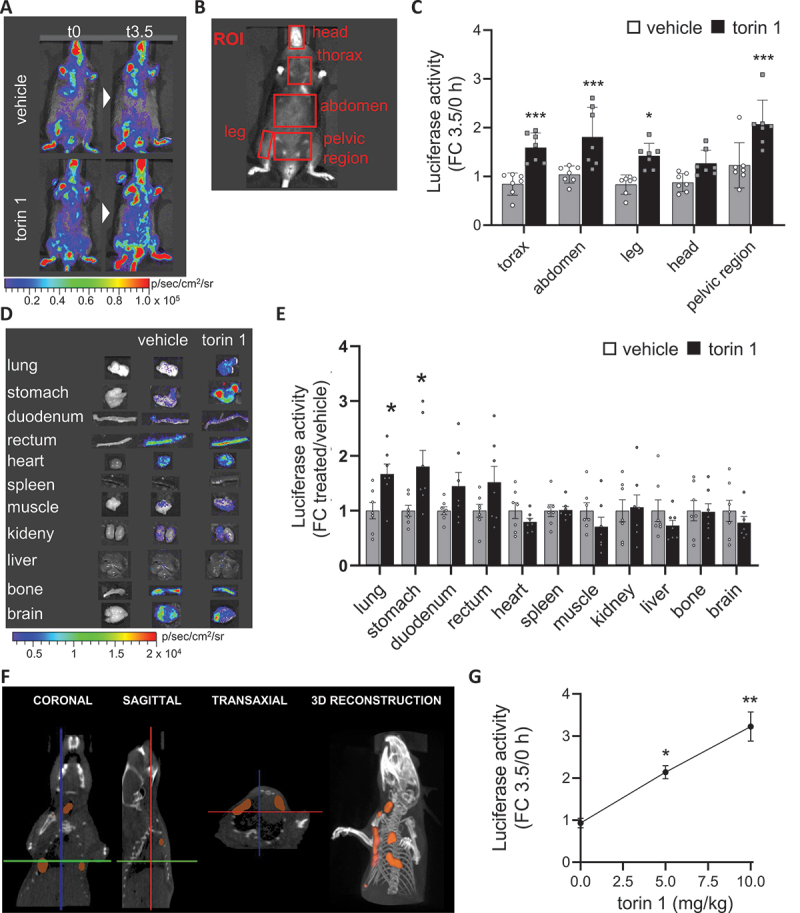
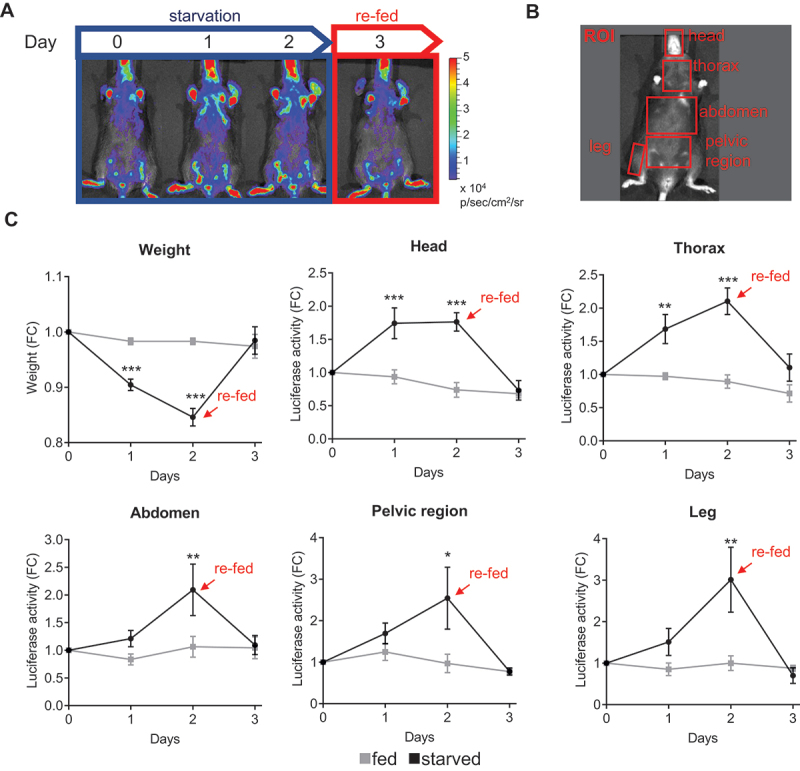
TFEB and TFE3 belong to the MiT/TFE family of transcription factors that bind identical DNA responsive elements in the regulatory regions of target genes. They are involved in regulating lysosomal biogenesis, function, exocytosis, autophagy, and lipid catabolism. Precise control of TFEB and TFE3 activity is crucial for processes such as senescence, stress response, energy metabolism, and cellular catabolism. Dysregulation of these factors is implicated in various diseases, thus researchers have explored pharmacological approaches to modulate MiT/TFE activity, considering these transcription factors as potential therapeutic targets. However, the physiological complexity of their functions and the lack of suitable tools have limited the development of selective MiT/TFE modulating agents. Here, we have created a reporter-based biosensor, named CLEARoptimized, facilitating the pharmacological profiling of TFEB- and TFE3-mediated transcription. This innovative tool enables the measurement of TFEB and TFE3 activity in living cells and mice through imaging and biochemical techniques. CLEARoptimized consists of a promoter with six coordinated lysosomal expression and regulation motifs identified through an in-depth bioinformatic analysis of the promoters of 128 TFEB-target genes. The biosensor drives the expression of luciferase and tdTomato reporter genes, allowing the quantification of TFEB and TFE3 activity in cells and in animals through optical imaging and biochemical assays. The biosensor's validity was confirmed by modulating MiT/TFE activity in both cell culture and reporter mice using physiological and pharmacological stimuli. Overall, this study introduces an innovative tool for studying autophagy and lysosomal pathway modulation at various biological levels, from individual cells to the entire organism. CLEAR: coordinated lysosomal expression and regulation; MAR: matrix attachment regions; MiT: microphthalmia-associated transcription factor; ROI: region of interest; TBS: tris-buffered saline; TF: transcription factor; TFE3: transcription factor binding to IGHM enhancer 3; TFEB: transcription factor EB; TH: tyrosine hydroxylase; TK: thymidine kinase; TSS: transcription start site.
TFEB 和 TFE3 属于 MiT/TFE 家族转录因子,它们可以结合靶基因调控区中相同的 DNA 反应元件。它们参与调节溶酶体发生、功能、胞吐作用、自噬和脂质分解代谢。TFEB 和 TFE3 活性的精确控制对于衰老、应激反应、能量代谢和细胞分解代谢等过程至关重要。这些因子的失调与各种疾病有关,因此研究人员探索了调节 MiT/TFE 活性的药理学方法,将这些转录因子视为潜在的治疗靶点。然而,其功能的生理复杂性和缺乏合适的工具限制了选择性 MiT/TFE 调节剂的发展。在这里,我们创建了一种基于报告基因的生物传感器,命名为 CLEARoptimized,它促进了 TFEB 和 TFE3 介导的转录的药理学分析。这种创新工具通过成像和生化技术,使我们能够在活细胞和小鼠中测量 TFEB 和 TFE3 的活性。CLEARoptimized 由一个启动子组成,该启动子包含六个协调的溶酶体表达和调节基序,这些基序是通过对 128 个 TFEB 靶基因启动子进行深入的生物信息学分析而确定的。该生物传感器驱动荧光素酶和 tdTomato 报告基因的表达,通过光学成像和生化测定,在细胞和动物中定量 TFEB 和 TFE3 的活性。通过使用生理和药理学刺激在细胞培养和报告小鼠中调节 MiT/TFE 活性,验证了该生物传感器的有效性。总的来说,这项研究介绍了一种在从单个细胞到整个生物体的各种生物学水平上研究自噬和溶酶体途径调节的创新工具。CLEAR:协调的溶酶体表达和调节;MAR:基质附着区;MiT:小眼相关转录因子;ROI:感兴趣区域;TBS:三羟甲基氨基甲烷缓冲盐水;TF:转录因子;TFE3:转录因子结合 IGHM 增强子 3;TFEB:转录因子 EB;TH:酪氨酸羟化酶;TK:胸苷激酶;TSS:转录起始位点。