Department of Life Science, University of Seoul, Seoul, 130-743, Republic of Korea.
Cell Death Dis. 2021 Apr 1;12(4):343. doi: 10.1038/s41419-021-03632-9.
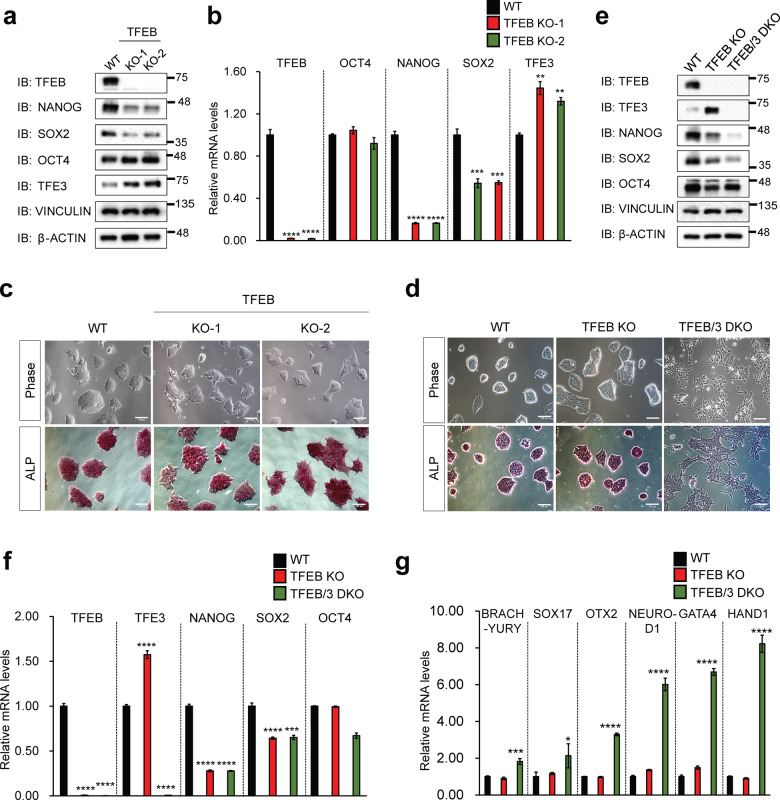
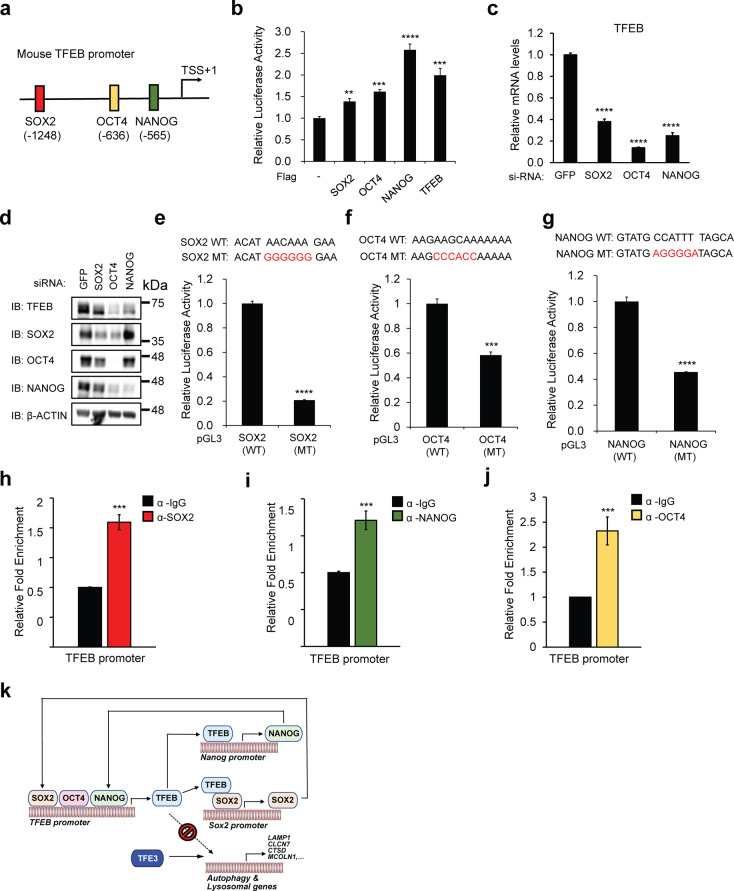
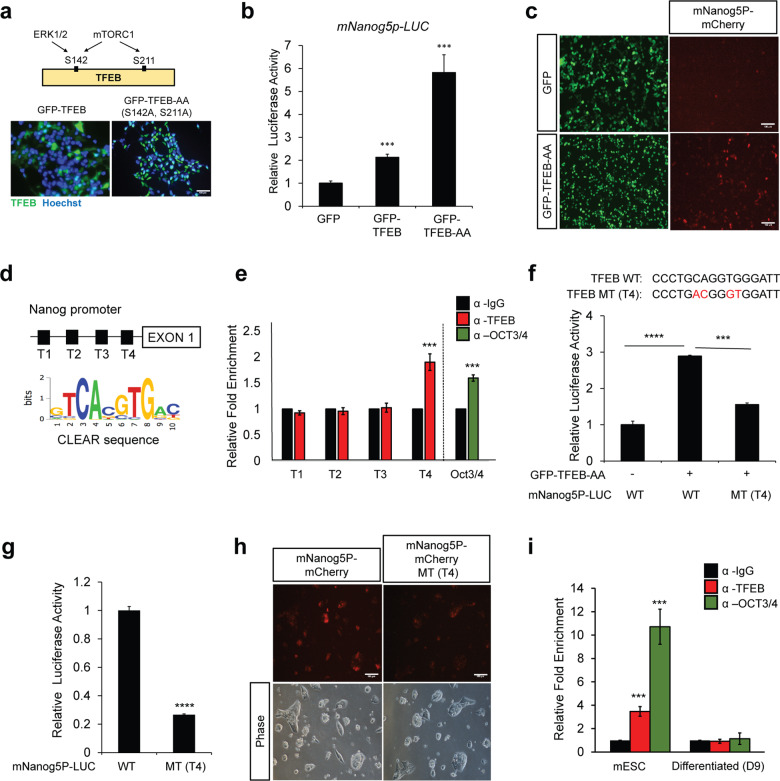
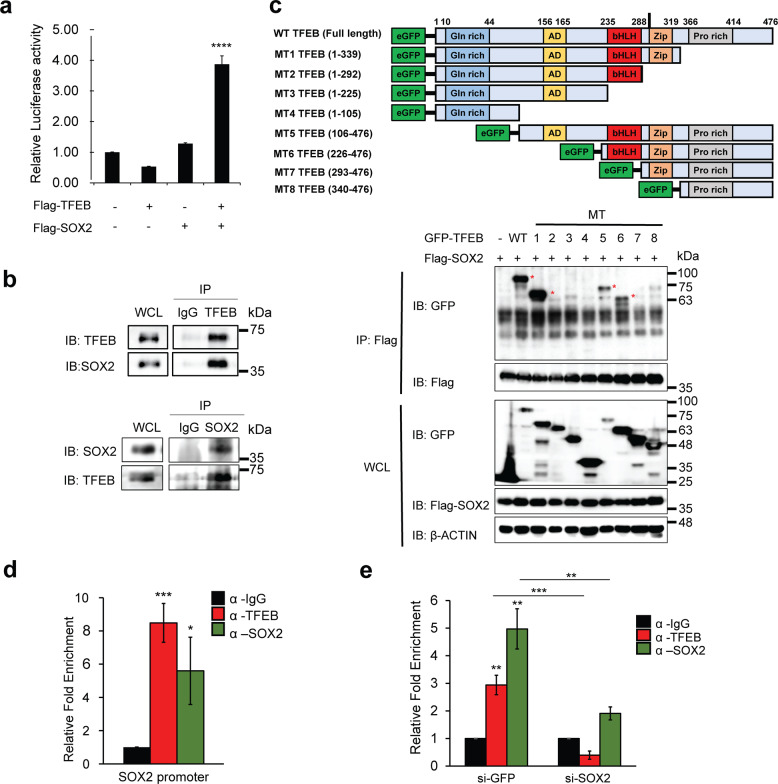
Transcription factor EB (TFEB), a well-known master regulator of autophagy and lysosomal biogenesis, is a member of the microphthalmia family of transcription factors (MiT family). Over the years, TFEB has been shown to have diverse roles in various physiological processes such as clearance for intracellular pathogenic factors and having developmental functions such as dendritic maturation, as well as osteoclast, and endoderm differentiation. However, in the present study, we propose a novel mechanism for TFEB governing pluripotency of mouse ESCs (mESCs) by regulating the pluripotency transcriptional network (PTN) in these cells. We observed high levels of TFEB mRNA and protein levels in undifferentiated mESCs. Interestingly, we found a reduction of Nanog and Sox2 levels in TFEB knockout (KO) mESCs while pluripotency was maintained as there was an upregulation of TFE3, a potent stem cell maintenance factor. In consistent, double knockout of TFEB/TFE3 (TFEB/3 DKO) reduced mESC pluripotency, as indicated by the loss of ESC morphology, reduction of ESC markers, and the emergence of differentiation markers. We further discovered that Nanog was a TFEB target gene in undifferentiated mESCs. TFEB also promoted sex-determining region Y-box2 (Sox2) transcription by forming a heterodimer with Sox2 in mESCs. Notably, Sox2, Oct4, and Nanog were also binding to the TFEB promoter and thus generating a feed-forward loop in relation to TFEB. Although high levels of nuclear TFEB are expected to enhance autophagy-lysosomal activity, undifferentiated mESC remarkably displayed low basal autophagy-lysosomal activity. Overexpression or knockout of TFEB did not affect the expression of TFEB lysosomal-autophagy target genes and TFEB also had a lesser binding affinity to its own lysosomal promoter-target genes in mESCs compared to differentiated cells. Collectively, these findings define a newly incorporative, moonlighting function for TFEB in regulating PTN, independent of its autophagy-lysosomal biogenesis roles.
转录因子 EB(TFEB)是溶酶体生物发生和自噬的著名主调控因子,是小眼畸形家族转录因子(MiT 家族)的成员。多年来,TFEB 在多种生理过程中发挥了多种作用,例如清除细胞内致病因子,具有发育功能,如树突成熟、破骨细胞和内胚层分化。然而,在本研究中,我们提出了一种新的机制,即 TFEB 通过调节这些细胞中的多能性转录网络(PTN)来控制小鼠胚胎干细胞(mESC)的多能性。我们观察到未分化的 mESC 中 TFEB mRNA 和蛋白水平较高。有趣的是,我们发现 TFEB 敲除(KO)mESC 中的 Nanog 和 Sox2 水平降低,而多能性得以维持,因为 TFE3 水平上调,TFE3 是一种强有力的干细胞维持因子。一致地,TFEB/TFE3 双重敲除(TFEB/3 DKO)降低了 mESC 的多能性,表现在 ESC 形态丧失、ESC 标志物减少和分化标志物出现。我们还发现,Nanog 是未分化的 mESC 中 TFEB 的靶基因。TFEB 还通过在 mESC 中与 Sox2 形成异二聚体来促进性别决定区 Y 盒 2(Sox2)转录。值得注意的是,Sox2、Oct4 和 Nanog 也与 TFEB 启动子结合,从而在与 TFEB 相关的关系中产生正反馈环。尽管高水平的核 TFEB 预计会增强自噬溶酶体活性,但未分化的 mESC 显著显示出低基础自噬溶酶体活性。TFEB 的过表达或敲除均不影响 TFEB 溶酶体自噬靶基因的表达,与分化细胞相比,TFEB 对其自身溶酶体启动子靶基因的结合亲和力也较小。总的来说,这些发现定义了 TFEB 在调节 PTN 中的一种新的、兼职功能,独立于其自噬溶酶体生物发生作用。