Department of General, Visceral, Transplantation, Vascular and Paediatric Surgery, Centre of Operative Medicine (ZOM), University Hospital of Wuerzburg, Würzburg, Germany.
Department of Anesthesiology, Intensive Care, Emergency and Pain Medicine, University Hospital Wuerzburg, Würzburg, Germany.
Hernia. 2024 Oct;28(5):1697-1707. doi: 10.1007/s10029-024-03027-7. Epub 2024 Mar 25.
Chronic postsurgical pain (CPSP) is a potential long-term problem following open incisional hernia repair which may affect the quality of life of patients despite successful anatomical repair of the hernia. The aim of this manuscript was to identify the incidence and outcome of patients following open incisional hernia repair in respect of risk factors to develop CPSP.
A single-center retrospective analysis of patients who underwent open incisional hernia repair between 2015 and 2021 was performed. Pre-existing conditions (e.g., diabetes mellitus and malignancy), hernia complexity, postoperative complications, and postoperative pain medication were analyzed using the local database. Quality of life and CPSP were assessed using the EuraHS Quality of Life (QoL) questionnaire.
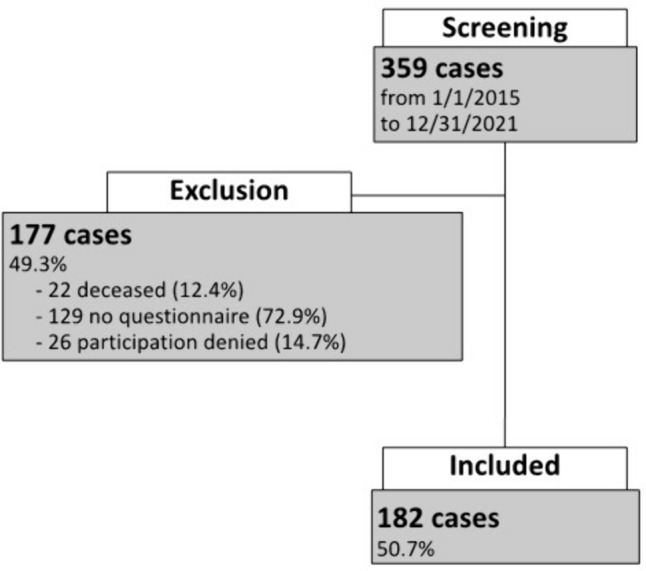
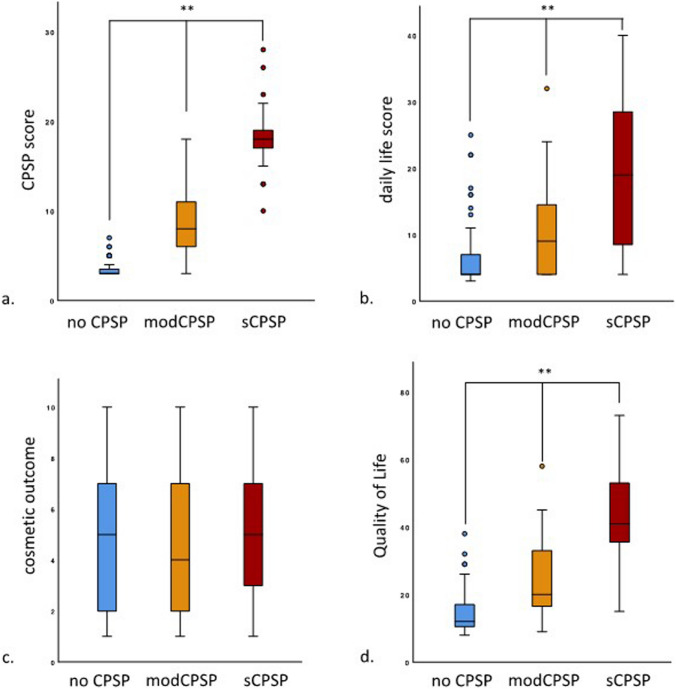
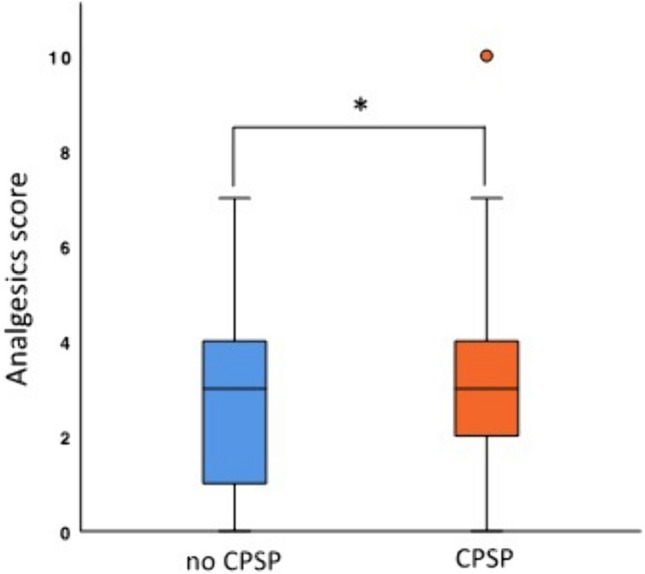
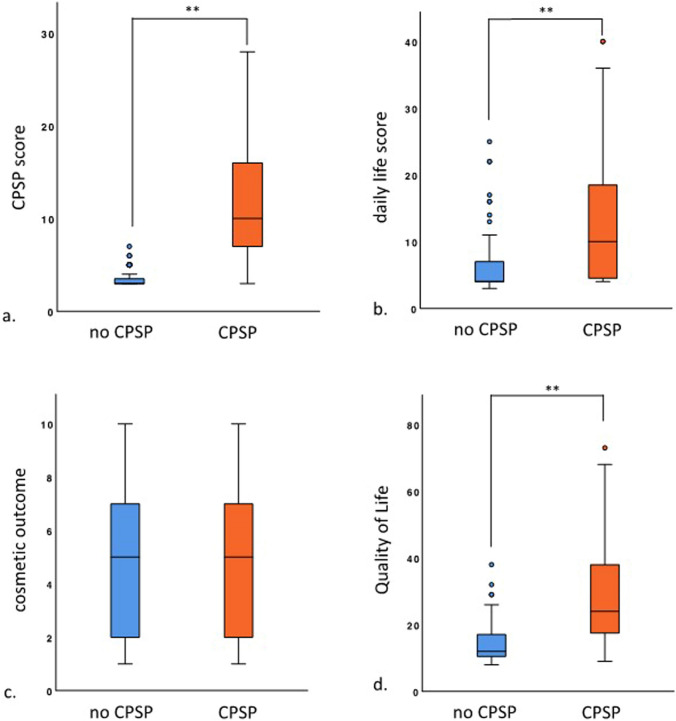
A total of 182 cases were retrospectively included in a detailed analysis based on the complete EuraHS (QoL) questionnaire. During the average follow-up period of 46 months, this long-term follow-up revealed a 54.4% incidence of CPSP and including a rate of 14.8% for severe CPSP (sCPSP) after open incisional hernia surgery. The complexity of the hernia and the demographic variables were not different between the group with and without CPSP. Patients with CPSP reported significantly reduced QoL. The analgesics score which includes the need of pain medication in the initial days after surgery was significantly higher in patients with CPSP than in those without (no CPSP: 2.86 vs. CPSP: 3.35; p = 0.047).
The presence of CPSP after open incisional hernia repair represents a frequent and underestimated long-term problem which has been not been recognized to this extent before. CPSP impairs QoL in these patients. Patients at risk to develop CPSP can be identified in the perioperative setting by the need of high doses of pain medication using the analgesics score. Possibly timely adjustment of pain medication, even in the domestic setting, could alleviate the chronicity or severity of CPSP.
慢性术后疼痛(CPSP)是开放式切口疝修补术后的一种潜在长期问题,尽管疝的解剖修复成功,但仍可能影响患者的生活质量。本文的目的是确定接受开放式切口疝修补术的患者在发生 CPSP 的风险因素方面的发病率和结局。
对 2015 年至 2021 年间接受开放式切口疝修补术的患者进行了单中心回顾性分析。使用本地数据库分析了术前合并症(如糖尿病和恶性肿瘤)、疝复杂性、术后并发症和术后疼痛药物的使用情况。使用 EuraHS 生活质量(QoL)问卷评估生活质量和 CPSP。
根据完整的 EuraHS(QoL)问卷,对 182 例患者进行了详细分析,共纳入 182 例患者。在平均 46 个月的随访期间,长期随访发现开放式切口疝手术后 CPSP 的发生率为 54.4%,包括严重 CPSP(sCPSP)的发生率为 14.8%。疝的复杂性和人口统计学变量在有和无 CPSP 的组之间没有差异。有 CPSP 的患者报告生活质量明显降低。术后最初几天需要疼痛药物的镇痛药评分在 CPSP 患者中明显高于无 CPSP 患者(无 CPSP:2.86 vs. CPSP:3.35;p=0.047)。
开放式切口疝修补术后 CPSP 的发生是一种常见且被低估的长期问题,以前尚未认识到这一点。CPSP 会损害这些患者的生活质量。可以通过镇痛药评分识别出围手术期有发生 CPSP 风险的患者,需要使用高剂量的疼痛药物。可能及时调整疼痛药物,即使在国内环境下,也可以减轻 CPSP 的慢性或严重程度。