CliCon Società Benefit S.r.l., Health, Economics & Outcomes Research, Via Murri 9, Bologna, 40137, Italy.
USL Umbria 2, Dipartimento Farmaceutico, Perugia, Italy.
Ital J Pediatr. 2024 Mar 25;50(1):57. doi: 10.1186/s13052-024-01628-7.
Respiratory syncytial virus (RSV) is among the leading causes of hospitalization due to lower respiratory tract infections (LRTIs) in children younger than 5 years worldwide and the second cause of infant death after malaria. RSV infection occurs in almost all the infants before the second year of life with variable clinical severity, often requiring medical assistance. This analysis investigated patients aged 0-5 years with RSV infection focusing on epidemiology, clinical features, and economic burden of RSV-associated hospitalizations in a setting of Italian real clinical practice.
An observational retrospective analysis was conducted on administrative databases of healthcare entities covering around 2.6 million residents of whom 120,000 health-assisted infants aged < 5 years. From 2010 to 2018, pediatric patients were included in the presence of hospitalization discharge diagnosis for RSV infections, and RSV-related acute bronchiolitis or pneumonia. Epidemiology, demographics, clinical picture and costs were evaluated in RSV-infected patients, overall and stratified by age ranges (0-1, 1-2, 2-5 years) and compared with an age-matched general population.
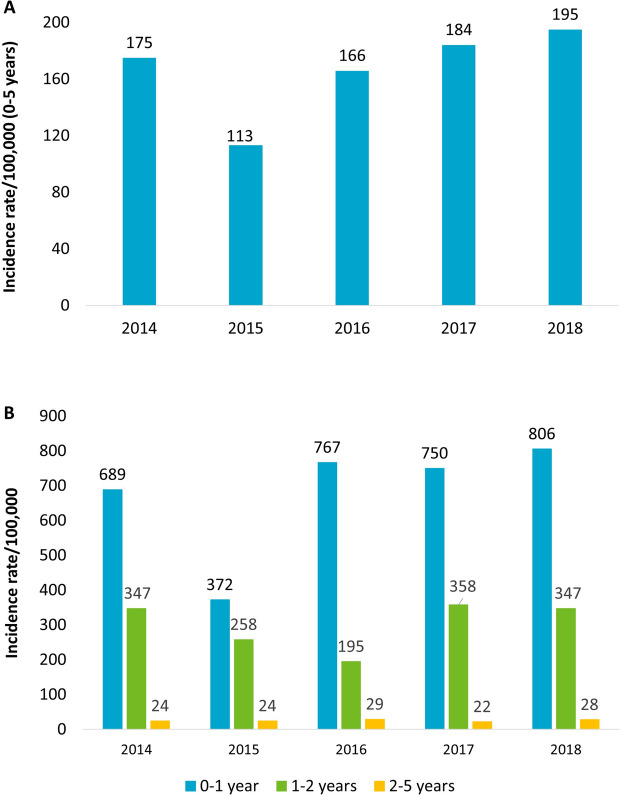
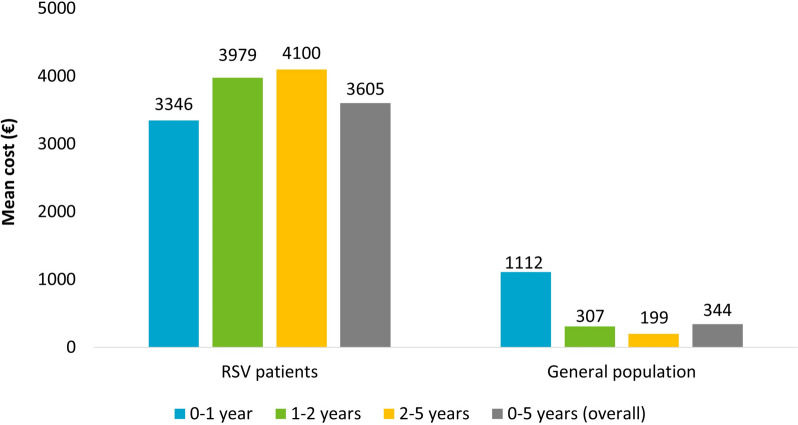
Overall 1378 RSV-infected children aged 0-5 years were included. Among them, the annual incidence rate of RSV-related hospitalizations was 175-195/100,000 people, with a peak in neonates aged < 1 year (689-806/100,000). While nearly 85% of infected infants were healthy, the remaining 15% presented previous hospitalization for known RSV risk factors, like preterm birth, or congenital heart, lung, and immune diseases. The economic analysis revealed that direct healthcare costs per patient/year were markedly higher in RSV patients than in the general population (3605€ vs 344€).
These findings derived from the real clinical practice in Italy confirmed that RSV has an important epidemiological, clinical, and economic burden among children aged 0-5 years. While the complex management of at-risk infants was confirmed, our data also highlighted the significant impact of RSV infection in infants born at term or otherwise healthy, demonstrating that all infants need protection against RSV disease, reducing then the risk of medium and long-term complications, such as wheezing and asthma.
呼吸道合胞病毒(RSV)是全球 5 岁以下儿童因下呼吸道感染(LRTIs)住院的主要原因之一,也是仅次于疟疾的婴儿死亡第二大原因。RSV 感染在生命的第二年之前几乎发生在所有婴儿中,其临床严重程度不同,通常需要医疗帮助。本分析调查了 0-5 岁患有 RSV 感染的患者,重点关注意大利真实临床实践中 RSV 相关住院治疗的流行病学、临床特征和经济负担。
对覆盖约 260 万居民的医疗保健实体的行政数据库进行了观察性回顾性分析,其中包括 12 万名健康辅助的 5 岁以下婴儿。从 2010 年到 2018 年,患有 RSV 感染住院诊断和 RSV 相关急性细支气管炎或肺炎的儿科患者被纳入研究。对 RSV 感染患者进行流行病学、人口统计学、临床特征和成本评估,按年龄范围(0-1、1-2、2-5 岁)进行分层,并与年龄匹配的一般人群进行比较。
共纳入 1378 名 0-5 岁患有 RSV 感染的儿童。其中,RSV 相关住院的年发病率为 175-195/10 万人,新生儿(<1 岁)发病率最高(689-806/10 万人)。尽管近 85%的感染婴儿健康,但其余 15%的婴儿有已知 RSV 危险因素的既往住院史,如早产,或先天性心脏病、肺病和免疫疾病。经济分析显示,与普通人群相比,RSV 患者的每位患者/年直接医疗费用明显更高(3605 欧元比 344 欧元)。
这些来自意大利真实临床实践的数据证实,RSV 在 0-5 岁儿童中具有重要的流行病学、临床和经济负担。虽然高危婴儿的复杂管理得到了证实,但我们的数据还突出表明,RSV 感染在足月或 otherwise 健康的婴儿中也具有重大影响,这表明所有婴儿都需要 RSV 疾病的保护,从而降低中远期并发症(如喘息和哮喘)的风险。