Krsnik Sabina, Erjavec Karmen
University of Novo Mesto Faculty of Health Sciences, Novo Mesto, Slovenia.
J Patient Exp. 2024 Mar 24;11:23743735241241181. doi: 10.1177/23743735241241181. eCollection 2024.
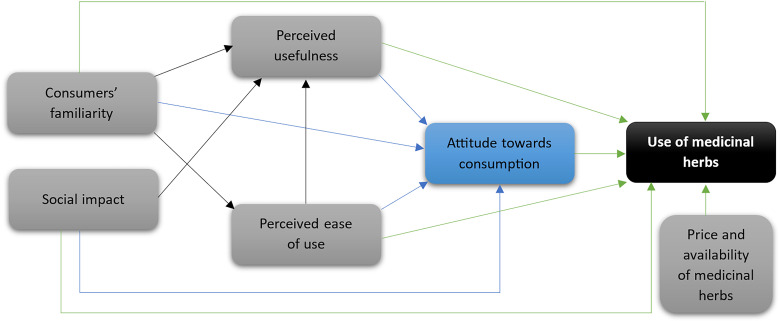
In countries with a long tradition of folk herbal medicine that is not integrated into the health system, consumer interest in medicinal herbs has increased. Considering the lack of knowledge about the factors influencing the use of medicinal herbs, the aim of this study was to identify the most important factors of herbal use in Slovenia. Factors were assessed in June 2023 using a nationwide sample ( = 508). Results show that almost half of the respondents are not familiar with medicinal herbs, however, 86% use them at least a few times a year. The "familiarity with medicinal herbs" had the strongest direct effect on the use of medicinal herbs, followed by the "social impact of the herbalist" and the "perceived usefulness of medicinal herbs." There is a need to create a new approach to integrative medicine policy and the use of medicinal herbs in Slovenia by developing educational programs, training professionals, establishing guidelines for the safe and effective use of herbs, and advocating for reimbursement by health insurance companies.
在有着悠久民间草药传统但未纳入卫生系统的国家,消费者对药草的兴趣有所增加。鉴于对影响药草使用的因素缺乏了解,本研究的目的是确定斯洛文尼亚药草使用的最重要因素。2023年6月,使用全国性样本(n = 508)对这些因素进行了评估。结果显示,近一半的受访者不熟悉药草,然而,86%的人每年至少使用几次药草。“对药草的熟悉程度”对药草使用的直接影响最大,其次是“草药医生的社会影响”和“对药草有用性的认知”。斯洛文尼亚需要通过制定教育计划、培训专业人员、建立药草安全有效使用指南以及倡导健康保险公司给予报销,来创建一种新的综合医学政策和药草使用方法。