Ippolitov Danyyl, Lin Yi-Han, Spence Jeremy, Glogowska Aleksandra, Thanasupawat Thatchawan, Beiko Jason, Del Bigio Marc R, Xu Xin, Wang Amy, Calvo Raul, Kapoor Abhijeet, Marugan Juan J, Henderson Mark J, Klonisch Thomas, Hombach-Klonisch Sabine
Department of Human Anatomy and Cell Science, University of Manitoba, Winnipeg, Manitoba, Canada.
National Center for Advancing Translational Sciences, National Institutes of Health, Rockville, MD, USA.
bioRxiv. 2024 Feb 22:2024.02.19.581073. doi: 10.1101/2024.02.19.581073.
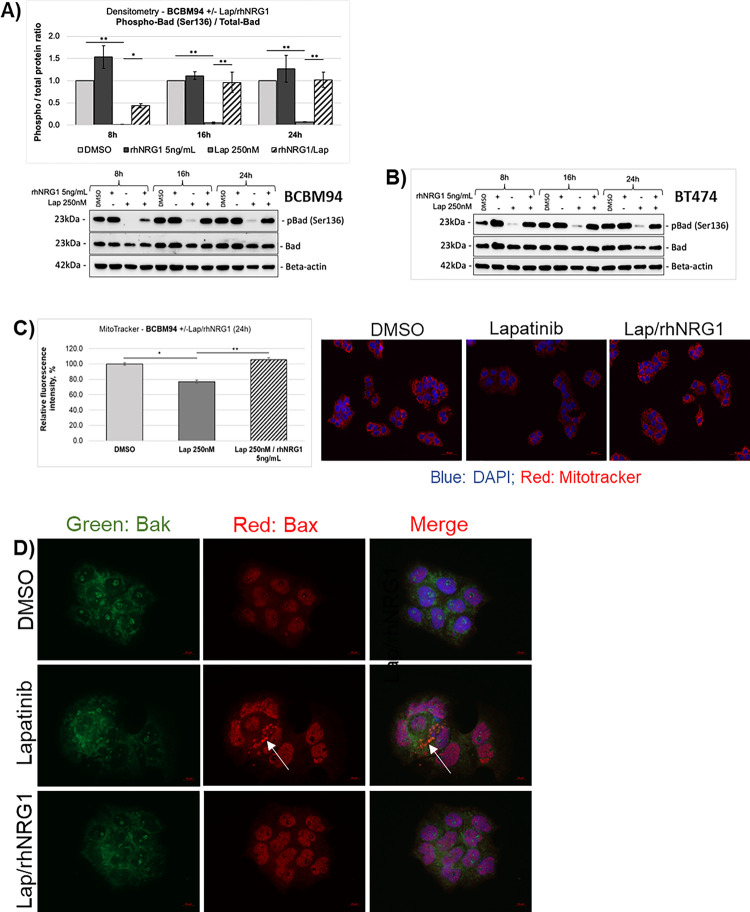
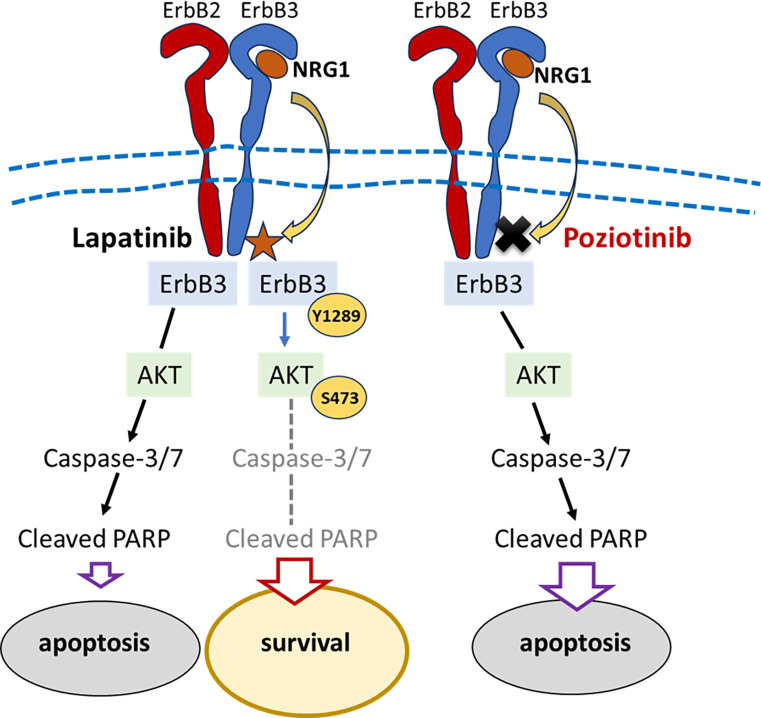
Brain metastasis of HER2+ breast cancer occurs in about 50% of all women with metastatic HER2+ breast cancer and confers poor prognosis for patients. Despite effective HER2-targeted treatments of peripheral HER2+ breast cancer with Trastuzumab +/-HER2 inhibitors, limited brain permeability renders these treatments inefficient for HER2+ breast cancer brain metastasis (BCBM). The scarcity of suitable patient-derived in-vivo models for HER2+ BCBM has compromised the study of molecular mechanisms that promote growth and therapeutic resistance in brain metastasis. We have generated and characterized new HER2+ BCBM cells (BCBM94) isolated from a patient HER2+ brain metastasis. Repeated hematogenic xenografting of BCBM94 consistently generated BCBM in mice. The clinically used receptor tyrosine kinase inhibitor (RTKi) Lapatinib blocked phosphorylation of all ErbB1-4 receptors and induced the intrinsic apoptosis pathway in BCBM94. Neuregulin-1 (NRG1), a ligand for ErbB3 and ErbB4 that is abundantly expressed in the brain, was able to rescue Lapatinib-induced apoptosis and clonogenic ability in BCBM94 and in HER2+ BT474. ErbB3 was essential to mediate the NRG1-induced survival pathway that involved PI3K-AKT signalling and the phosphorylation of BAD at serine 136 to prevent apoptosis. High throughput RTKi screening identified the brain penetrable Poziotinib as highly potent compound to reduce cell viability in HER2+ BCBM in the presence of NRG1. Successful in-vivo ablation of BCBM94- and BT474-derived HER2+ brain tumors was achieved upon two weeks of treatment with Poziotinib. MRI revealed BCBM remission upon poziotinib, but not with Lapatinib treatment. In conclusion, we have established a new patient-derived HER2+ BCBM in-vivo model and identified Poziotinib as highly efficacious RTKi with excellent brain penetrability that abrogated HER2+ BCBM brain tumors in our mouse models.
HER2阳性乳腺癌的脑转移发生在约50%的转移性HER2阳性乳腺癌女性患者中,且预后较差。尽管曲妥珠单抗±HER2抑制剂对HER2阳性外周乳腺癌进行了有效的HER2靶向治疗,但有限的脑通透性使这些治疗对HER2阳性乳腺癌脑转移(BCBM)无效。缺乏合适的HER2阳性BCBM患者来源的体内模型,阻碍了对促进脑转移生长和治疗耐药性的分子机制的研究。我们从一名HER2阳性脑转移患者中分离并鉴定了新的HER2阳性BCBM细胞(BCBM94)。BCBM94的反复血源性异种移植在小鼠中持续产生BCBM。临床使用的受体酪氨酸激酶抑制剂(RTKi)拉帕替尼可阻断所有ErbB1 - 4受体的磷酸化,并在BCBM94中诱导内源性凋亡途径。神经调节蛋白-1(NRG1)是ErbB3和ErbB4的配体,在脑中大量表达,能够挽救拉帕替尼诱导的BCBM94和HER2阳性BT474细胞的凋亡和克隆形成能力。ErbB3对于介导NRG1诱导的生存途径至关重要,该途径涉及PI3K - AKT信号传导以及BAD在丝氨酸136处的磷酸化以防止凋亡。高通量RTKi筛选确定脑通透性良好的波齐替尼是在存在NRG1的情况下降低HER2阳性BCBM细胞活力的高效化合物。用波齐替尼治疗两周后,成功在体内消融了BCBM94和BT474来源的HER2阳性脑肿瘤。MRI显示波齐替尼治疗后BCBM缓解,但拉帕替尼治疗无效。总之,我们建立了一种新的患者来源的HER2阳性BCBM体内模型,并确定波齐替尼是一种高效的RTKi,具有出色的脑通透性,可在我们的小鼠模型中消除HER2阳性BCBM脑肿瘤。