Department of Pharmaceutical Microbiology and Immunology, Faculty of Pharmacy, Beni-Suef University, Beni Suef, 62511, Egypt.
Division of Biotechnology, Department of Chemistry, Center for Chemistry and Chemical Engineering, P.O. Box 124, 221 00, Lund, Sweden.
Microb Cell Fact. 2024 Mar 26;23(1):91. doi: 10.1186/s12934-024-02366-5.
Propionic acid fermentation from renewable feedstock suffers from low volumetric productivity and final product concentration, which limits the industrial feasibility of the microbial route. High cell density fermentation techniques overcome these limitations. Here, propionic acid (PA) production from glucose and a crude glycerol/glucose mixture was evaluated using Acidipropionibacterium acidipropionici, in high cell density (HCD) batch fermentations with cell recycle. The agro-industrial by-product, heat-treated potato juice, was used as N-source.
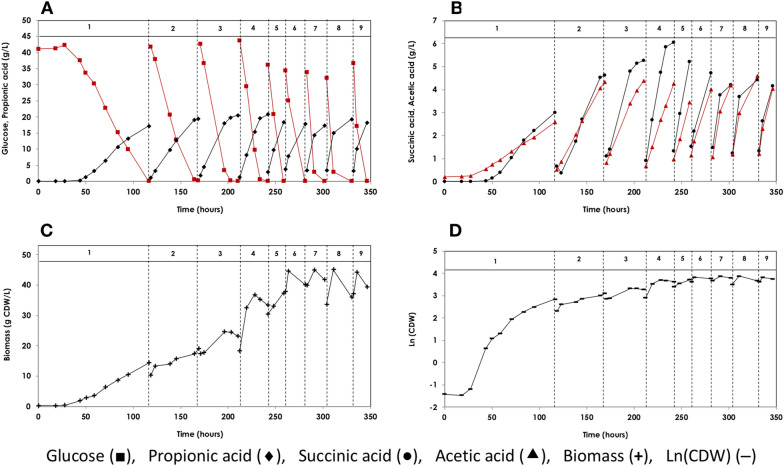
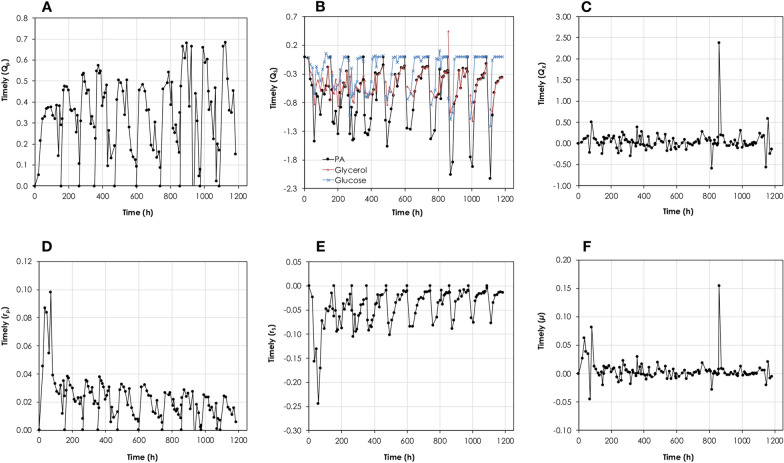
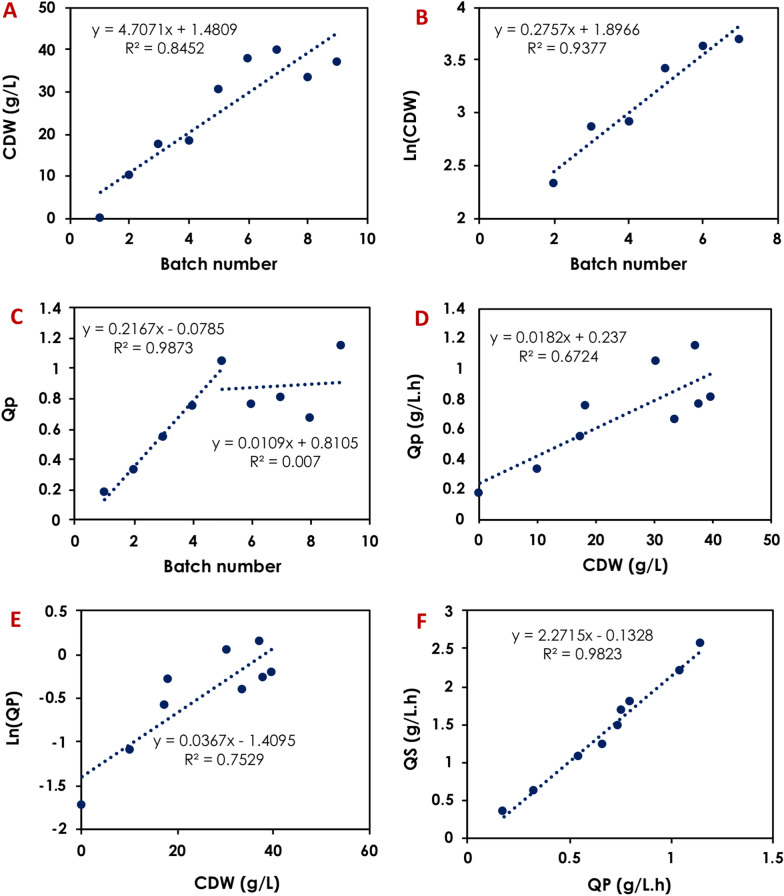
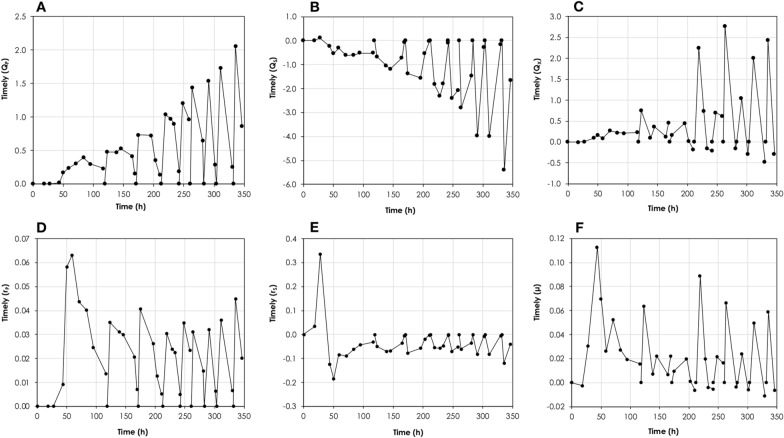
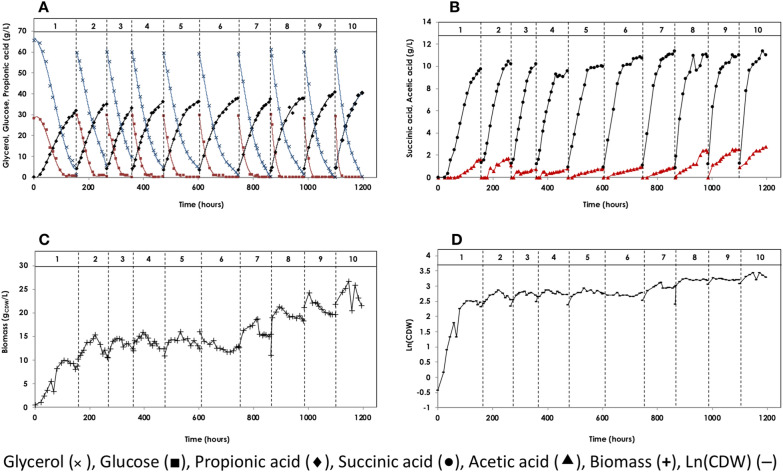
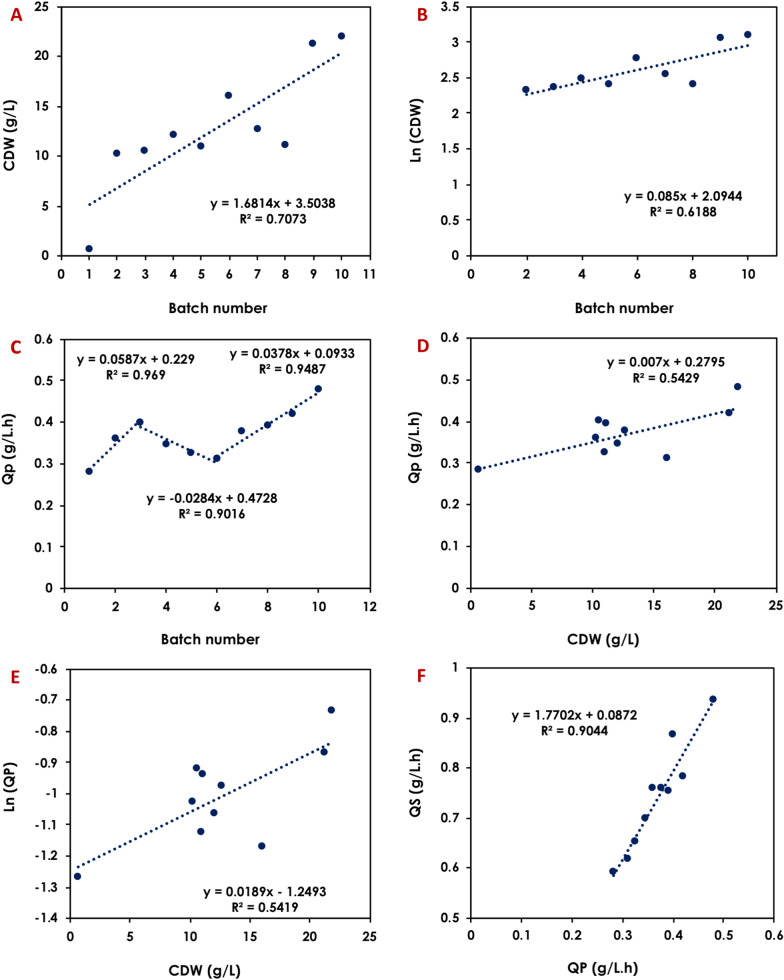
Using 40 g/L glucose for nine consecutive batches yielded an average of 18.76 ± 1.34 g/L of PA per batch (0.59 g/g) at a maximum rate of 1.15 g/L.h, and a maximum biomass of 39.89 g/L. Succinic acid (SA) and acetic acid (AA) were obtained as major by-products and the mass ratio of PA:SA:AA was 100:23:25. When a crude glycerol/glucose mixture (60 g/L:30 g/L) was used for 6 consecutive batches with cell recycle, an average of 35.36 ± 2.17 g/L of PA was obtained per batch (0.51 g/g) at a maximum rate of 0.35 g/L.h, and reaching a maximum biomass concentration of 12.66 g/L. The PA:SA:AA mass ratio was 100:29:3. Further addition of 0.75 mg/L biotin as a supplement to the culture medium enhanced the cell growth reaching 21.89 g/L, and PA productivity to 0.48 g/L.h, but also doubled AA concentration.
This is the highest reported productivity from glycerol/glucose co-fermentation where majority of the culture medium components comprised industrial by-products (crude glycerol and HTPJ). HCD batch fermentations with cell recycling are promising approaches towards industrialization of the bioprocess.
从可再生原料进行丙酸发酵的产量和最终产物浓度较低,这限制了微生物途径的工业可行性。高细胞密度发酵技术克服了这些限制。在这里,使用丙酸短杆菌在高细胞密度(HCD)分批发酵中进行细胞循环,从葡萄糖和粗甘油/葡萄糖混合物中生产丙酸。农业工业副产物热处理土豆汁被用作 N 源。
使用 40 g/L 的葡萄糖进行了九批连续发酵,每批平均产生 18.76±1.34 g/L 的丙酸(0.59 g/g),最大速率为 1.15 g/L.h,最大生物量为 39.89 g/L。获得了琥珀酸(SA)和乙酸(AA)作为主要副产物,PA:SA:AA 的质量比为 100:23:25。当使用粗甘油/葡萄糖混合物(60 g/L:30 g/L)进行 6 批连续发酵并进行细胞循环时,每批平均产生 35.36±2.17 g/L 的丙酸(0.51 g/g),最大速率为 0.35 g/L.h,达到 12.66 g/L 的最大生物量浓度。PA:SA:AA 的质量比为 100:29:3。进一步在培养基中添加 0.75 mg/L 的生物素作为补充,可增强细胞生长,达到 21.89 g/L,PA 生产力提高到 0.48 g/L.h,但也使 AA 浓度增加了一倍。
这是从甘油/葡萄糖共发酵中报告的最高生产力,其中大部分培养基成分由工业副产品(粗甘油和 HTPJ)组成。具有细胞循环的 HCD 分批发酵是该生物工艺工业化的有前途的方法。