Key Laboratory of RNA Science and Engineering, Shanghai Institute of Biochemistry and Cell Biology, Center for Excellence in Molecular Cell Science Chinese Academy of Sciences, University of Chinese Academy of Sciences, Shanghai, 200031, China.
Shanghai-MOST Key Laboratory of Health and Disease Genomics, NHC Key Lab of Reproduction Regulation, Shanghai Institute for Biomedical and Pharmaceutical Technologies, Shanghai, 200032, China.
Genome Biol. 2024 Mar 26;25(1):80. doi: 10.1186/s13059-024-03214-w.
Small RNAs are essential for germ cell development and fertilization. However, fundamental questions remain, such as the level of conservation in small RNA composition between species and whether small RNAs control transposable elements in mammalian oocytes.
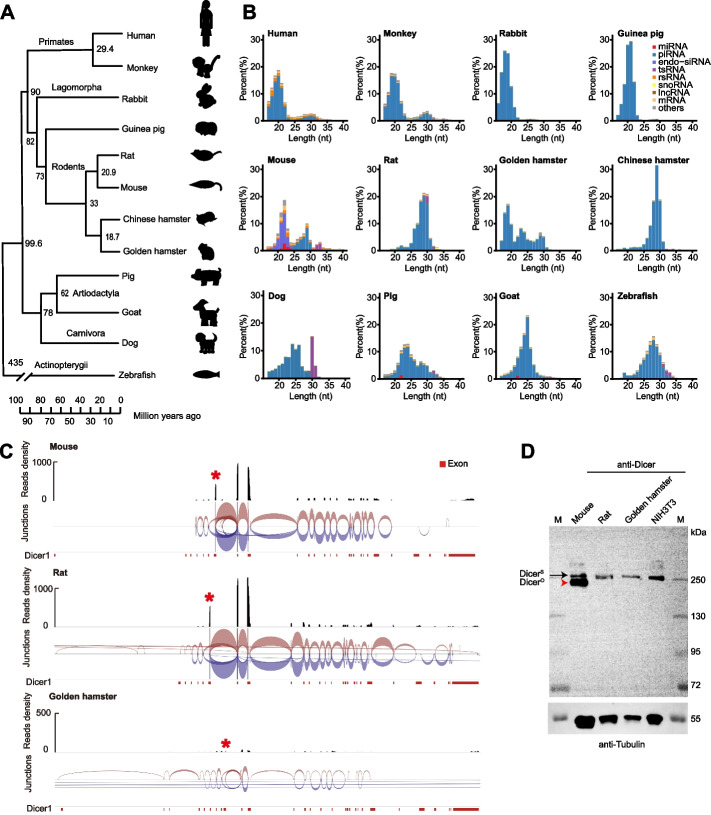
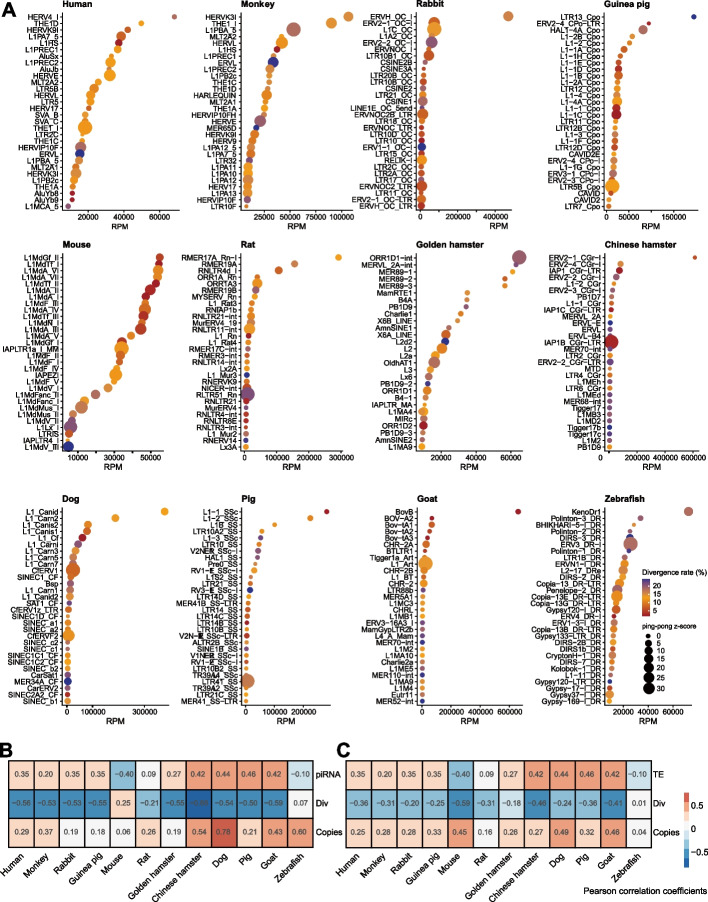
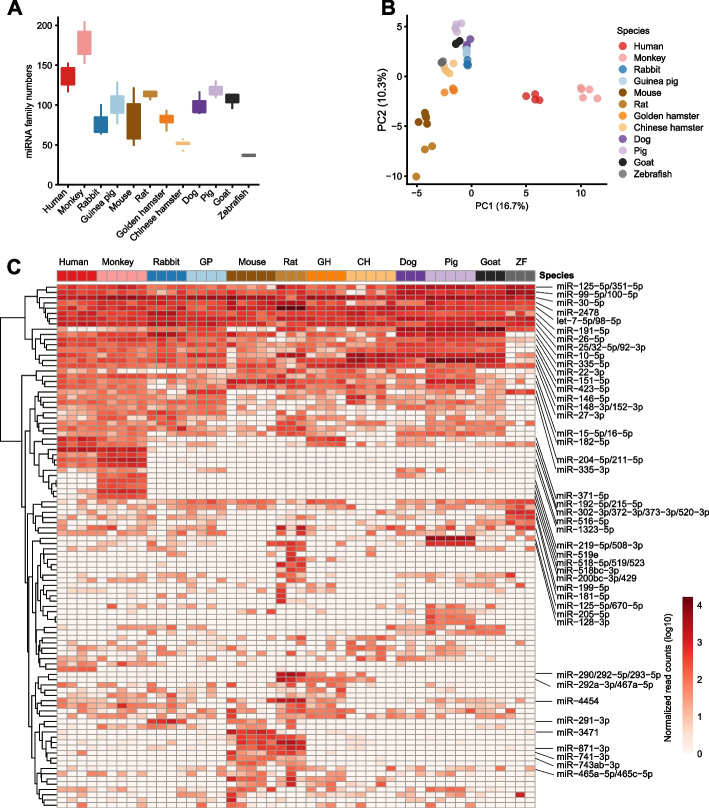
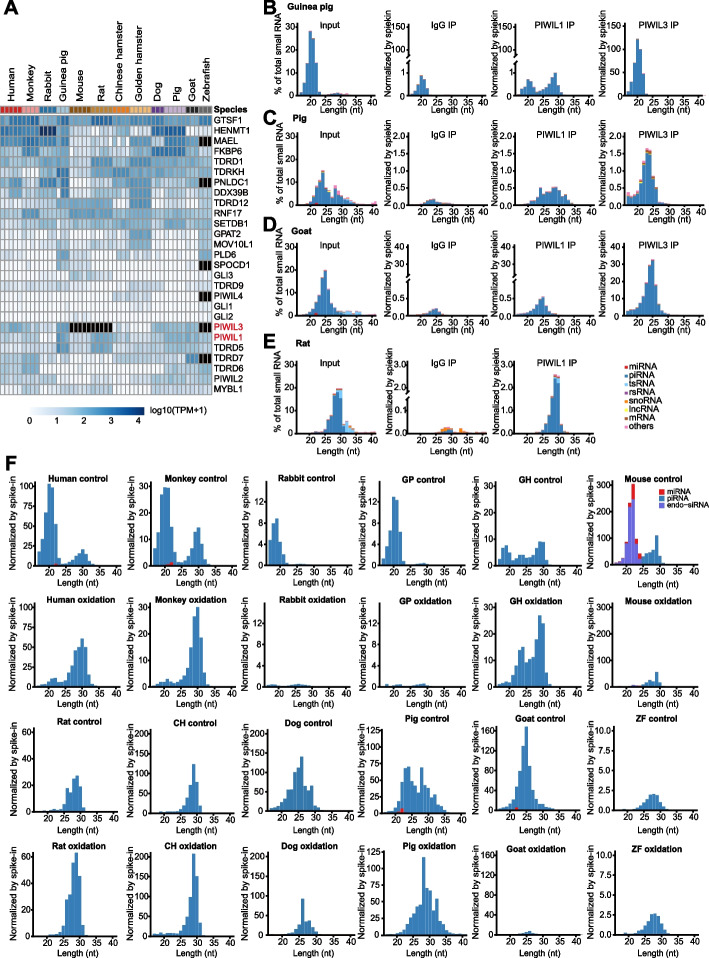
Here, we use high-throughput sequencing to profile small RNAs and poly(A)-bearing long RNAs in oocytes of 12 representative vertebrate species (including 11 mammals). The results show that miRNAs are generally expressed in the oocytes of each representative species (although at low levels), whereas endo-siRNAs are specific to mice. Notably, piRNAs are predominant in oocytes of all species (except mice) and vary widely in length. We find PIWIL3-associated piRNAs are widespread in mammals and generally lack 3'-2'-O-methylation. Additionally, sequence identity is low between homologous piRNAs in different species, even among those present in syntenic piRNA clusters. Despite the species-specific divergence, piRNAs retain the capacity to silence younger TE subfamilies in oocytes.
Collectively, our findings illustrate a high level of diversity in the small RNA populations of mammalian oocytes. Furthermore, we identify sequence features related to conserved roles of small RNAs in silencing TEs, providing a large-scale reference for future in-depth study of small RNA functions in oocytes.
小 RNA 对于生殖细胞的发育和受精至关重要。然而,仍存在一些基本问题,例如物种间小 RNA 组成的保守程度,以及小 RNA 是否控制哺乳动物卵母细胞中的转座元件。
在这里,我们使用高通量测序来描绘 12 种代表性脊椎动物(包括 11 种哺乳动物)卵母细胞中的小 RNA 和 poly(A) 结合的长 RNA。结果表明,miRNAs 通常在每个代表性物种的卵母细胞中表达(尽管水平较低),而内源性 siRNAs 则是小鼠所特有的。值得注意的是,piRNAs 在所有物种(除了小鼠)的卵母细胞中都占主导地位,并且长度差异很大。我们发现 PIWIL3 相关的 piRNAs 在哺乳动物中广泛存在,并且通常缺乏 3'-2'-O-甲基化。此外,不同物种之间同源 piRNAs 的序列同一性较低,即使在位于相同基因座的 piRNA 簇中也是如此。尽管存在物种特异性的差异,但 piRNAs 仍然能够在卵母细胞中沉默年轻的 TE 亚家族。
总的来说,我们的研究结果表明哺乳动物卵母细胞中小 RNA 群体具有高度的多样性。此外,我们确定了与小 RNA 沉默 TE 保守作用相关的序列特征,为未来深入研究卵母细胞中小 RNA 功能提供了大规模的参考。