Cuello Clément, Jansen Hans J, Abdallah Cécile, Zamar Mbadinga Duchesse-Lacours, Birer Williams Caroline, Durand Mickael, Oudin Audrey, Papon Nicolas, Giglioli-Guivarc'h Nathalie, Dirks Ron P, Jensen Michael Krogh, O'Connor Sarah Ellen, Besseau Sébastien, Courdavault Vincent
Biomolécules et Biotechnologies Végétales, EA2106, Université de Tours, 37200, Tours, France.
Future Genomics Technologies, 2333 BE, Leiden, the Netherlands.
Heliyon. 2024 Mar 14;10(6):e28078. doi: 10.1016/j.heliyon.2024.e28078. eCollection 2024 Mar 30.
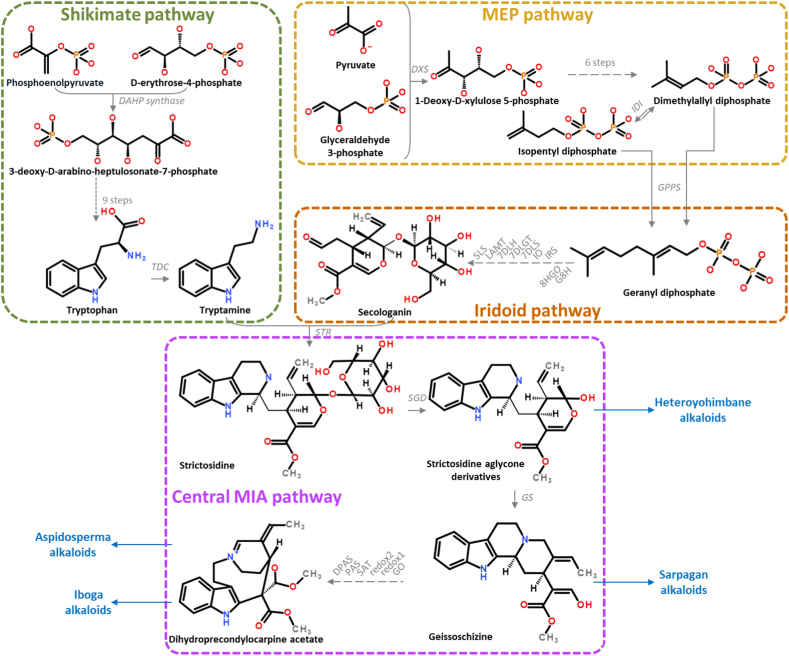
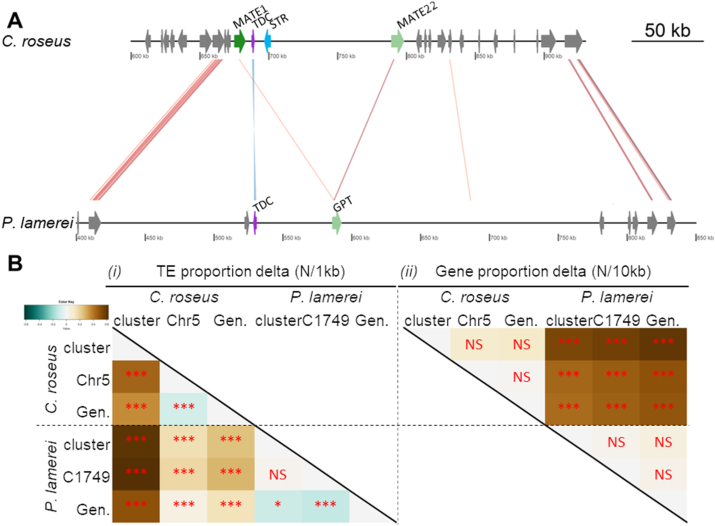
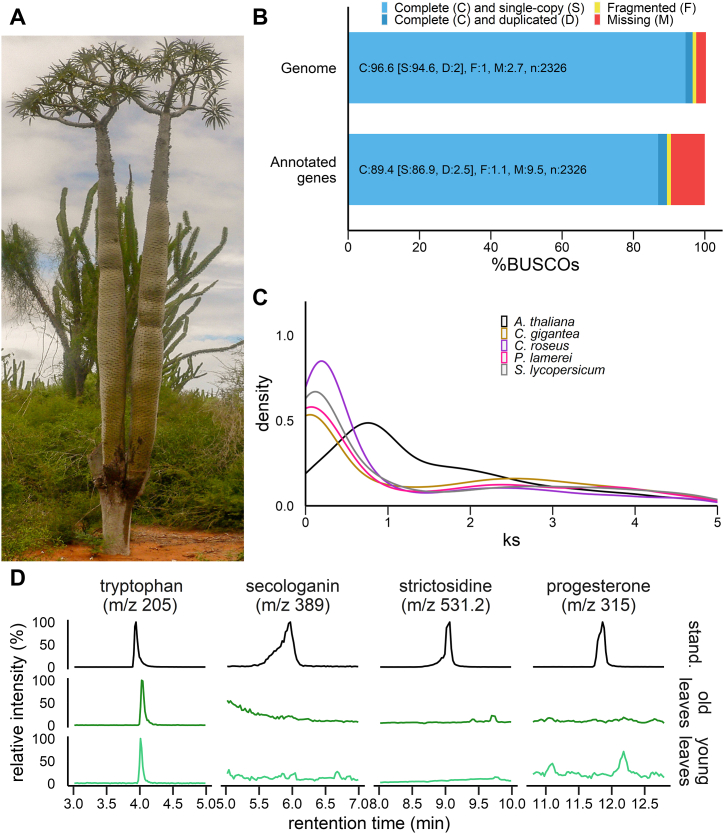
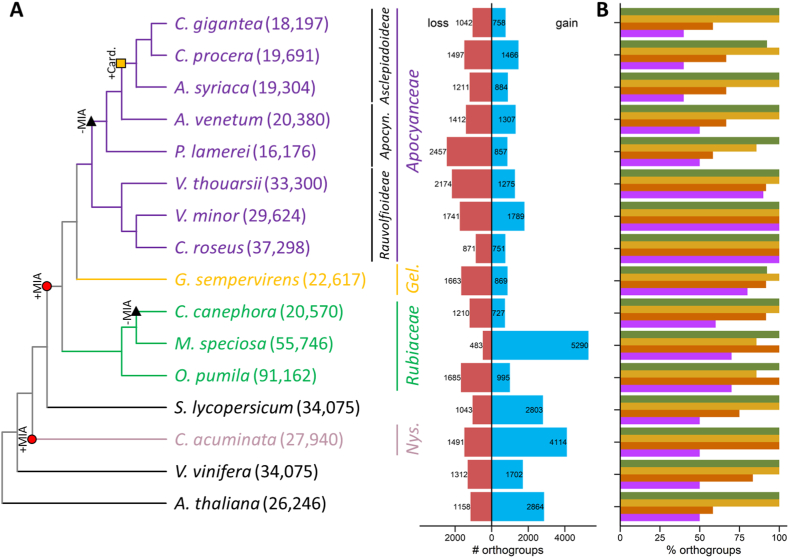
Specialized metabolites possess diverse interesting biological activities and some cardenolides- and monoterpene indole alkaloids- (MIAs) derived pharmaceuticals are currently used to treat human diseases such as cancers or hypertension. While these two families of biocompounds are produced by specific subfamilies of , one member of this medicinal plant family, the succulent tree Drake (also known as Madagascar palm), does not produce such specialized metabolites. To explore the evolutionary paths that have led to the emergence and loss of cardenolide and MIA biosynthesis in , we sequenced and assembled the genome by combining Oxford Nanopore Technologies long-reads and Illumina short-reads. Phylogenomics revealed that, among the whose genomes have been sequenced, the Madagascar palm is so far the species closest to the common ancestor between MIA producers/non-MIA producers. Transposable elements, constituting 72.48% of the genome, emerge as potential key players in shaping genomic architecture and influencing specialized metabolic pathways. The absence of crucial MIA biosynthetic genes such as strictosidine synthase in and non- species hints at a transposon-mediated mechanism behind gene loss. Phylogenetic analysis not only showcases the evolutionary divergence of specialized metabolite biosynthesis within but also underscores the role of transposable elements in this intricate process. Moreover, we shed light on the low conservation of enzymes involved in the final stages of MIA biosynthesis in the distinct MIA-producing plant families, inferring independent gains of these specialized enzymes along the evolution of these medicinal plant clades. Overall, this study marks a leap forward in understanding the genomic dynamics underpinning the evolution of specialized metabolites biosynthesis in the family, with transposons emerging as potential architects of genomics restructuring and gene loss.
特殊代谢产物具有多种有趣的生物活性,目前一些源自强心苷和单萜吲哚生物碱(MIAs)的药物被用于治疗人类疾病,如癌症或高血压。虽然这两类生物化合物是由该药用植物科的特定亚科产生的,但该药用植物科的一个成员,肉质树Drake(也被称为马达加斯加棕榈),并不产生此类特殊代谢产物。为了探索导致强心苷和MIA生物合成出现和丧失的进化路径,我们通过结合牛津纳米孔技术长读长和Illumina短读长对该植物的基因组进行了测序和组装。系统发育基因组学研究表明,在已测序基因组的该植物中,马达加斯加棕榈是迄今为止最接近MIA生产者/非MIA生产者共同祖先的物种。转座元件占基因组的72.48%,是塑造基因组结构和影响特殊代谢途径的潜在关键因素。在该植物和非该植物物种中缺乏关键的MIA生物合成基因,如 strictosidine合酶,这暗示了基因丢失背后的转座子介导机制。系统发育分析不仅展示了该植物中特殊代谢产物生物合成的进化差异,也强调了转座元件在这一复杂过程中的作用。此外,我们还揭示了不同MIA产生植物科中参与MIA生物合成最后阶段的酶的低保守性,推断这些特殊酶在这些药用植物进化枝的进化过程中是独立获得的。总体而言,这项研究在理解支撑该植物科特殊代谢产物生物合成进化的基因组动态方面取得了飞跃,转座子成为基因组重组和基因丢失的潜在构建者。