Zhou Hongfa, Chen Jinyuan, Zhang Xuan, Chen JingJing, Chen Jiayou, Jia Shicheng, Wang Deli, Zeng Hui, Weng Jian, Yu Fei
Department of Bone & Joint Surgery, Peking University Shenzhen Hospital, Shenzhen 518036, China.
National & Local Joint Engineering Research Center of Orthopaedic Biomaterials, Shenzhen 518036, China.
Nanomaterials (Basel). 2024 Mar 21;14(6):553. doi: 10.3390/nano14060553.
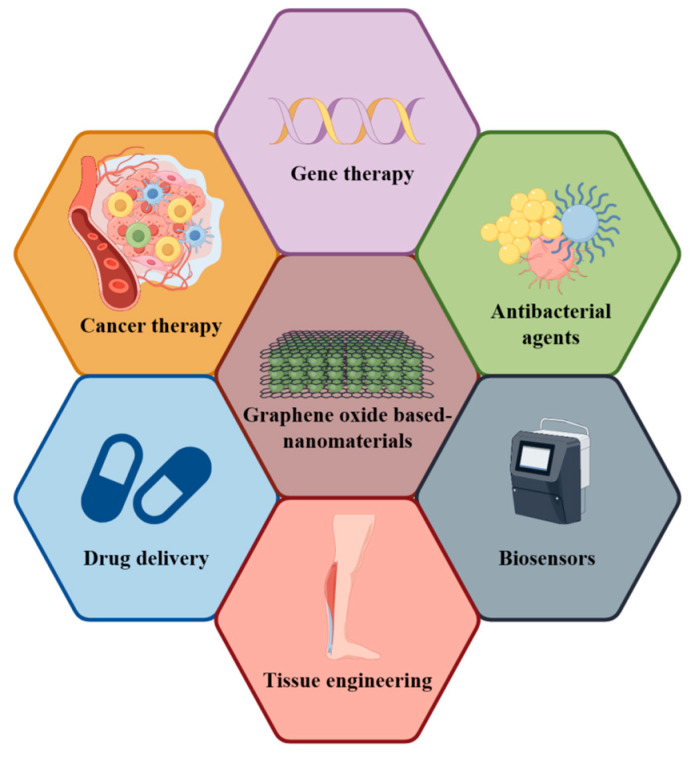
Osteoporotic fractures are induced by osteoporosis, which may lead to the degradation of bone tissues and microstructures and impair their healing ability. Conventional internal fixation therapies are ineffective in the treatment of osteoporotic fractures. Hence, developing tissue engineering materials is crucial for repairing osteoporotic fractures. It has been demonstrated that nanomaterials, particularly graphene oxide (GO), possess unique advantages in tissue engineering due to their excellent biocompatibility, mechanical properties, and osteoinductive abilities. Based on that, GO-nanocomposites have garnered significant attention and hold promising prospects for bone repair applications. This paper provides a comprehensive insight into the properties of GO, preparation methods for nanocomposites, advantages of these materials, and relevant mechanisms for osteoporotic fracture applications.
骨质疏松性骨折是由骨质疏松症引起的,骨质疏松症可能导致骨组织和微结构的退化,并损害其愈合能力。传统的内固定疗法在治疗骨质疏松性骨折方面效果不佳。因此,开发组织工程材料对于修复骨质疏松性骨折至关重要。已经证明,纳米材料,特别是氧化石墨烯(GO),由于其优异的生物相容性、机械性能和骨诱导能力,在组织工程中具有独特的优势。基于此,氧化石墨烯纳米复合材料已引起广泛关注,并在骨修复应用中具有广阔的前景。本文全面深入地探讨了氧化石墨烯的性质、纳米复合材料的制备方法、这些材料的优势以及在骨质疏松性骨折应用中的相关机制。