State Key Laboratory for Managing Biotic and Chemical Threats to the Quality and Safety of Agro-products, Key Laboratory of Biotechnology in Plant Protection of Ministry of Agriculture and Zhejiang Province, Institute of Plant Virology, Ningbo University, Ningbo 315211, China.
School of Basic Medical Sciences, Health Science Center, Ningbo University, Ningbo 315211, China.
Proc Natl Acad Sci U S A. 2024 Apr 2;121(14):e2315982121. doi: 10.1073/pnas.2315982121. Epub 2024 Mar 27.
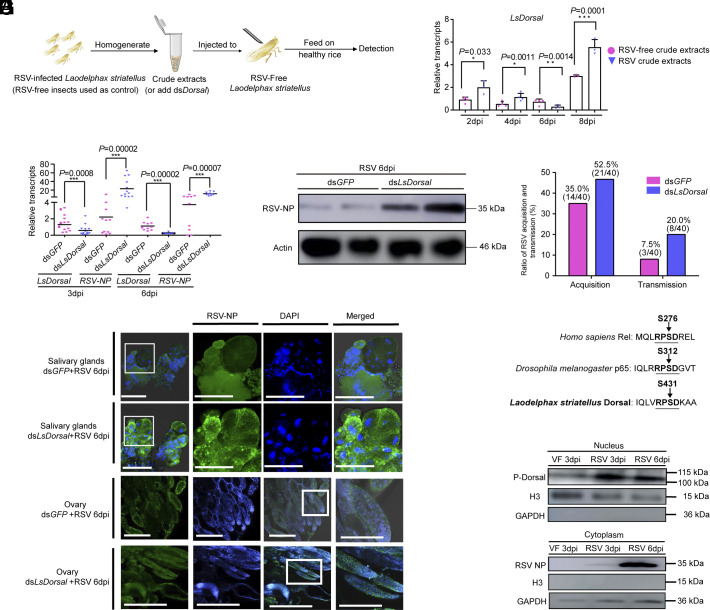
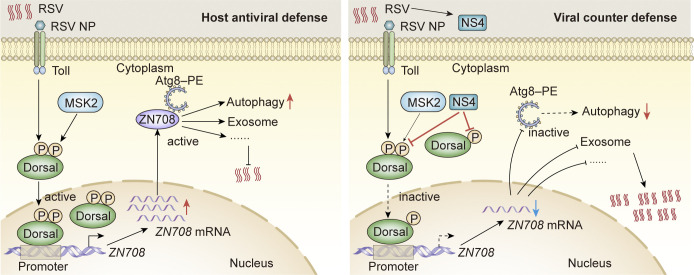
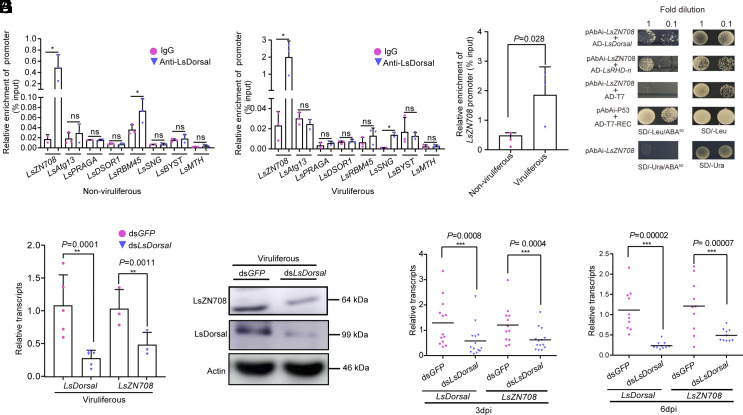
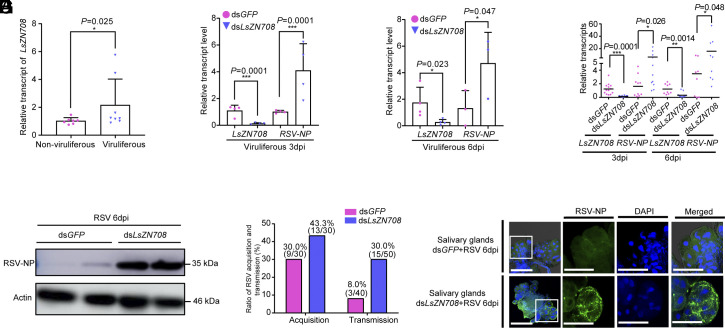
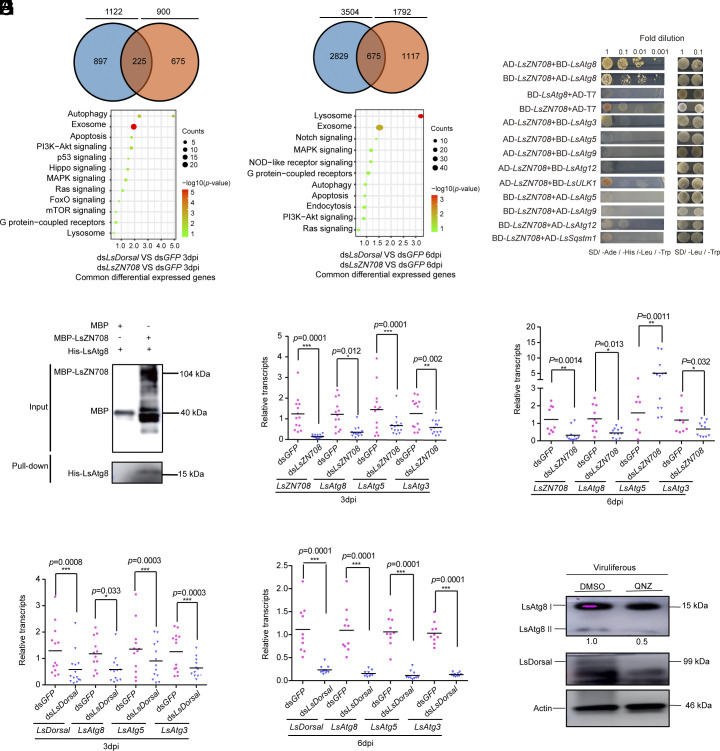
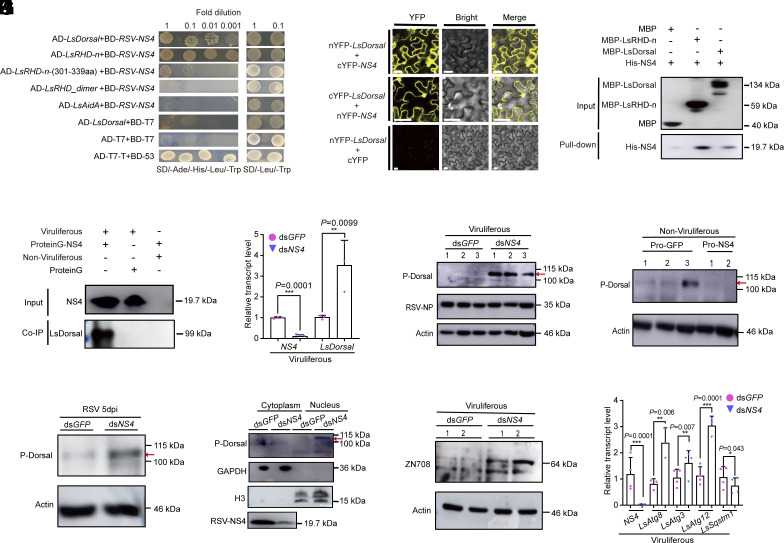
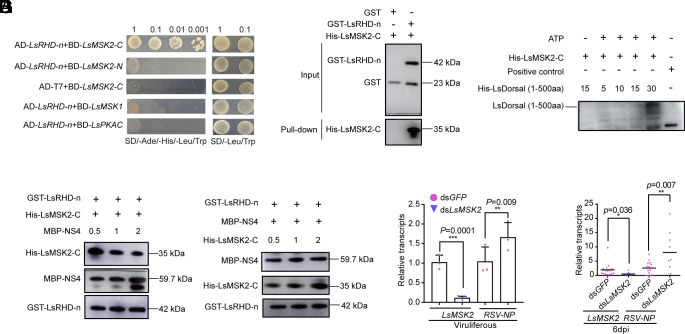
Throughout evolution, arboviruses have developed various strategies to counteract the host's innate immune defenses to maintain persistent transmission. Recent studies have shown that, in addition to bacteria and fungi, the innate Toll-Dorsal immune system also plays an essential role in preventing viral infections in invertebrates. However, whether the classical Toll immune pathway is involved in maintaining the homeostatic process to ensure the persistent and propagative transmission of arboviruses in insect vectors remain unclear. In this study, we revealed that the transcription factor Dorsal is actively involved in the antiviral defense of an insect vector () by regulating the target gene, (), which mediates downstream immune-related effectors against infection with the plant virus (Rice stripe virus, RSV). In contrast, an antidefense strategy involving the use of the nonstructural-protein (NS4) to antagonize host antiviral defense through competitive binding to Dorsal from the MSK2 kinase was employed by RSV; this competitive binding inhibited Dorsal phosphorylation and reduced the antiviral response of the host insect. Our study revealed the molecular mechanism through which Toll-Dorsal-ZN708 mediates the maintenance of an arbovirus homeostasis in insect vectors. Specifically, ZN708 is a newly documented zinc finger protein targeted by Dorsal that mediates the downstream antiviral response. This study will contribute to our understanding of the successful transmission and spread of arboviruses in plant or invertebrate hosts.
在进化过程中,虫媒病毒已经发展出各种策略来对抗宿主的先天免疫防御,以维持持续的传播。最近的研究表明,除了细菌和真菌外,先天 Toll-Dorsal 免疫系统在防止无脊椎动物的病毒感染方面也起着至关重要的作用。然而,经典的 Toll 免疫途径是否参与维持体内平衡过程,以确保虫媒病毒在昆虫媒介中的持续和传播性传播仍不清楚。在这项研究中,我们揭示了转录因子 Dorsal 通过调节靶基因 () 积极参与昆虫载体的抗病毒防御,() 介导针对感染植物病毒(水稻条纹病毒,RSV)的下游免疫相关效应物。相比之下,RSV 采用了一种反防御策略,涉及使用非结构蛋白 (NS4) 通过与 MSK2 激酶竞争结合 Dorsal 来拮抗宿主抗病毒防御;这种竞争性结合抑制 Dorsal 的磷酸化并降低宿主昆虫的抗病毒反应。我们的研究揭示了 Toll-Dorsal-ZN708 介导昆虫载体中虫媒病毒体内平衡维持的分子机制。具体来说,ZN708 是 Dorsal 靶向的新鉴定的锌指蛋白,介导下游抗病毒反应。这项研究将有助于我们理解虫媒病毒在植物或无脊椎动物宿主中的成功传播和扩散。