Laboratory of Anoxygenic Phototrophs, Institute of Microbiology of the Czech Academy of Sciences, Třeboň, Czechia.
Department of Ecosystem Biology, Faculty of Science, University of South Bohemia, České Budějovice, Czechia.
Microbiome. 2024 Mar 27;12(1):65. doi: 10.1186/s40168-024-01786-0.
Aerobic anoxygenic phototrophic (AAP) bacteria are heterotrophic bacteria that supply their metabolism with light energy harvested by bacteriochlorophyll-a-containing reaction centers. Despite their substantial contribution to bacterial biomass, microbial food webs, and carbon cycle, their phenology in freshwater lakes remains unknown. Hence, we investigated seasonal variations of AAP abundance and community composition biweekly across 3 years in a temperate, meso-oligotrophic freshwater lake.
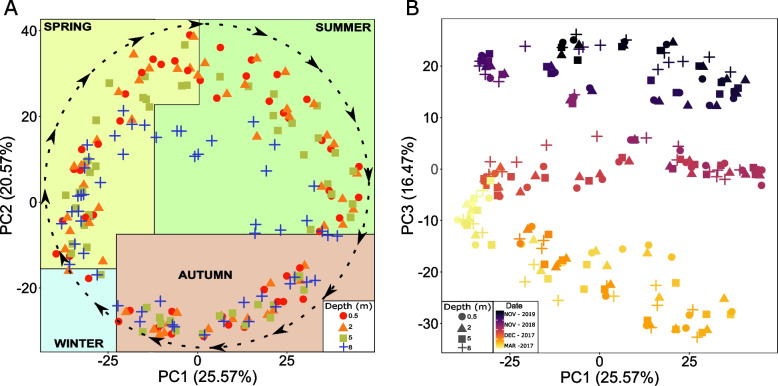
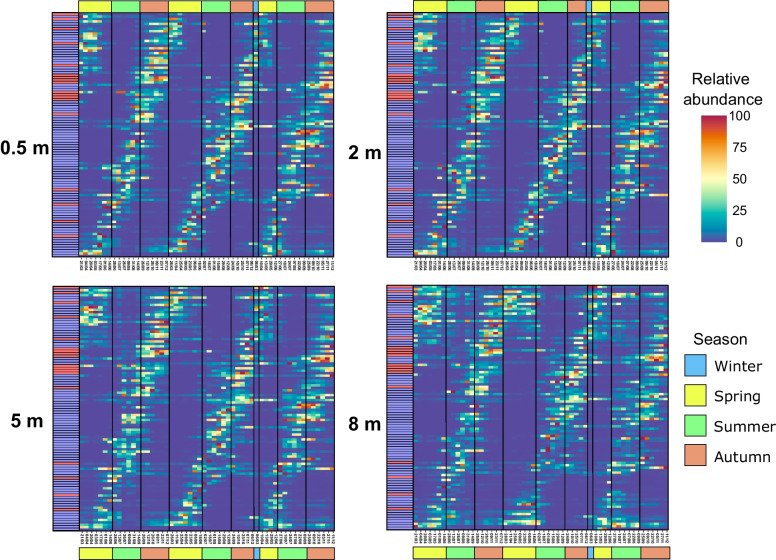
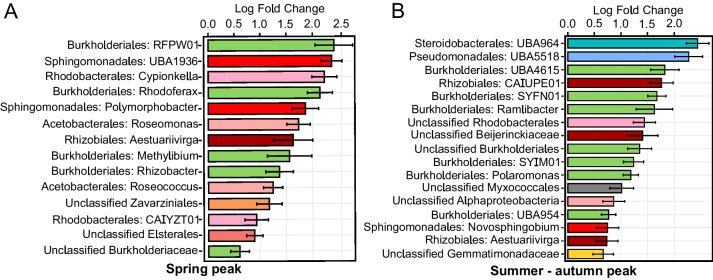
AAP bacteria displayed a clear seasonal trend with a spring maximum following the bloom of phytoplankton and a secondary maximum in autumn. As the AAP bacteria represent a highly diverse assemblage of species, we followed their seasonal succession using the amplicon sequencing of the pufM marker gene. To enhance the accuracy of the taxonomic assignment, we developed new pufM primers that generate longer amplicons and compiled the currently largest database of pufM genes, comprising 3633 reference sequences spanning all phyla known to contain AAP species. With this novel resource, we demonstrated that the majority of the species appeared during specific phases of the seasonal cycle, with less than 2% of AAP species detected during the whole year. AAP community presented an indigenous freshwater nature characterized by high resilience and heterogenic adaptations to varying conditions of the freshwater environment.
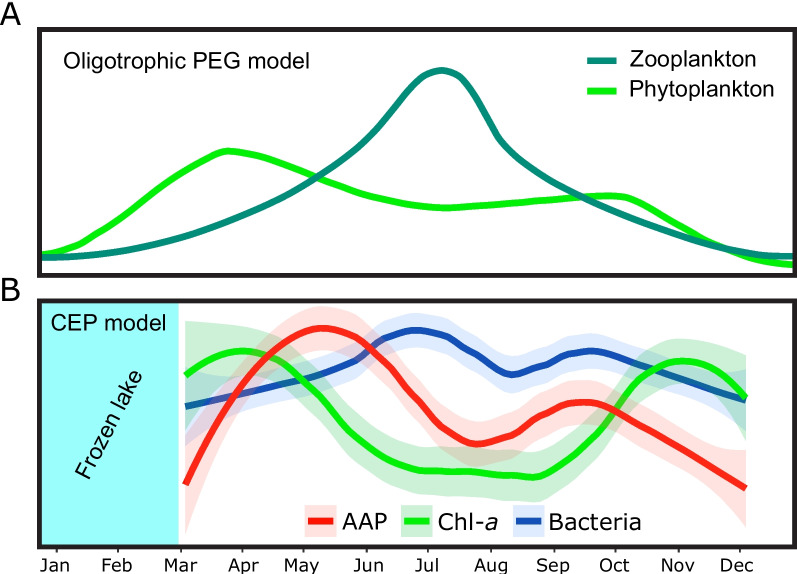
Our findings highlight the substantial contribution of AAP bacteria to the carbon flow and ecological dynamics of lakes and unveil a recurrent and dynamic seasonal succession of the AAP community. By integrating this information with the indicator of primary production (Chlorophyll-a) and existing ecological models, we show that AAP bacteria play a pivotal role in the recycling of dissolved organic matter released during spring phytoplankton bloom. We suggest a potential role of AAP bacteria within the context of the PEG model and their consideration in further ecological models.
好氧厌氧光养(AAP)细菌是异养细菌,它们通过含有细菌叶绿素-a 的反应中心收集的光能来供给新陈代谢。尽管它们对细菌生物量、微生物食物网和碳循环有很大的贡献,但它们在淡水湖泊中的物候学仍然未知。因此,我们在 3 年内每隔两周调查了一个温带、中营养淡水湖中 AAP 丰度和群落组成的季节性变化。
AAP 细菌表现出明显的季节性趋势,春末夏初浮游植物大量繁殖后达到最大值,秋季出现第二个最大值。由于 AAP 细菌是一个高度多样化的物种集合,我们使用 pufM 标记基因的扩增子测序来跟踪它们的季节性演替。为了提高分类学分配的准确性,我们开发了新的 pufM 引物,这些引物生成更长的扩增子,并编译了目前最大的 pufM 基因数据库,其中包含 3633 个参考序列,涵盖了已知含有 AAP 物种的所有门。利用这个新资源,我们证明了大多数物种出现在季节性周期的特定阶段,而在全年中检测到的 AAP 物种不到 2%。AAP 群落呈现出本土淡水性质,具有对淡水环境变化条件的高度恢复力和异质适应性。
我们的研究结果突出了 AAP 细菌对湖泊碳流动和生态动态的巨大贡献,并揭示了 AAP 群落反复出现的动态季节性演替。通过将这些信息与初级生产力(叶绿素-a)的指示物和现有的生态模型相结合,我们表明 AAP 细菌在春季浮游植物大量繁殖期间释放的溶解有机物质的再循环中发挥了关键作用。我们建议在 PEG 模型的背景下考虑 AAP 细菌的潜在作用,并在进一步的生态模型中考虑它们。