Ahmad Monica, Sechi Cristina, Vismara Laura
Department of Pedagogy, Psychology, Philosophy, University of Cagliari, 09123 Cagliari, Italy.
Behav Sci (Basel). 2024 Feb 20;14(3):147. doi: 10.3390/bs14030147.
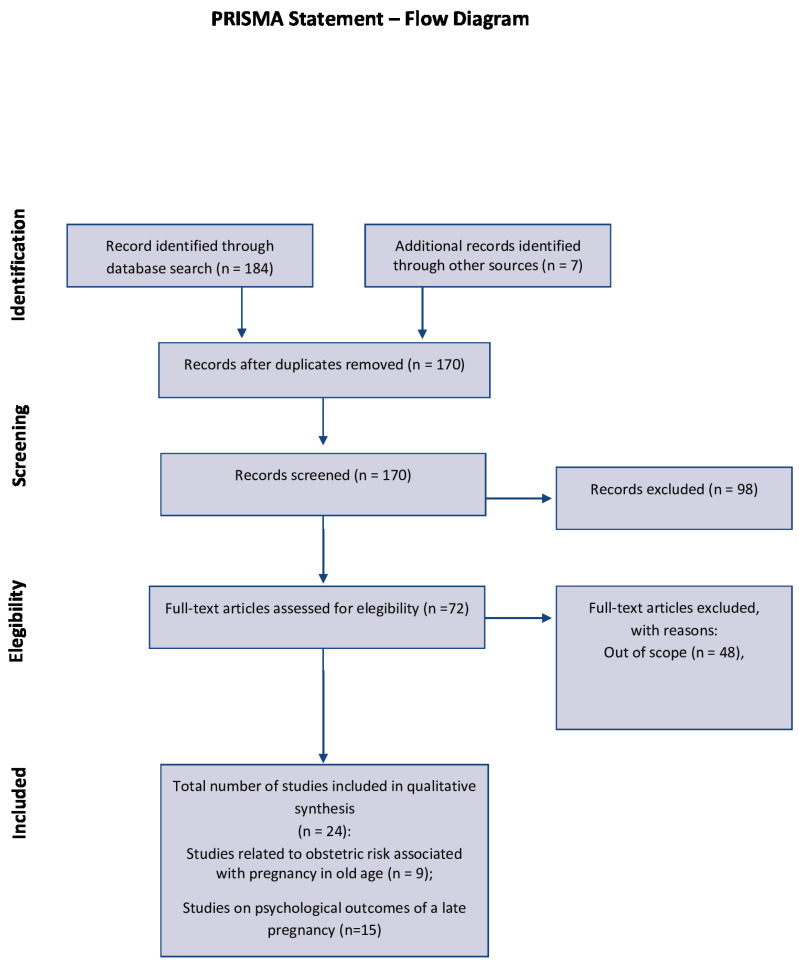
The mean age at childbirth in Europe has gradually increased, and it is now around 29 years of age. It has been shown that older maternal age is associated with problems of fertility; in fact, with increasing age, the chance of conceiving diminishes, and fetal and obstetric complications grow. Research has focused particularly on the biological risks associated with late pregnancy, both for the child and the woman. Less space has been dedicated to the potential psychological and relational benefits of motherhood at an advanced age. The aim of this review was to summarize the existing literature on this issue. Qualitative and quantitative studies were sourced from Pubmed, Science Direct, PsycINFO, and SciELO. The selected works highlight that advanced maternal age can be associated with some advantages for both mothers and their offspring in terms of physical healthcare, parenting styles, and child developmental outcomes. Specifically, the review suggests that older mothers have greater emotional maturity and feel more prepared for motherhood; also, advanced maternal age appears to exert a protective influence on children's behavioral, social, and emotional functioning, compensating for the biological risks.
欧洲的平均生育年龄逐渐上升,目前约为29岁。研究表明,产妇年龄较大与生育问题有关;事实上,随着年龄的增长,受孕几率降低,胎儿和产科并发症增多。研究特别关注了晚育对孩子和女性的生物学风险。而高龄生育在心理和人际关系方面的潜在益处却较少受到关注。这篇综述的目的是总结关于这个问题的现有文献。定性和定量研究来自于PubMed、Science Direct、PsycINFO和SciELO。所选研究表明,高龄产妇在身体保健、育儿方式和儿童发育结果方面,对母亲及其后代可能具有一些优势。具体而言,该综述表明,年龄较大的母亲情感更为成熟,对为人母更有准备;此外,高龄似乎对孩子的行为、社交和情感功能有保护作用,弥补了生物学风险。