Division of Vaccine Research, Institute of Human Virology, University of Maryland School of Medicine, 725 West Lombard Street, Baltimore, MD 21201, USA.
Division of Clinical Research, Institute of Human Virology, University of Maryland School of Medicine, 725 West Lombard Street, Baltimore, MD 21201, USA.
Viruses. 2024 Mar 6;16(3):407. doi: 10.3390/v16030407.
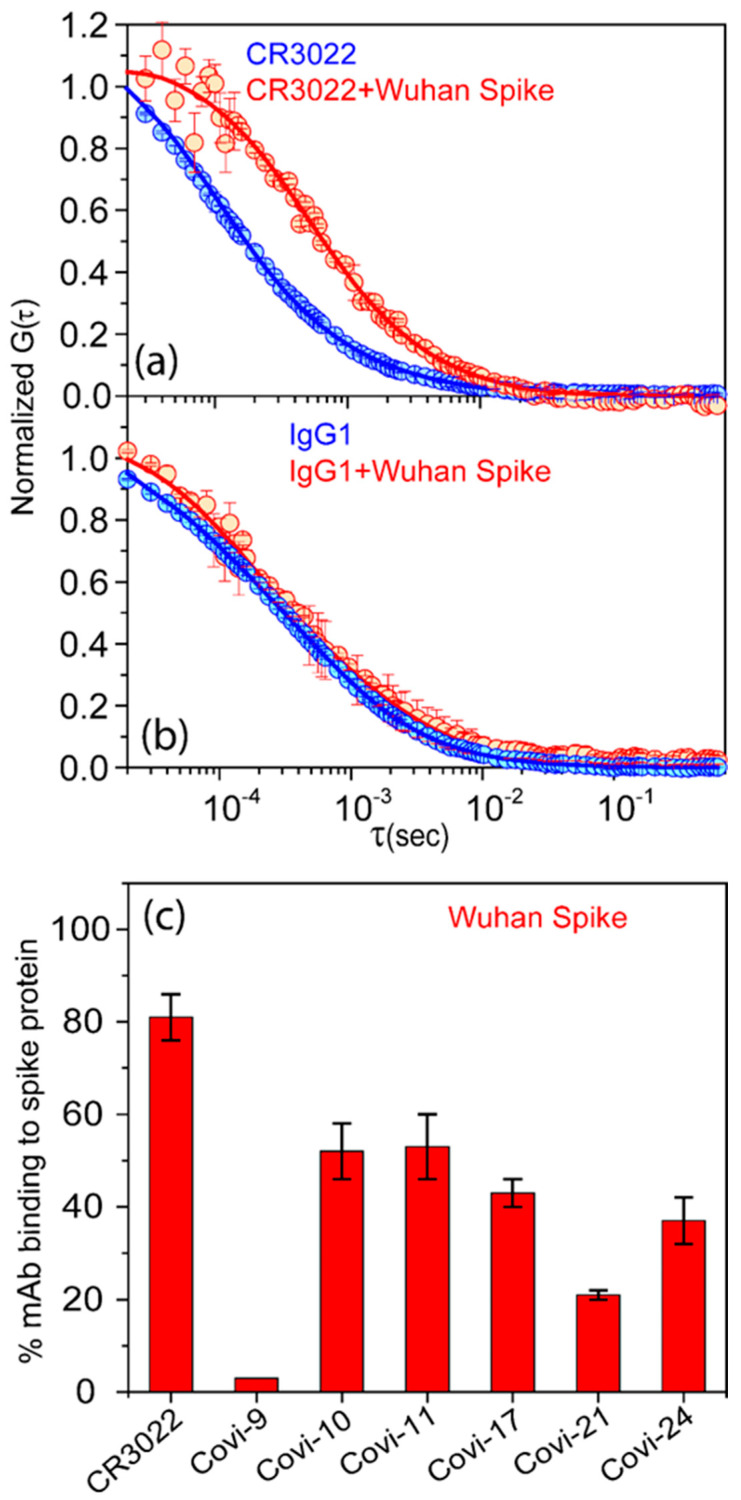
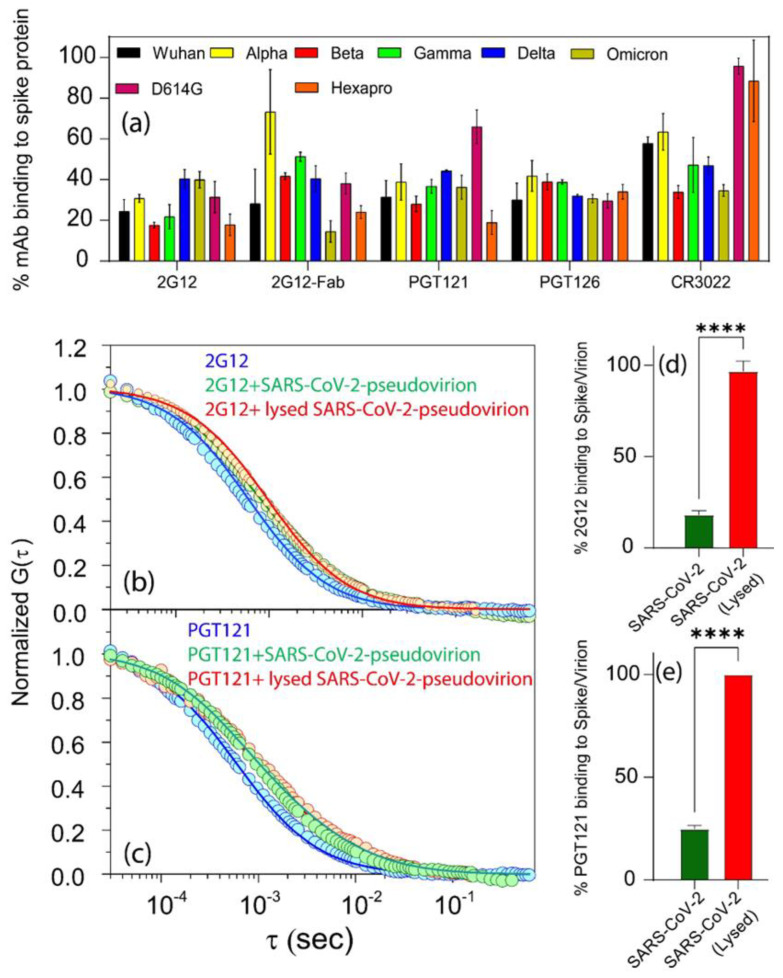
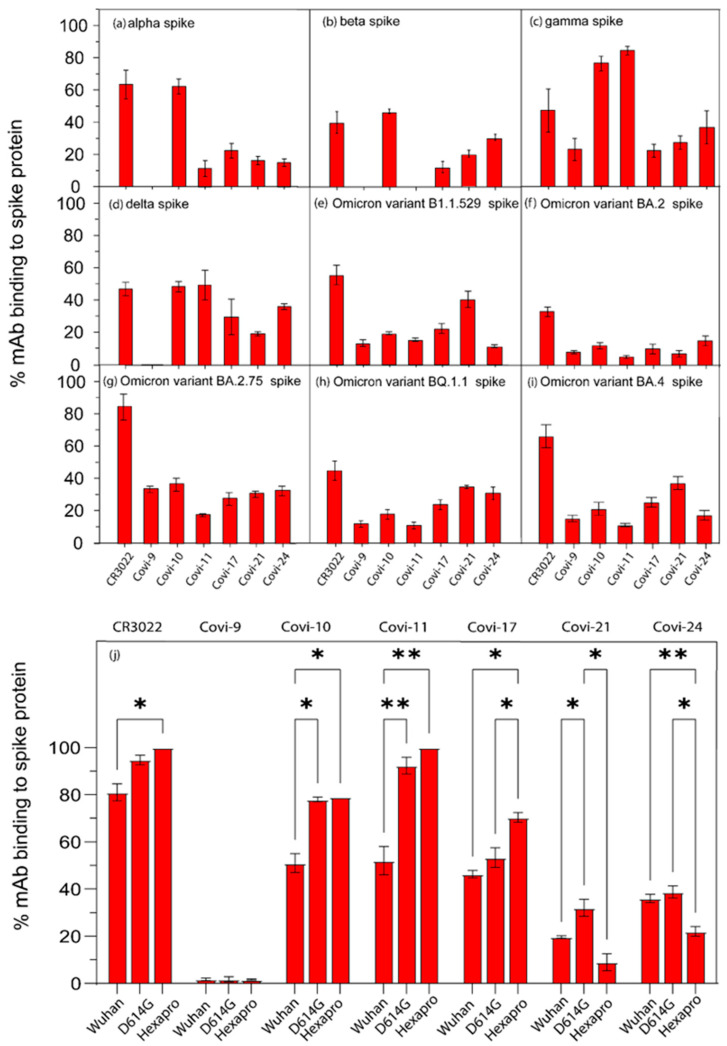
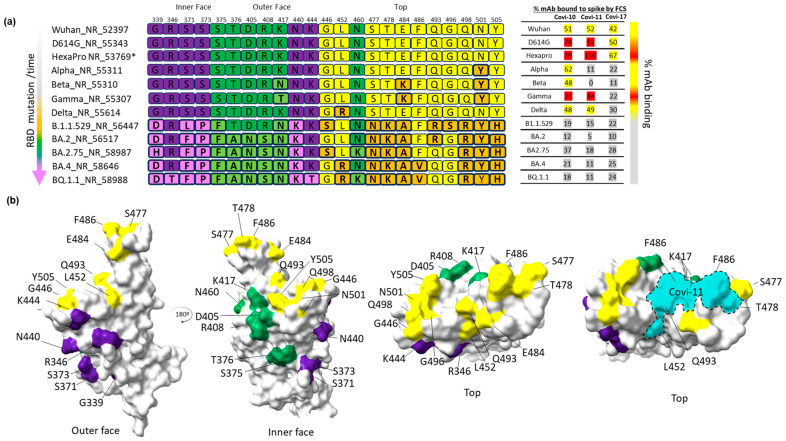
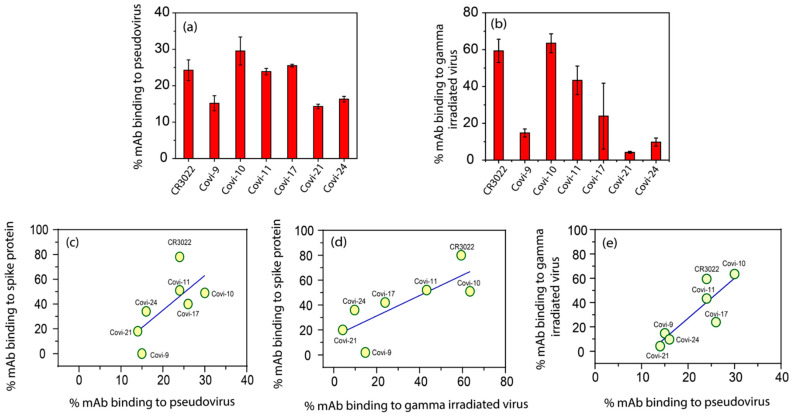
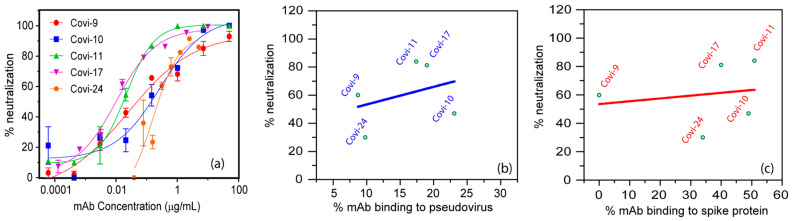
Efforts to develop vaccine and immunotherapeutic countermeasures against the COVID-19 pandemic focus on targeting the trimeric spike (S) proteins of SARS-CoV-2. Vaccines and therapeutic design strategies must impart the characteristics of virion S from historical and emerging variants onto practical constructs such as soluble, stabilized trimers. The virus spike is a heterotrimer of two subunits: S1, which includes the receptor binding domain (RBD) that binds the cell surface receptor ACE2, and S2, which mediates membrane fusion. Previous studies suggest that the antigenic, structural, and functional characteristics of virion S may differ from current soluble surrogates. For example, it was reported that certain anti-glycan, HIV-1 neutralizing monoclonal antibodies bind soluble SARS-CoV-2 S but do not neutralize SARS-CoV-2 virions. In this study, we used single-molecule fluorescence correlation spectroscopy (FCS) under physiologically relevant conditions to examine the reactivity of broadly neutralizing and non-neutralizing anti-S human monoclonal antibodies (mAbs) isolated in 2020. Binding efficiency was assessed by FCS with soluble S trimers, pseudoviruses and inactivated wild-type virions representing variants emerging from 2020 to date. Anti-glycan mAbs were tested and compared. We find that both anti-S specific and anti-glycan mAbs exhibit variable but efficient binding to a range of stabilized, soluble trimers. Across mAbs, the efficiencies of soluble S binding were positively correlated with reactivity against inactivated virions but not pseudoviruses. Binding efficiencies with pseudoviruses were generally lower than with soluble S or inactivated virions. Among neutralizing mAbs, potency did not correlate with binding efficiencies on any target. No neutralizing activity was detected with anti-glycan antibodies. Notably, the virion S released from membranes by detergent treatment gained more efficient reactivity with anti-glycan, HIV-neutralizing antibodies but lost reactivity with all anti-S mAbs. Collectively, the FCS binding data suggest that virion surfaces present appreciable amounts of both functional and nonfunctional trimers, with neutralizing anti-S favoring the former structures and non-neutralizing anti-glycan mAbs binding the latter. S released from solubilized virions represents a nonfunctional structure bound by anti-glycan mAbs, while engineered soluble trimers present a composite structure that is broadly reactive with both mAb types. The detection of disparate antigenicity and immunoreactivity profiles in engineered and virion-associated S highlight the value of single-virus analyses in designing future antiviral strategies against SARS-CoV-2.
针对 COVID-19 大流行,人们致力于开发疫苗和免疫治疗对策,这些对策主要针对 SARS-CoV-2 的三聚体刺突(S)蛋白。疫苗和治疗设计策略必须将历史和新兴变异株的病毒 S 特征赋予实际构建体,如可溶性、稳定的三聚体。病毒刺突是由两个亚基组成的异三聚体:S1 包含与细胞表面受体 ACE2 结合的受体结合域(RBD),S2 介导膜融合。先前的研究表明,病毒 S 的抗原性、结构和功能特征可能与当前的可溶性替代物不同。例如,据报道,某些抗聚糖、HIV-1 中和单克隆抗体与可溶性 SARS-CoV-2 S 结合,但不能中和 SARS-CoV-2 病毒。在这项研究中,我们使用单分子荧光相关光谱(FCS)在生理相关条件下检查了 2020 年分离的广泛中和和非中和抗 S 人单克隆抗体(mAb)的反应性。通过 FCS 用可溶性 S 三聚体、假病毒和代表 2020 年至今出现的变异体的灭活野生型病毒评估结合效率。测试并比较了抗聚糖 mAb。我们发现,抗 S 特异性和抗聚糖 mAb 都表现出不同但有效的结合范围广泛的稳定可溶性三聚体。在 mAb 之间,可溶性 S 结合的效率与针对灭活病毒的反应性呈正相关,但与假病毒无关。与可溶性 S 或灭活病毒相比,假病毒的结合效率通常较低。在中和 mAb 中,效力与任何靶标上的结合效率均无关。用抗聚糖抗体未检测到中和活性。值得注意的是,用去污剂处理从膜中释放的病毒 S 与抗聚糖、HIV 中和抗体的反应性增强,但与所有抗 S mAb 的反应性丧失。总体而言,FCS 结合数据表明,病毒表面存在相当数量的功能性和非功能性三聚体,中和性抗 S 有利于前者的结构,而非中和性抗聚糖 mAb 结合后者。从可溶性病毒中释放的 S 代表一种与抗聚糖 mAb 结合的非功能性结构,而工程化的可溶性三聚体呈现出一种与两种 mAb 类型均具有广泛反应性的复合结构。在工程化和病毒相关 S 中检测到不同的抗原性和免疫反应性谱突出了在设计针对 SARS-CoV-2 的未来抗病毒策略时对单个病毒进行分析的价值。