Jia Yanhuai, Wang Zheng
School of Business, Macau University of Science and Technology, Macau, 999078, China.
Department of Business Administration, Shanghai University of Finance and Economics Zhejiang College, Jinhua, 312000, China.
Heliyon. 2024 Mar 18;10(6):e28116. doi: 10.1016/j.heliyon.2024.e28116. eCollection 2024 Mar 30.
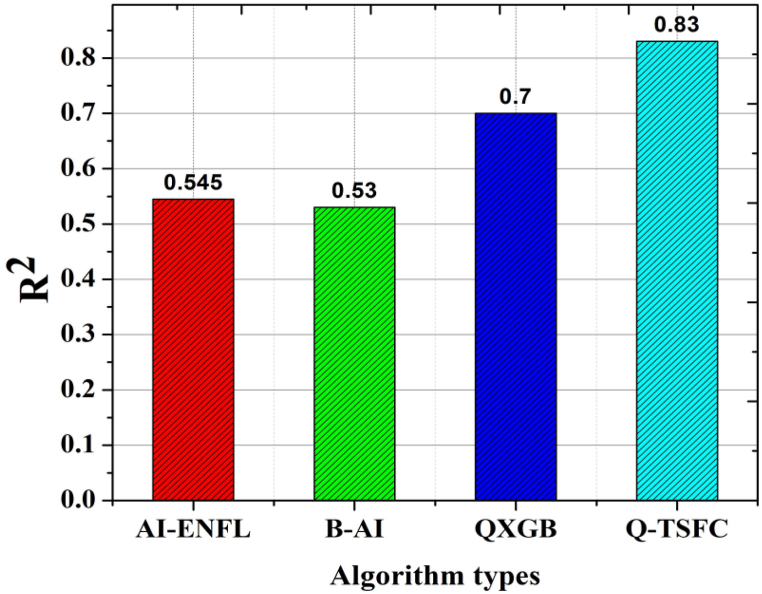
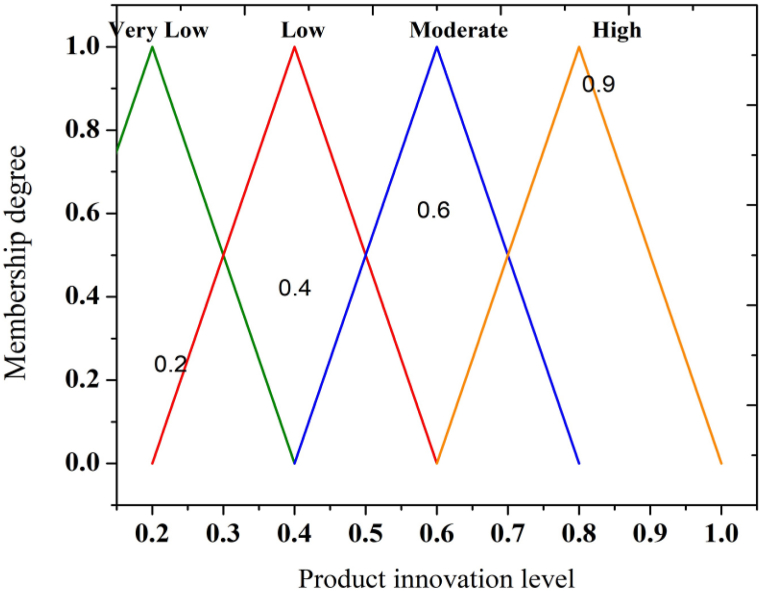
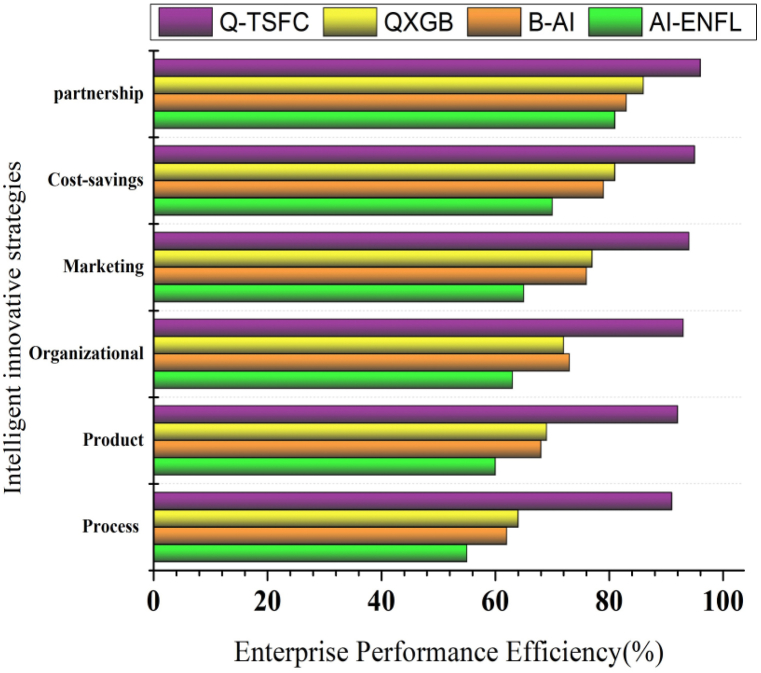
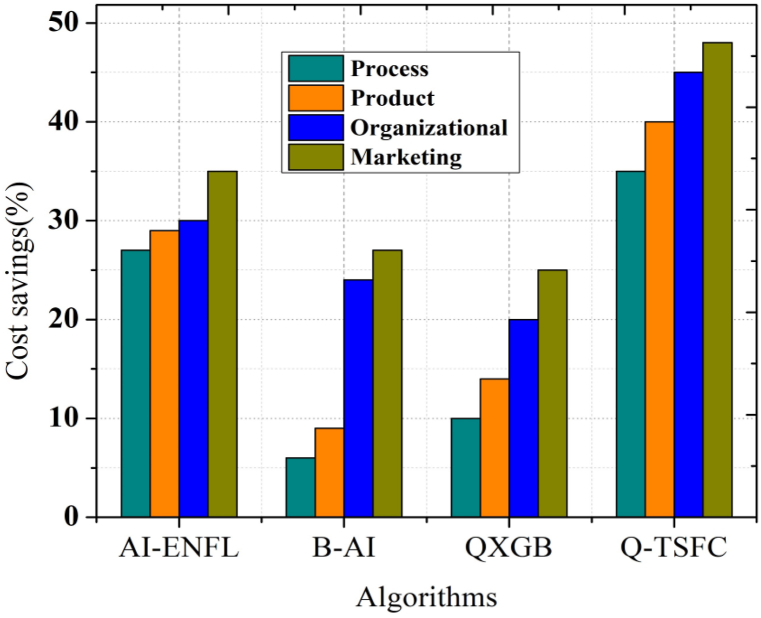
Artificial Intelligence (AI) has gained immense popularity in recent years as many enterprises have realized their potential to change the way of conducting business innovatively. The new concepts, items, or procedures are developed and implemented within a business or organization to enhance productivity, effectiveness, and competitiveness, and this is called Enterprise Innovation (EI). AI techniques are required to make decisions more effectively in challenging and dynamic situations, like EI, as result of competitive marketplace. Hence, an intelligent, innovative strategy with Q-learning and Takagi Sugeno Fuzzy Control (Q-TSFC) algorithm has been proposed as it combines adaptive learning and Fuzzy Logic (FL) that humans understand to improve decision-making in enterprise innovation. Q-learning seeks to maximize the enterprise's profit by utilizing the newly acquired knowledge, exploring activities, and adaptive learning based on the optimal ε greedy policy that results with rewards and the experiences. To develop a framework for making decisions and connections between input from the learned Q values and output decisions using enterprise expertise and linguistic conventions. The objective is to handle language uncertainty and imprecision in market trend. So, it leads to right decisions even without accurate numerical facts. The proposed approach is validated by evaluating metrics like cost savings, customer satisfaction, and innovation performance efficiency in the competitive edge in the market. With this proposed Q-TSFC algorithm, the obtained results are 96.5% customer satisfaction ratio, 96% enterprise performance efficiency, cost savings of about 48% profitable value, and the coefficient of determination R is 0.83, respectively.
近年来,人工智能(AI)已获得极大的普及,因为许多企业已经意识到其具有以创新方式改变业务开展方式的潜力。在企业或组织内部开发并实施新概念、新事物或新流程,以提高生产力、效率和竞争力,这被称为企业创新(EI)。由于竞争激烈的市场环境,在诸如企业创新这样具有挑战性和动态性的情况下,需要人工智能技术来更有效地做出决策。因此,提出了一种采用Q学习和高木 - 关野模糊控制(Q - TSFC)算法的智能创新策略,因为它结合了人类易于理解的自适应学习和模糊逻辑(FL),以改善企业创新中的决策制定。Q学习旨在通过利用新获取的知识、探索活动以及基于产生奖励和经验的最优ε贪心策略进行自适应学习,来实现企业利润最大化。利用企业专业知识和语言惯例,开发一个用于决策以及建立所学Q值输入与输出决策之间联系的框架。目的是处理市场趋势中的语言不确定性和不精确性。这样,即使没有准确的数值事实,也能做出正确的决策。通过评估诸如成本节约、客户满意度和市场竞争优势中的创新绩效效率等指标,对所提出的方法进行了验证。使用所提出的Q - TSFC算法,得到的结果分别是客户满意度为96.5%、企业绩效效率为96%、成本节约约为48%的盈利值,以及决定系数R为0.83。