Pennsylvania State University, Departments of Biology and Entomology, University Park, Pennsylvania, United States of America.
Pennsylvania State University, One Health Microbiome Center, Huck Institutes of the Life Sciences, University Park, Pennsylvania, United States of America.
PLoS Biol. 2024 Mar 28;22(3):e3002573. doi: 10.1371/journal.pbio.3002573. eCollection 2024 Mar.
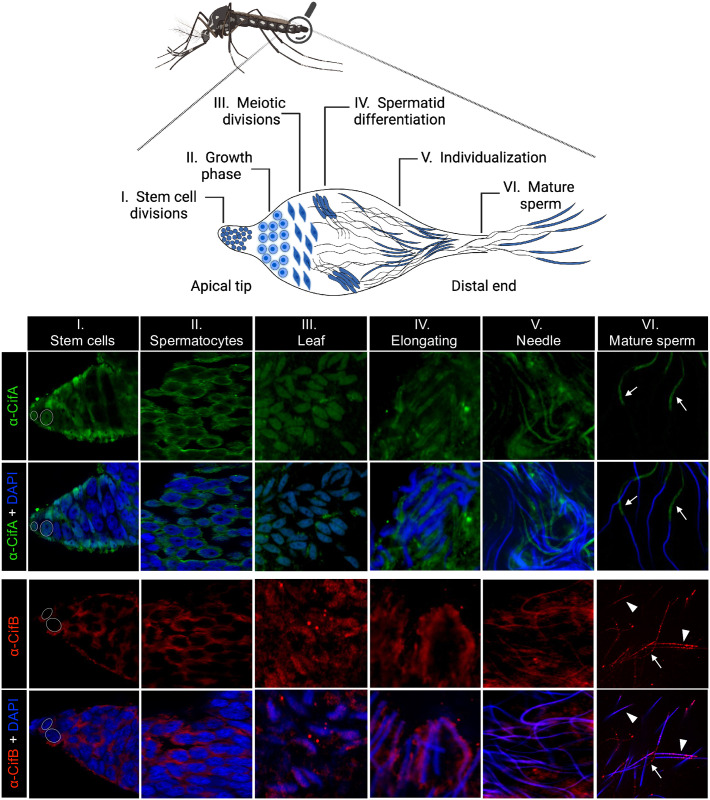
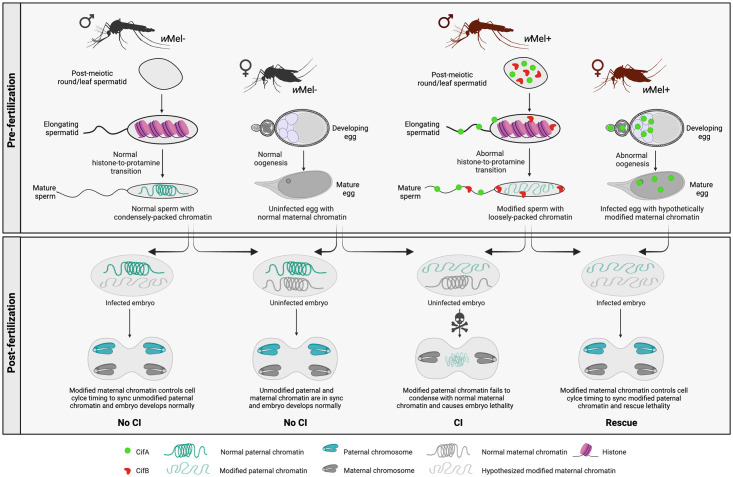
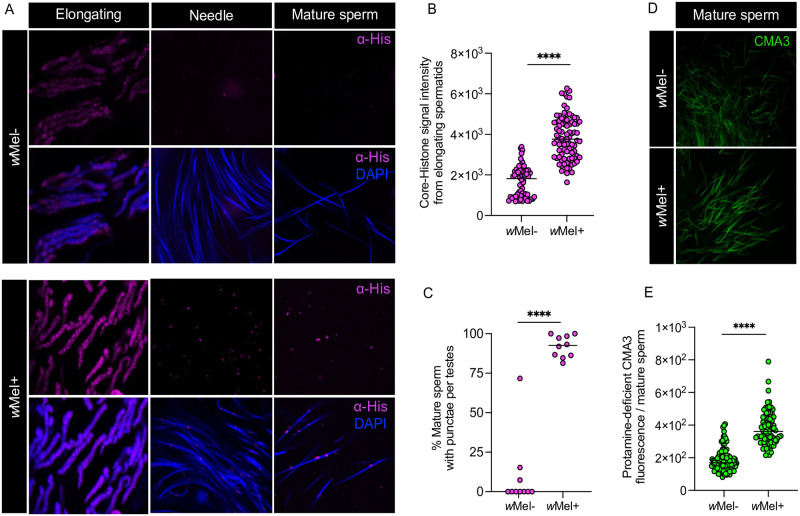
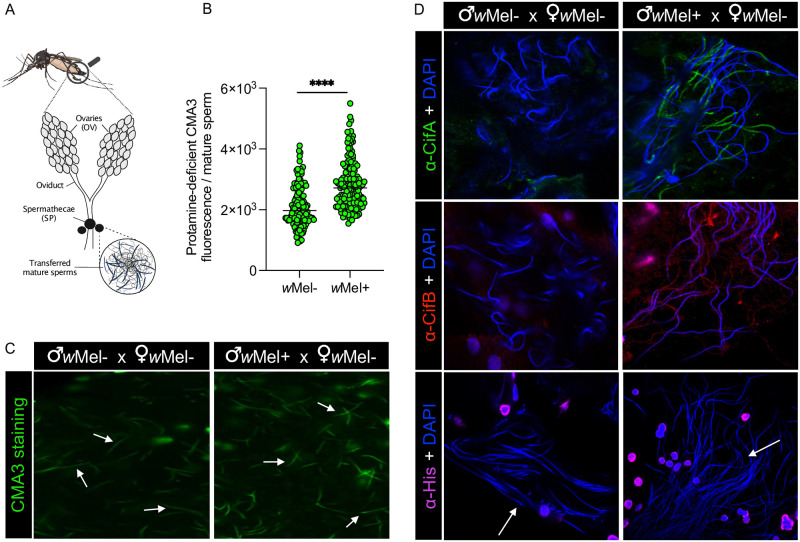
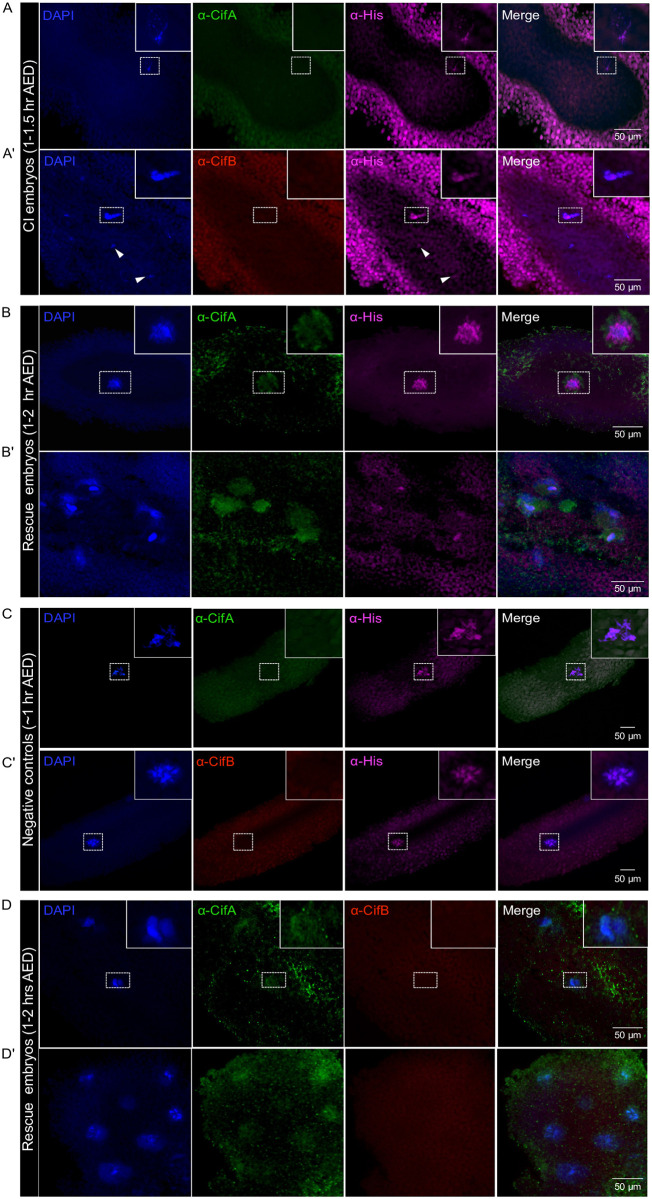
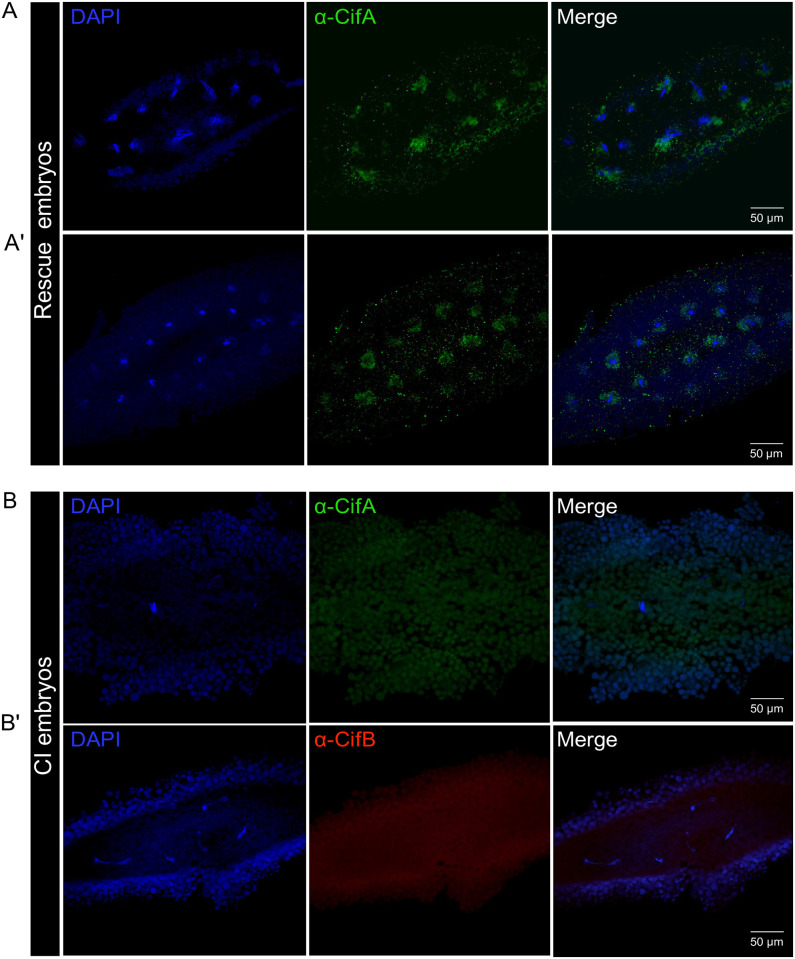
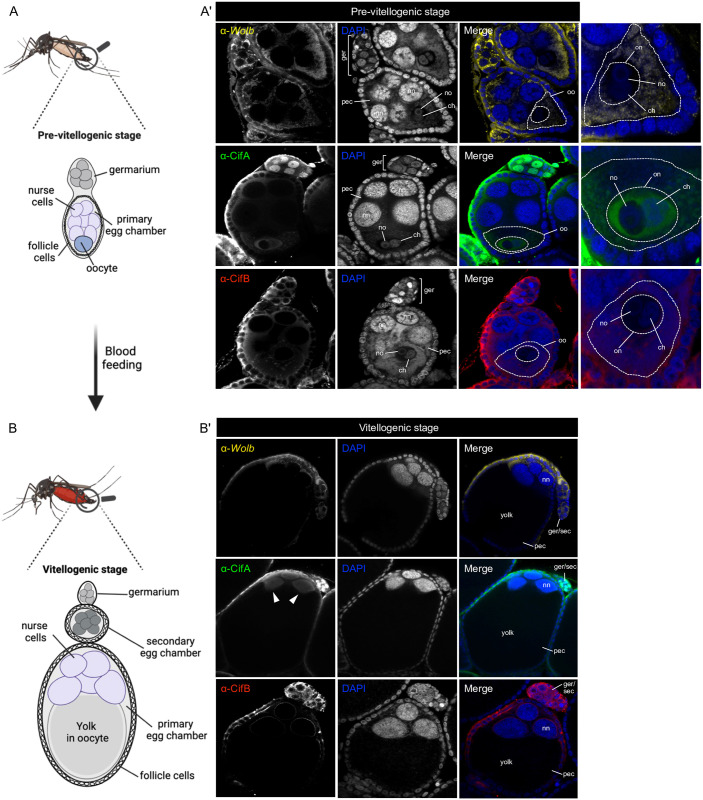
The rising interest and success in deploying inherited microorganisms and cytoplasmic incompatibility (CI) for vector control strategies necessitate an explanation of the CI mechanism. Wolbachia-induced CI manifests in the form of embryonic lethality when sperm from Wolbachia-bearing testes fertilize eggs from uninfected females. Embryos from infected females however survive to sustain the maternally inherited symbiont. Previously in Drosophila melanogaster flies, we demonstrated that CI modifies chromatin integrity in developing sperm to bestow the embryonic lethality. Here, we validate these findings using wMel-transinfected Aedes aegypti mosquitoes released to control vector-borne diseases. Once again, the prophage WO CI proteins, CifA and CifB, target male gametic nuclei to modify chromatin integrity via an aberrant histone-to-protamine transition. Cifs are not detected in the embryo, and thus elicit CI via the nucleoprotein modifications established pre-fertilization. The rescue protein CifA in oogenesis localizes to stem cell, nurse cell, and oocyte nuclei, as well as embryonic DNA during embryogenesis. Discovery of the nuclear targeting Cifs and altered histone-to-protamine transition in both Aedes aegypti mosquitoes and D. melanogaster flies affirm the Host Modification Model of CI is conserved across these host species. The study also newly uncovers the cell biology of Cif proteins in the ovaries, CifA localization in the embryos, and an impaired histone-to-protamine transition during spermiogenesis of any mosquito species. Overall, these sperm modification findings may enable future optimization of CI efficacy in vectors or pests that are refractory to Wolbachia transinfections.
为了控制病媒传播疾病而释放的经转染沃尔巴克氏体(Wolbachia)的埃及伊蚊中,细胞质不亲和性(CI)诱导胚胎致死的机制。胚胎致死现象发生在携带有沃尔巴克氏体的精巢中的精子使未感染的雌性卵子受精时。然而,来自感染了沃尔巴克氏体的雌性的胚胎存活下来,以维持母体遗传共生体。先前在黑腹果蝇中,我们证明了 CI 通过修饰发育中的精子中的染色质完整性来赋予胚胎致死性。在这里,我们使用经 wMel 转染的埃及伊蚊来验证这些发现,这些蚊子被释放以控制病媒传播疾病。再次,原噬菌体 WO CI 蛋白 CifA 和 CifB 通过异常的组蛋白到鱼精蛋白的转变来靶向雄性配子核,从而修饰染色质完整性。在胚胎中未检测到 Cifs,因此通过受精前建立的核蛋白修饰引发 CI。在卵子发生过程中,CifA 救援蛋白定位于干细胞、滋养细胞和卵母细胞核,以及胚胎 DNA。在埃及伊蚊和黑腹果蝇中发现的核靶向 Cifs 和改变的组蛋白到鱼精蛋白的转变,证实了 CI 的宿主修饰模型在这些宿主物种中是保守的。该研究还新发现了 Cif 蛋白在卵巢中的细胞生物学、CifA 在胚胎中的定位以及任何蚊子物种的精子发生过程中组蛋白到鱼精蛋白的转变受损。总的来说,这些精子修饰发现可能使未来能够优化对沃尔巴克氏体转染有抗性的病媒或害虫中的 CI 效果。