Department of Obstetrics, Division of Obstetrics and Gynecology, Oslo University Hospital, Oslo, Norway.
Department of Nursing and Health Promotion, Faculty of Health Sciences, Oslo Metropolitan University, Oslo, Norway.
PLoS Med. 2024 Mar 28;21(3):e1004352. doi: 10.1371/journal.pmed.1004352. eCollection 2024 Mar.
Prolonged labor is a common condition associated with maternal and perinatal complications. The standard treatment with oxytocin for augmentation of labor increases the risk of adverse outcomes. Hyoscine butylbromide is a spasmolytic drug with few side effects shown to shorten labor when used in a general population of laboring women. However, research on its effect on preventing prolonged labor is lacking. We aimed to assess the effect of hyoscine butylbromide on the duration of labor in nulliparous women showing early signs of slow labor.
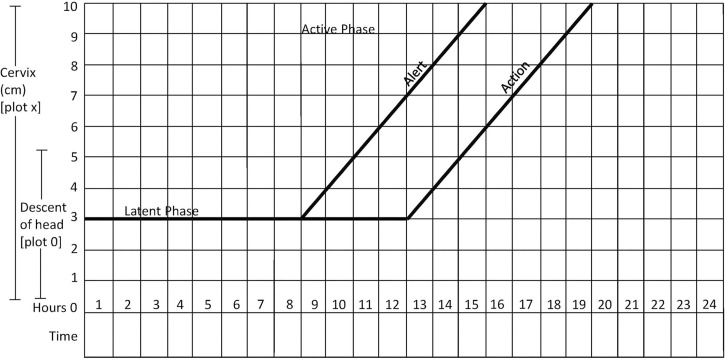
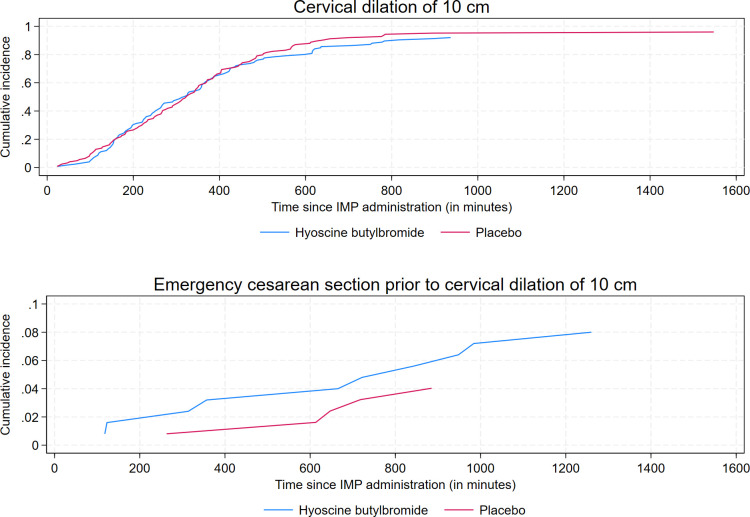
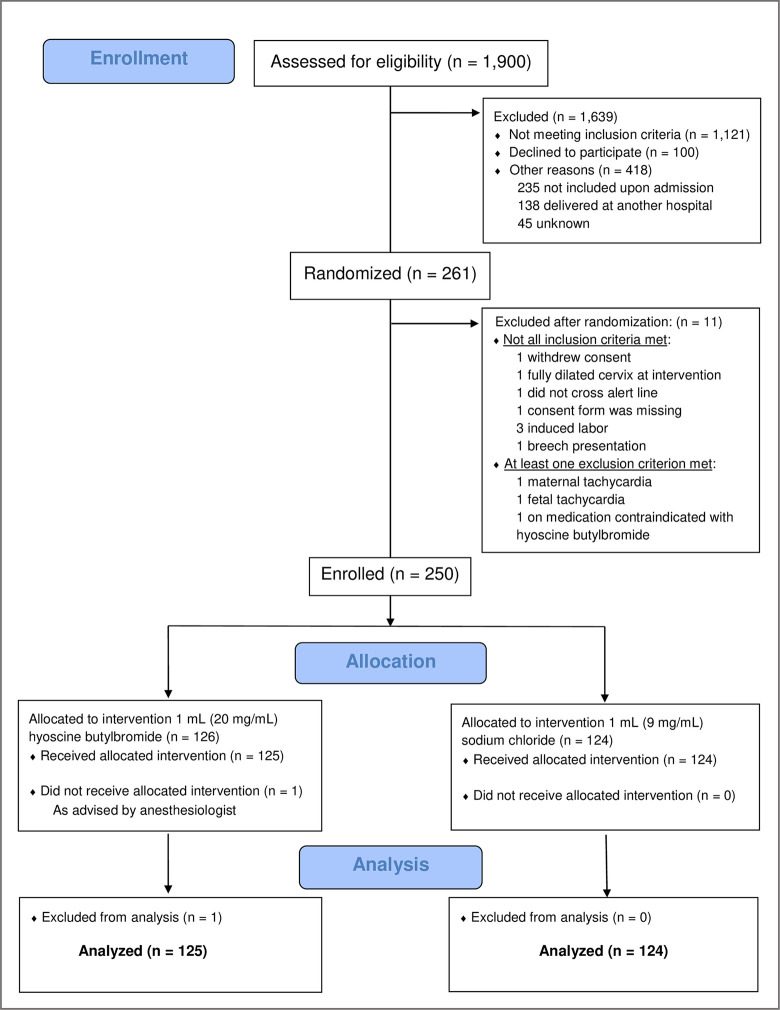
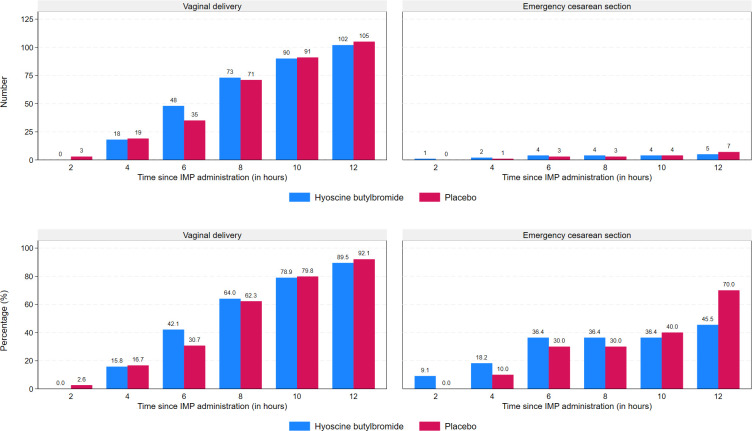
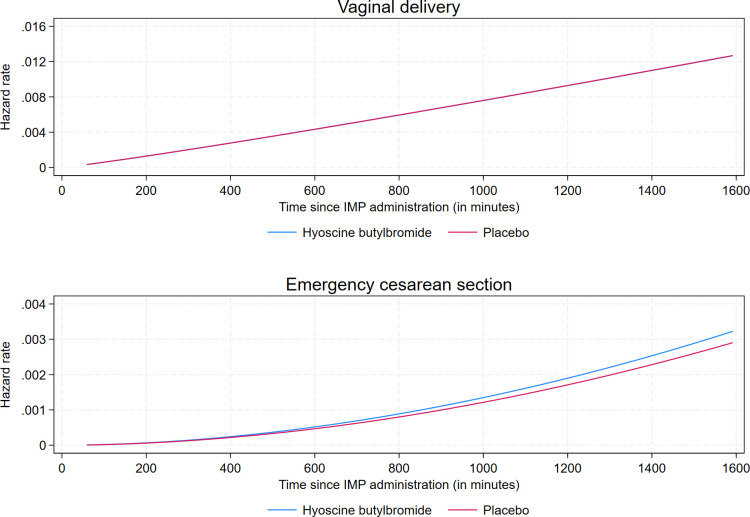
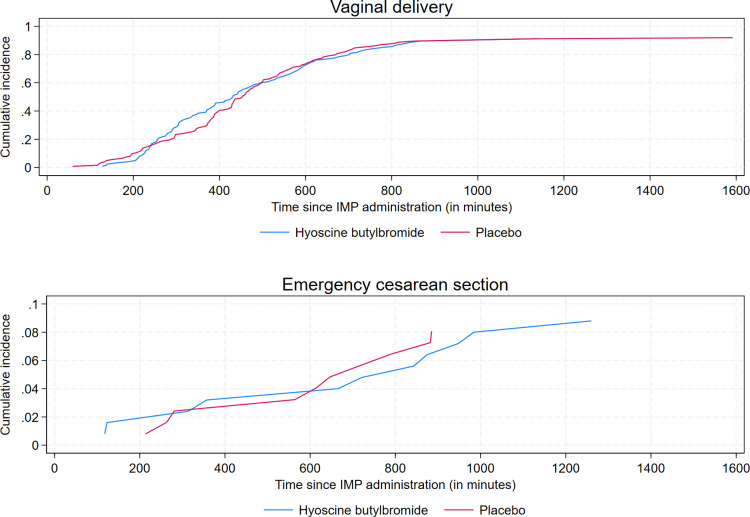
In this double-blind randomized placebo-controlled trial, we included 249 nulliparous women at term with 1 fetus in cephalic presentation and spontaneous start of labor, showing early signs of prolonged labor by crossing the alert line of the World Health Organization (WHO) partograph. The trial was conducted at Oslo University Hospital in Norway from May 2019 to December 2021. One hundred and twenty-five participants were randomized to receive 1 ml hyoscine butylbromide (Buscopan) (20 mg/ml), while 124 received 1 ml sodium chloride intravenously. Randomization was computer-generated, with allocation concealment by opaque sequentially numbered sealed envelopes. The primary outcome was duration of labor from administration of the investigational medicinal product (IMP) to vaginal delivery, which was analyzed by Weibull regression to estimate the cause-specific hazard ratio (HR) of vaginal delivery between the 2 treatment groups, with associated 95% confidence interval (CI). A wide range of secondary maternal and perinatal outcomes were also evaluated. Time-to-event outcomes were analyzed by Weibull regression, whereas continuous and dichotomous outcomes were analyzed by median regression and logistic regression, respectively. All main analyses were based on the modified intention-to-treat (ITT) set of eligible women with signed informed consent receiving either of the 2 treatments. The follow-up period lasted during the postpartum hospital stay. All personnel, participants, and researchers were blinded to the treatment allocation. Median (mean) labor duration from IMP administration to vaginal delivery was 401 (440.8) min in the hyoscine butylbromide group versus 432.5 (453.6) min in the placebo group. We found no statistically significant association between IMP and duration of labor from IMP administration to vaginal delivery: cause-specific HR of 1.00 (95% CI [0.77, 1.29]; p = 0.993). Among 255 randomized women having received 1 dose of IMP, 169 women (66.3%) reported a mild adverse event: 75.2% in the hyoscine butylbromide group and 57.1% in the placebo group (Pearson's chi-square test: p = 0.002). More than half of eligible women were not included in the study because they did not wish to participate or were not included upon admission. The participants might have represented a selected group of women reducing the external validity of the study.
One intravenous dose of 20 mg hyoscine butylbromide was not found to be superior to placebo in preventing slow labor progress in a population of first-time mothers at risk of prolonged labor. Further research is warranted to answer whether increased and/or repeated doses of hyoscine butylbromide might have an effect on duration of labor.
ClinicalTrials.gov (NCT03961165) EudraCT (2018-002338-19).
产程延长是一种常见的与母婴并发症相关的情况。用催产素进行标准治疗以增加产程,会增加不良结局的风险。氢溴酸东莨菪碱是一种解痉药物,副作用较少,已被证明可缩短一般产程中劳动妇女的产程。然而,关于其预防产程延长效果的研究却很少。我们旨在评估氢溴酸东莨菪碱对有早期产程延长迹象的初产妇产程持续时间的影响。
在这项双盲随机安慰剂对照试验中,我们纳入了 249 名足月、初产妇、具有自发性临产表现、且显示出早期产程延长迹象的产妇,其产程延长的迹象是跨越世界卫生组织(WHO)产程图的警戒线。试验于 2019 年 5 月至 2021 年 12 月在挪威奥斯陆大学医院进行。125 名参与者被随机分配接受 1 毫升氢溴酸东莨菪碱(Buscopan)(20 毫克/毫升),而 124 名参与者接受 1 毫升生理盐水静脉注射。随机化是通过计算机生成的,使用不透明的、顺序编号的密封信封进行分配隐藏。主要结局是从给予研究药物(IMP)到阴道分娩的产程持续时间,通过威布尔回归估计两组治疗之间阴道分娩的特定原因风险比(HR),并附有相关的 95%置信区间(CI)。还评估了广泛的次要产妇和围产儿结局。通过威布尔回归分析时间-事件结局,而连续和二项结局分别通过中位数回归和逻辑回归进行分析。所有主要分析均基于签署知情同意书并接受两种治疗之一的合格产妇的改良意向治疗(ITT)集。随访期持续到产后住院期间。所有人员、参与者和研究人员均对治疗分配保持盲态。从 IMP 给药到阴道分娩的中位数(平均)产程时间在氢溴酸东莨菪碱组为 401(440.8)分钟,安慰剂组为 432.5(453.6)分钟。我们发现 IMP 与从 IMP 给药到阴道分娩的产程持续时间之间没有统计学显著关联:特定原因 HR 为 1.00(95%CI [0.77, 1.29];p=0.993)。在接受 1 剂 IMP 的 255 名随机产妇中,169 名(66.3%)报告了轻度不良事件:氢溴酸东莨菪碱组为 75.2%,安慰剂组为 57.1%(皮尔逊卡方检验:p=0.002)。由于不愿意参加或入院时未被纳入,超过一半的合格产妇未被纳入研究。参与者可能代表了一个选定的产妇群体,降低了研究的外部有效性。
在有产程延长风险的初产妇人群中,静脉注射 20 毫克氢溴酸东莨菪碱一次并不优于安慰剂预防产程进展缓慢。需要进一步研究以回答增加和/或重复剂量的氢溴酸东莨菪碱是否会对产程持续时间产生影响。
ClinicalTrials.gov(NCT03961165)EudraCT(2018-002338-19)。