Department of Hematology, University Hospital of Santiago de Compostela, Compostela, Spain.
Health Research Institute of Santiago de Compostela, Compostela, Spain.
Clin Epigenetics. 2024 Mar 28;16(1):49. doi: 10.1186/s13148-024-01662-6.
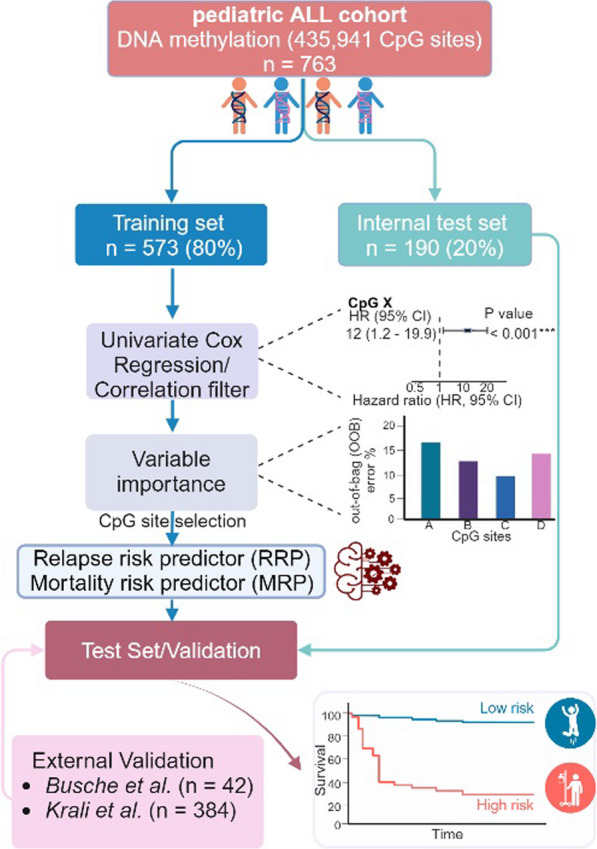
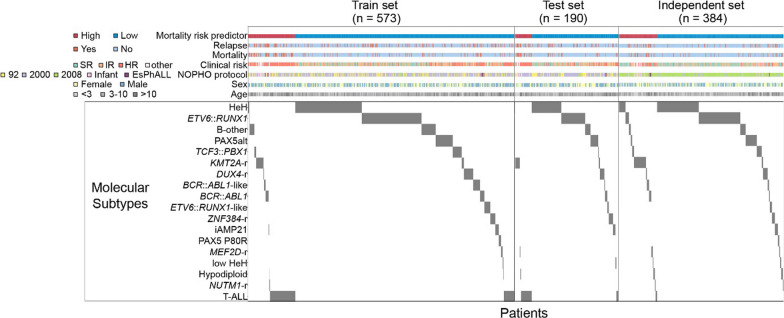
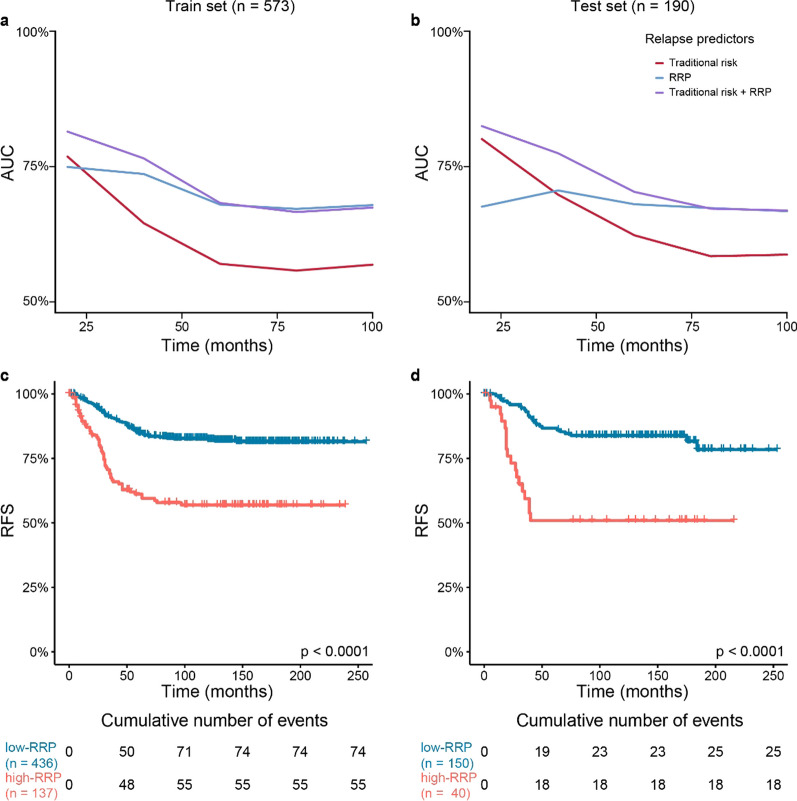
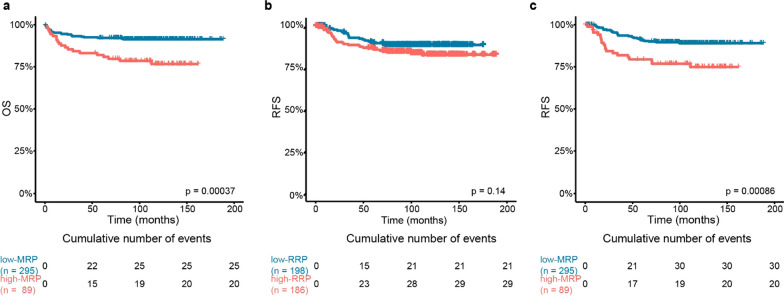
Acute lymphoblastic leukemia (ALL) is the most prevalent cancer in children, and despite considerable progress in treatment outcomes, relapses still pose significant risks of mortality and long-term complications. To address this challenge, we employed a supervised machine learning technique, specifically random survival forests, to predict the risk of relapse and mortality using array-based DNA methylation data from a cohort of 763 pediatric ALL patients treated in Nordic countries. The relapse risk predictor (RRP) was constructed based on 16 CpG sites, demonstrating c-indexes of 0.667 and 0.677 in the training and test sets, respectively. The mortality risk predictor (MRP), comprising 53 CpG sites, exhibited c-indexes of 0.751 and 0.754 in the training and test sets, respectively. To validate the prognostic value of the predictors, we further analyzed two independent cohorts of Canadian (n = 42) and Nordic (n = 384) ALL patients. The external validation confirmed our findings, with the RRP achieving a c-index of 0.667 in the Canadian cohort, and the RRP and MRP achieving c-indexes of 0.529 and 0.621, respectively, in an independent Nordic cohort. The precision of the RRP and MRP models improved when incorporating traditional risk group data, underscoring the potential for synergistic integration of clinical prognostic factors. The MRP model also enabled the definition of a risk group with high rates of relapse and mortality. Our results demonstrate the potential of DNA methylation as a prognostic factor and a tool to refine risk stratification in pediatric ALL. This may lead to personalized treatment strategies based on epigenetic profiling.
急性淋巴细胞白血病(ALL)是儿童中最常见的癌症,尽管在治疗结果方面取得了相当大的进展,但复发仍然是导致死亡和长期并发症的重大风险。为了解决这一挑战,我们采用了监督机器学习技术,特别是随机生存森林,利用来自北欧国家 763 名儿科 ALL 患者的基于阵列的 DNA 甲基化数据来预测复发和死亡率的风险。基于 16 个 CpG 位点构建了复发风险预测器(RRP),在训练集和测试集中的 c 指数分别为 0.667 和 0.677。包含 53 个 CpG 位点的死亡率风险预测器(MRP)在训练集和测试集中的 c 指数分别为 0.751 和 0.754。为了验证预测器的预后价值,我们进一步分析了来自加拿大(n=42)和北欧(n=384)的两个独立的 ALL 患者队列。外部验证证实了我们的发现,RRP 在加拿大队列中的 c 指数为 0.667,RRP 和 MRP 在独立的北欧队列中的 c 指数分别为 0.529 和 0.621。当纳入传统风险组数据时,RRP 和 MRP 模型的准确性得到了提高,突出了临床预后因素协同整合的潜力。MRP 模型还能够定义一个复发和死亡率高的风险组。我们的结果表明,DNA 甲基化为儿童 ALL 的预后因素和风险分层的工具具有潜力。这可能会导致基于表观遗传谱的个性化治疗策略。