Du HaoRan, Li Bang, Yu Rui, Lu Xiaoxuan, Li ChengLin, Zhang HuiHui, Yang Fan, Zhao RongQuan, Bao WeiMin, Yin Xuan, Wang YuanYin, Zhou Jian, Xu Jianguang
College & Hospital of Stomatology, Anhui Medical University, Key Lab. of Oral Diseases Research of Anhui Province, Hefei, 230032, China.
Salivary Gland Disease Center and Beijing Key Laboratory of Tooth Regeneration and Function Reconstruction, Beijing Laboratory of Oral Health and Beijing Stomatological Hospital, Capital Medical University, Beijing, 100050, China.
Bioact Mater. 2024 Mar 22;37:222-238. doi: 10.1016/j.bioactmat.2024.02.014. eCollection 2024 Jul.
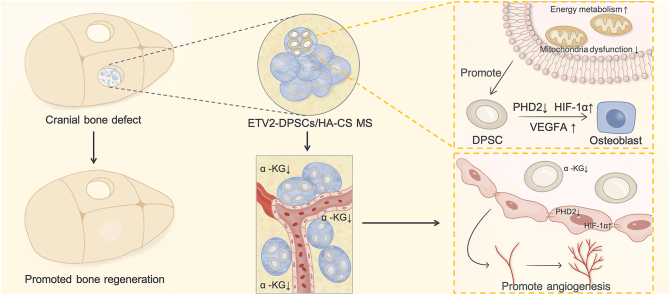
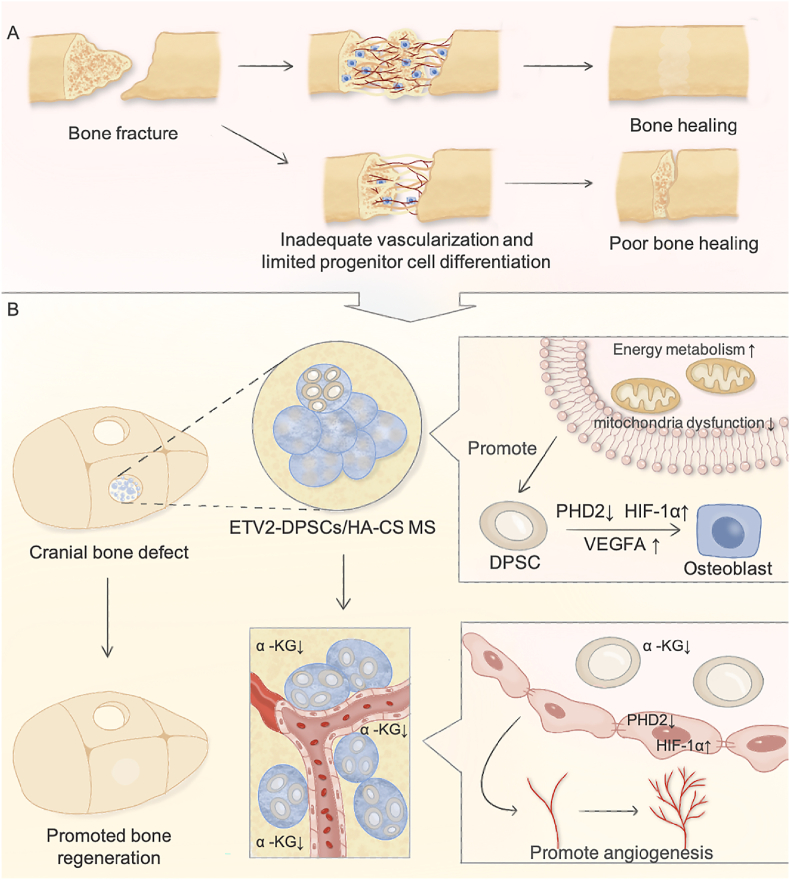
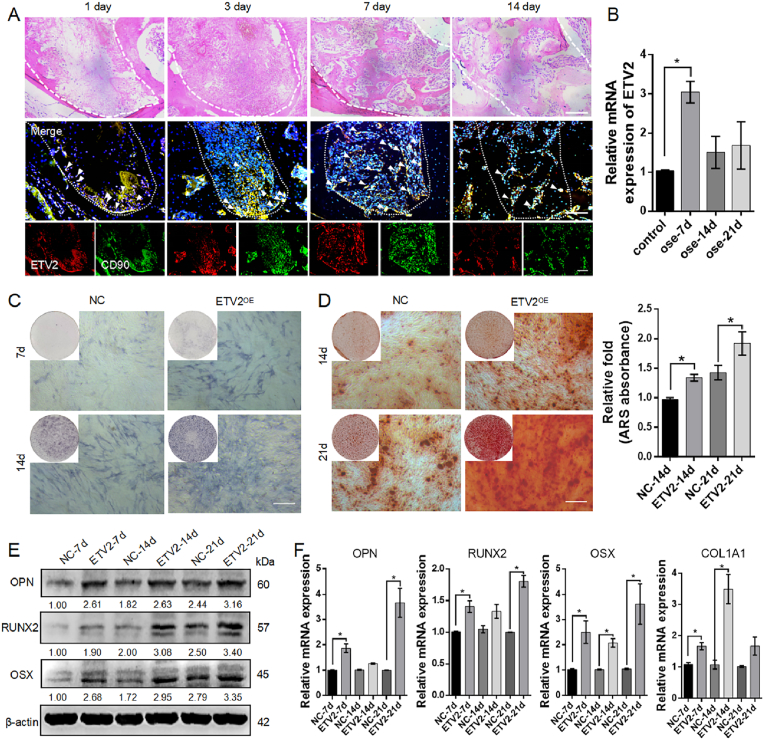
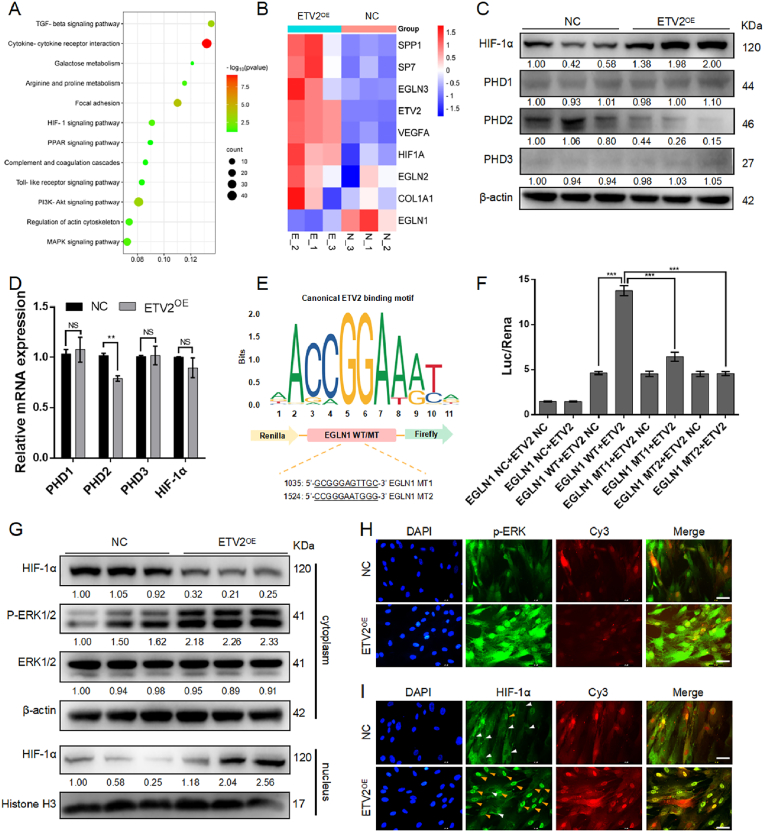
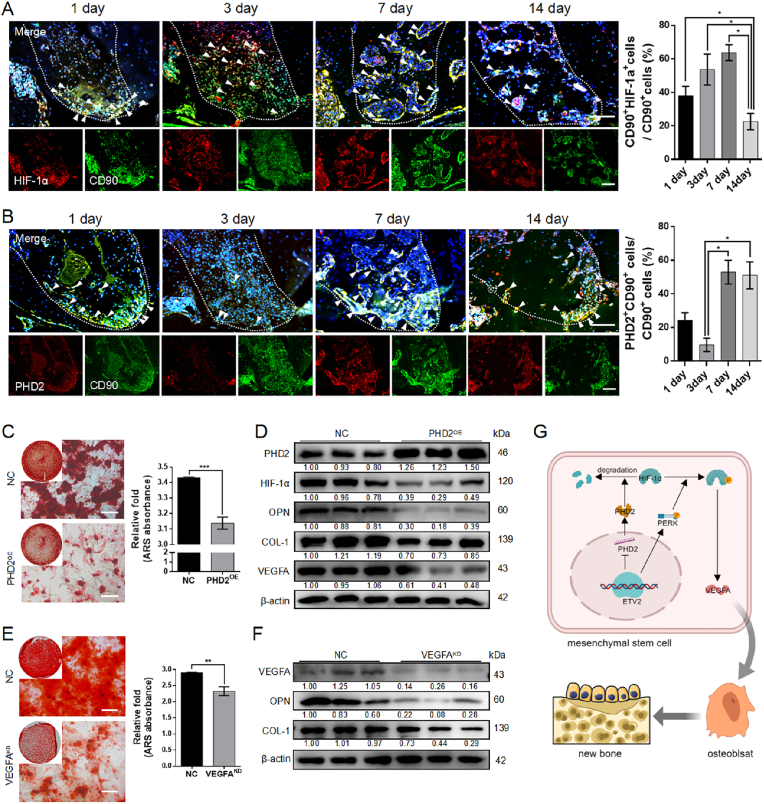
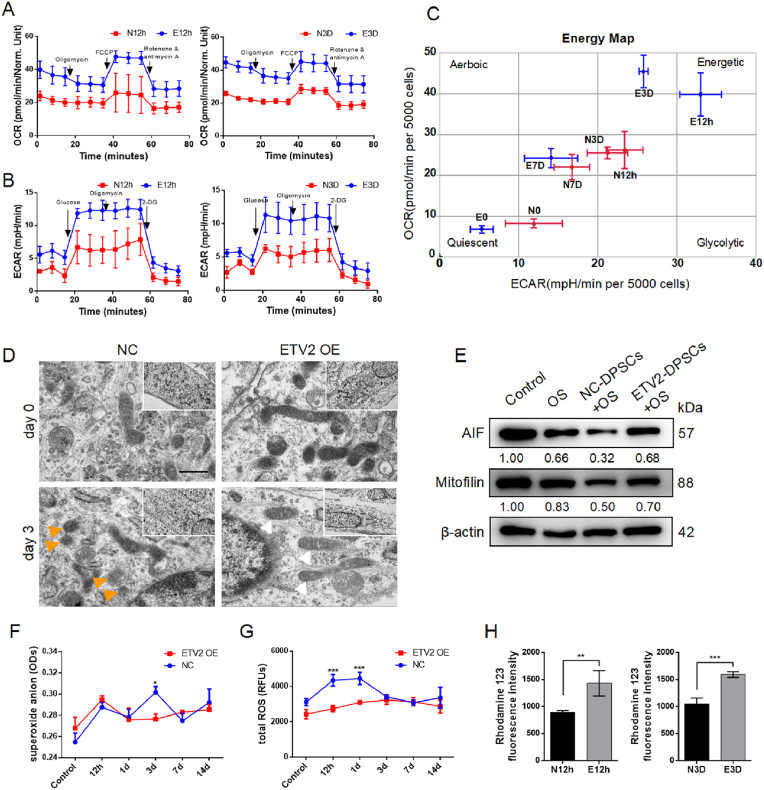
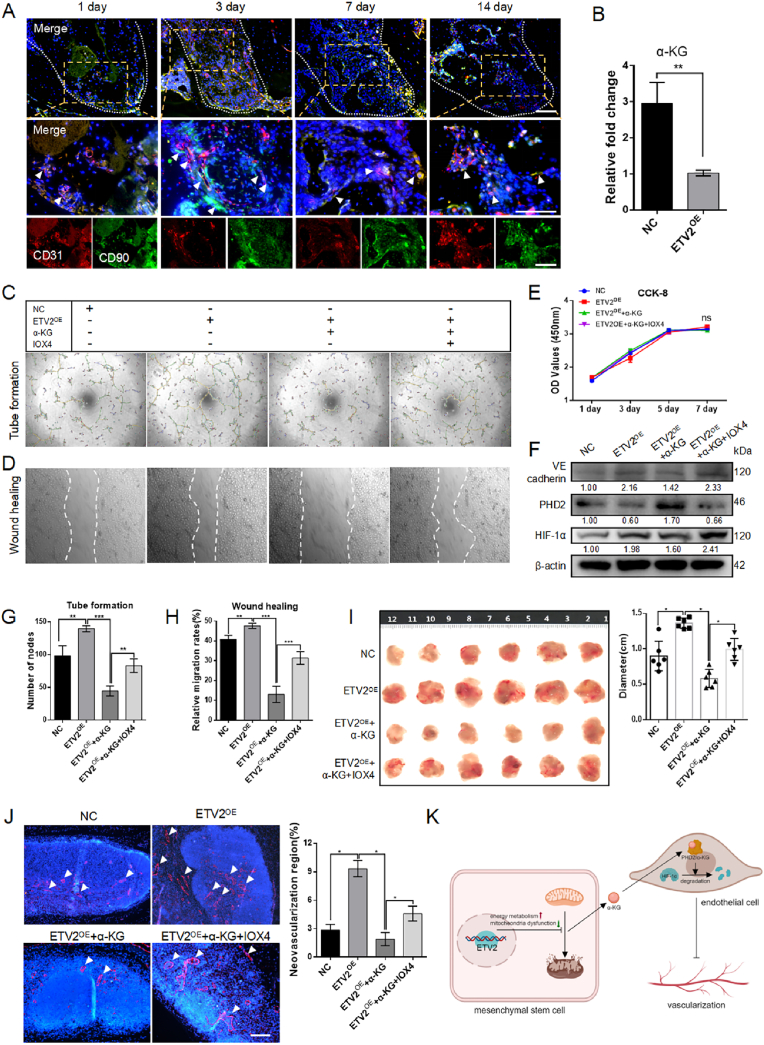
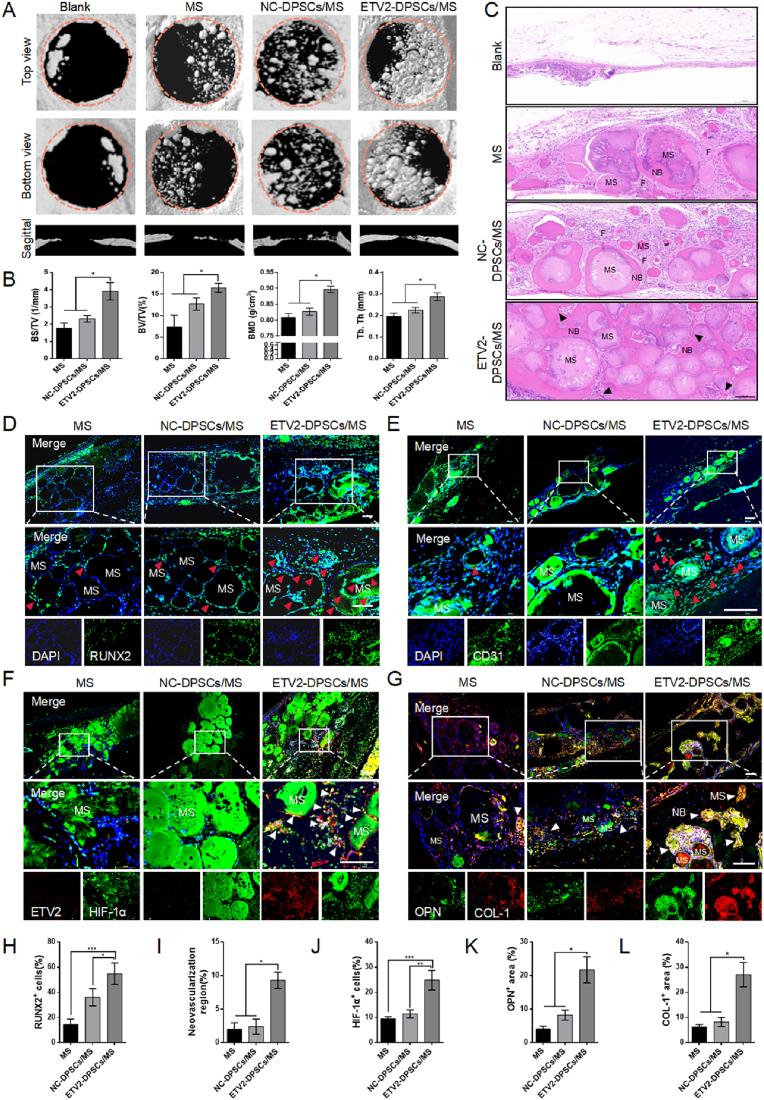
The synchronized development of mineralized bone and blood vessels is a fundamental requirement for successful bone tissue regeneration. Adequate energy production forms the cornerstone supporting new bone formation. ETS variant 2 (ETV2) has been identified as a transcription factor that promotes energy metabolism reprogramming and facilitates the coordination between osteogenesis and angiogenesis. In vitro molecular experiments have demonstrated that ETV2 enhances osteogenic differentiation of dental pulp stem cells (DPSCs) by regulating the ETV2- prolyl hydroxylase 2 (PHD2)- hypoxia-inducible factor-1α (HIF-1α)- vascular endothelial growth factor A (VEGFA) axis. Notably, ETV2 achieves the rapid reprogramming of energy metabolism by simultaneously accelerating mitochondrial aerobic respiration and glycolysis, thus fulfilling the energy requirements essential to expedite osteogenic differentiation. Furthermore, decreased α-ketoglutarate release from ETV2-modified DPSCs contributes to microcirculation reconstruction. Additionally, we engineered hydroxyapatite/chitosan microspheres (HA/CS MS) with biomimetic nanostructures to facilitate multiple ETV2-DPSC functions and further enhanced the osteogenic differentiation. Animal experiments have validated the synergistic effect of ETV2-modified DPSCs and HA/CS MS in promoting the critical-size bone defect regeneration. In summary, this study offers a novel treatment approach for vascularized bone tissue regeneration that relies on energy metabolism activation and the maintenance of a stable local hypoxia signaling state.
矿化骨与血管的同步发育是骨组织成功再生的基本要求。充足的能量产生是支持新骨形成的基石。ETS变异体2(ETV2)已被鉴定为一种转录因子,可促进能量代谢重编程,并促进成骨与血管生成之间的协调。体外分子实验表明,ETV2通过调节ETV2-脯氨酰羟化酶2(PHD2)-缺氧诱导因子-1α(HIF-1α)-血管内皮生长因子A(VEGFA)轴,增强牙髓干细胞(DPSC)的成骨分化。值得注意的是,ETV2通过同时加速线粒体有氧呼吸和糖酵解,实现能量代谢的快速重编程,从而满足加速成骨分化所需的能量需求。此外,ETV2修饰的DPSC中α-酮戊二酸释放的减少有助于微循环重建。此外,我们设计了具有仿生纳米结构的羟基磷灰石/壳聚糖微球(HA/CS MS),以促进多种ETV2-DPSC功能,并进一步增强成骨分化。动物实验验证了ETV2修饰的DPSC和HA/CS MS在促进临界尺寸骨缺损再生方面的协同作用。总之,本研究提供了一种新的血管化骨组织再生治疗方法,该方法依赖于能量代谢激活和维持稳定的局部缺氧信号状态。