Merza Nooraldin, Saab Omar, Nawras Yusuf, Abdulhussein Roua, Elmoursi Ahmed, Daddoo Lena, Yaqoob Zinah, Al Ani Hiba, Al Hamdany Tamarah, Gadelmawla Ahmed, Khalil Mohamed, Hassan Mona, Kobeissy Abdallah
Department of Internal Medicine, University of Toledo, Toledo, OH, USA.
Department of Internal Medicine, Cleavland Clinic, Cleavland, OH, USA.
J Clin Med Res. 2024 Mar;16(2-3):33-45. doi: 10.14740/jocmr5007. Epub 2024 Mar 16.
Bile acid malabsorption (BAM) is characterized by chronic watery diarrhea resulting from excessive bile acids in the feces. BAM is often an overlooked cause of chronic diarrhea, with its prevalence not being sufficiently researched. This review aimed to assess existing literature that explores diverse treatment strategies, to review the published studies that examine the various therapies for BAM patients, emphasizing their influence on clinical results.
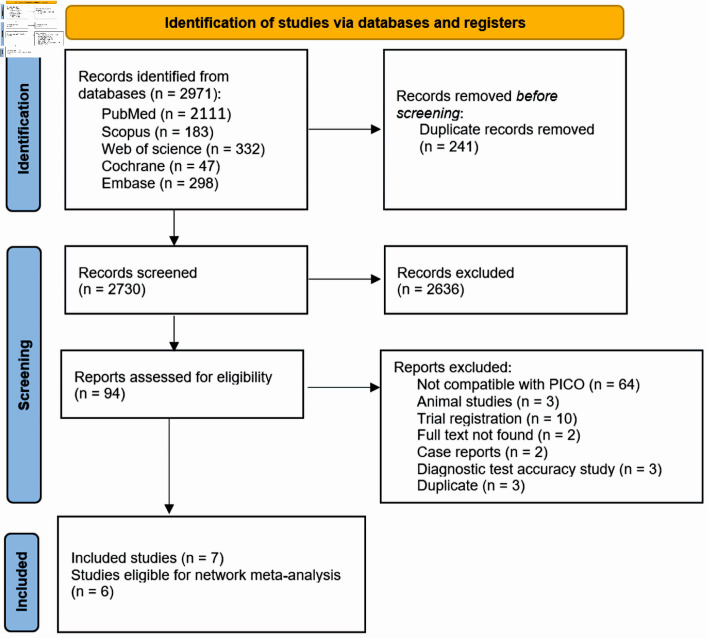
We conducted a comprehensive review of various databases, including PubMed, Scopus, Web of Science, Cochrane Database, and EMBASE. Our criteria for inclusion focused on randomized controlled studies (RCTs) that evaluated the effectiveness of different treatment options for patients with BAM. To rank the treatments, we adopted the frequentist approach through the "netrank" function of the network meta-analysis (NMA). Moreover, we utilized the "netsplit" function in the NMA to separate direct and indirect evidence. Our analysis was carried out using RStudio version 1.4.1717 (2009 - 2021 RStudio, Inc.), and we used the "netmeta" and "meta" packages for NMA.
We found seven relevant articles involving 213 participants, the average age being approximately 50 years, including 53 males and 92 females. Of the drugs examined, tropifexor was proved to be the most effective in raising the fibroblast growth factor 19 (FGF19) levels and reducing the 7 alpha-hydroxy-4-cholesten-3-one (C4) levels, compared to the placebo (mean difference (MD) = 335.30, 95% confidence interval (CI) (334.86, 335.74), MD = -24.60, 95% CI (-25.37, -23.83); respectively). Compared to colesevelam and the placebo, liraglutide was more efficient in decreasing fecal bile acid concentration (liraglutide; MD = -19, 95% CI (-37.61, -0.39)).
Tropifexor has been identified as the most successful medication in mitigating BAM symptoms. To ensure more accurate results, there is a need for randomized controlled clinical trials that involve a larger participant pool.
胆汁酸吸收不良(BAM)的特征是因粪便中胆汁酸过多导致慢性水样腹泻。BAM常常是慢性腹泻一个被忽视的病因,其患病率尚未得到充分研究。本综述旨在评估探索不同治疗策略的现有文献,回顾已发表的研究,这些研究考察了针对BAM患者的各种疗法,强调它们对临床结果的影响。
我们对多个数据库进行了全面检索,包括PubMed、Scopus、科学网、考克兰数据库和EMBASE。我们的纳入标准聚焦于评估不同治疗方案对BAM患者有效性的随机对照试验(RCT)。为了对治疗方法进行排序,我们通过网络荟萃分析(NMA)的“netrank”函数采用频率学派方法。此外,我们利用NMA中的“netsplit”函数来区分直接证据和间接证据。我们的分析使用RStudio版本1.4.1717(2009 - 2021 RStudio公司)进行,并且我们使用“netmeta”和“meta”软件包进行NMA分析。
我们找到了7篇相关文章,涉及213名参与者,平均年龄约为50岁,其中男性53名,女性92名。在所研究的药物中,与安慰剂相比,曲匹西奥被证明在提高成纤维细胞生长因子19(FGF19)水平和降低7α - 羟基 - 4 - 胆甾烯 - 3 - 酮(C4)水平方面最有效(平均差(MD)= 335.30,95%置信区间(CI)(334.86,335.74),MD = -24.60,95% CI(-25.37,-23.83);分别)。与考来维仑和安慰剂相比,利拉鲁肽在降低粪便胆汁酸浓度方面更有效(利拉鲁肽;MD = -19,95% CI(-37.61,-0.39))。
曲匹西奥已被确定为缓解BAM症状最成功的药物。为确保获得更准确的结果,需要开展涉及更大样本量参与者的随机对照临床试验。