Department of Chemistry, Chonnam National University, Gwangju, Republic of Korea.
Research Center, DAESANG InnoPark, Gangseo-gu, Seoul, Republic of Korea.
PLoS One. 2024 Apr 1;19(4):e0294474. doi: 10.1371/journal.pone.0294474. eCollection 2024.
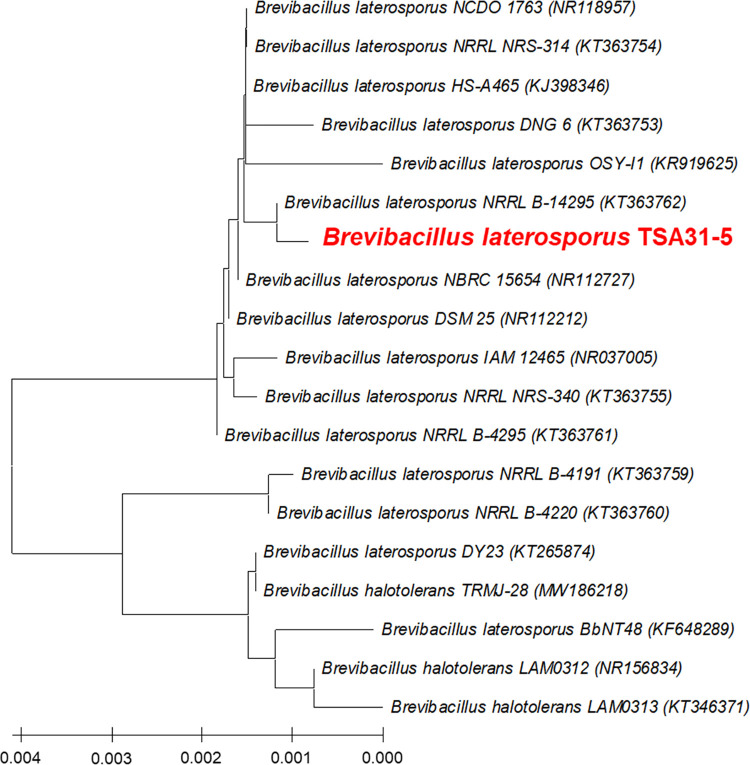
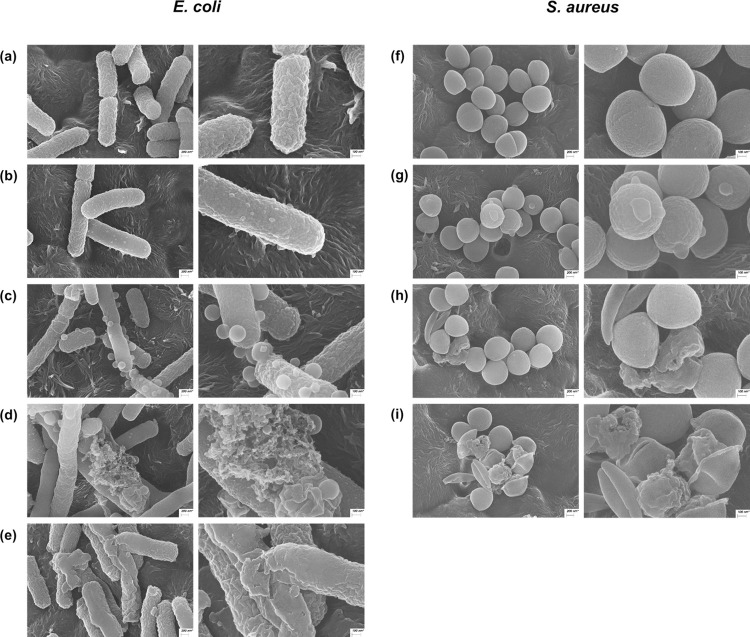
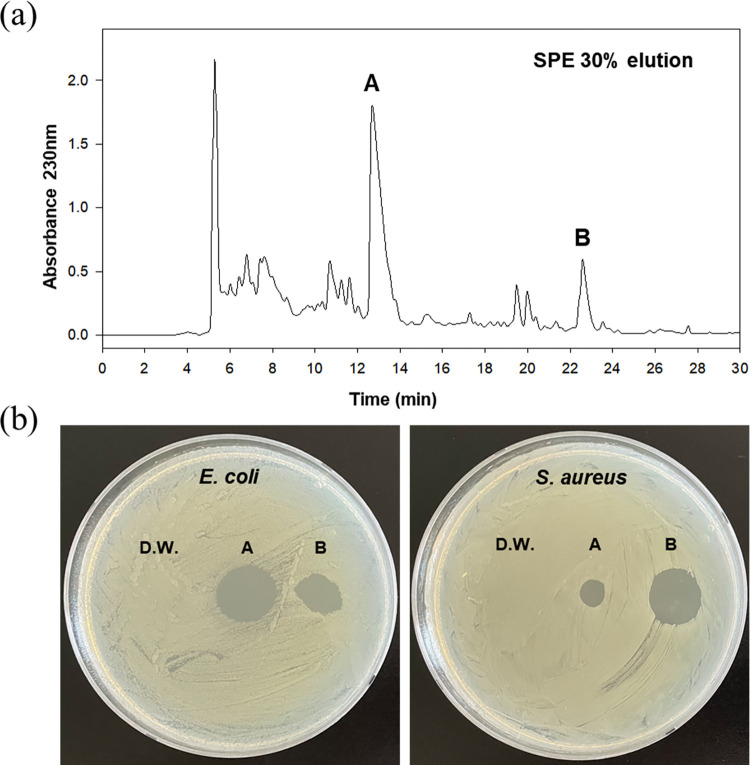
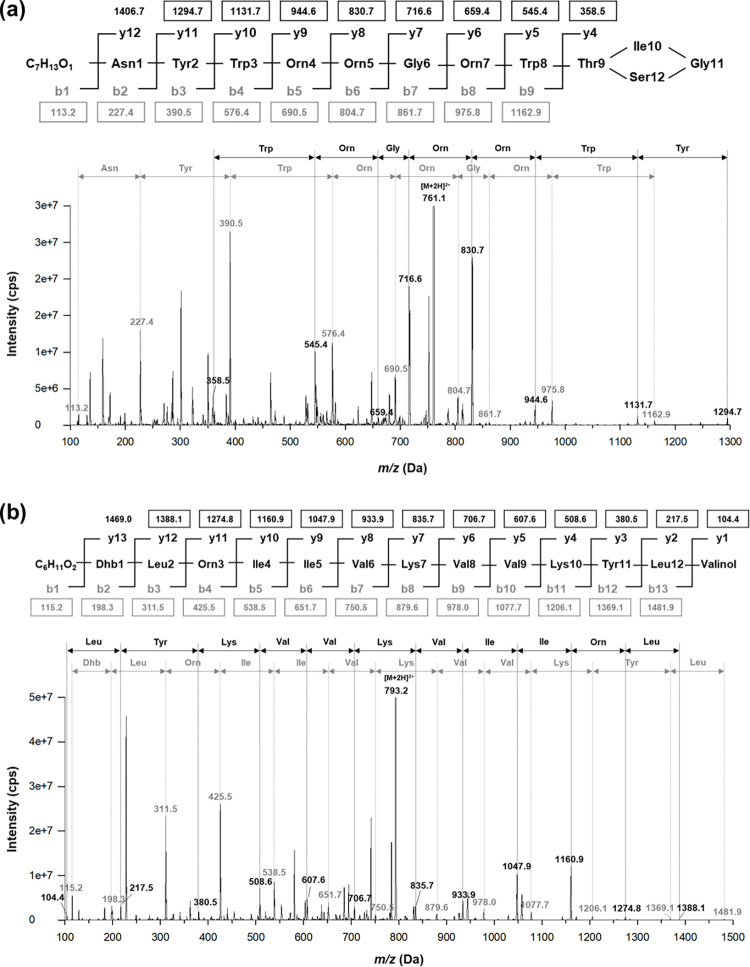
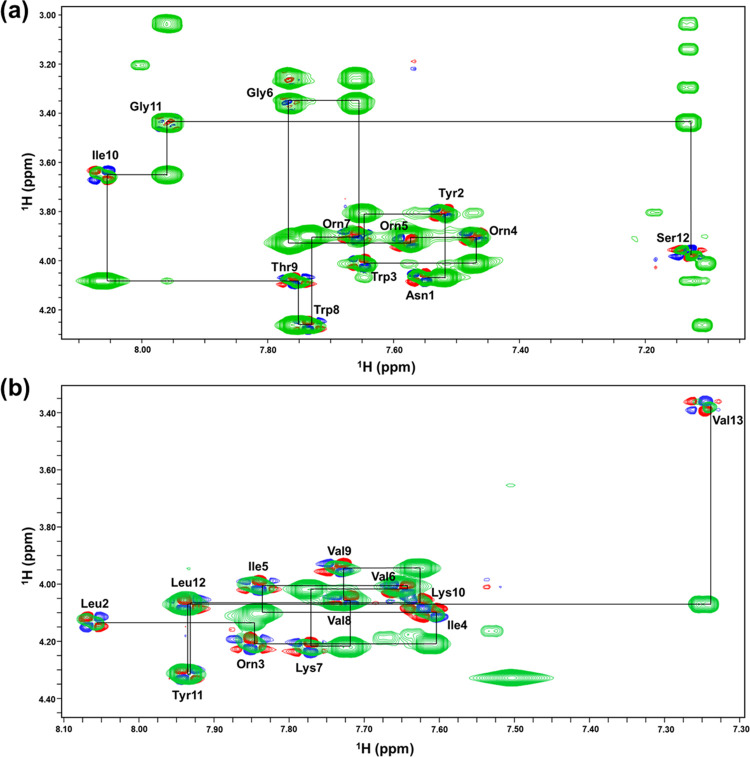
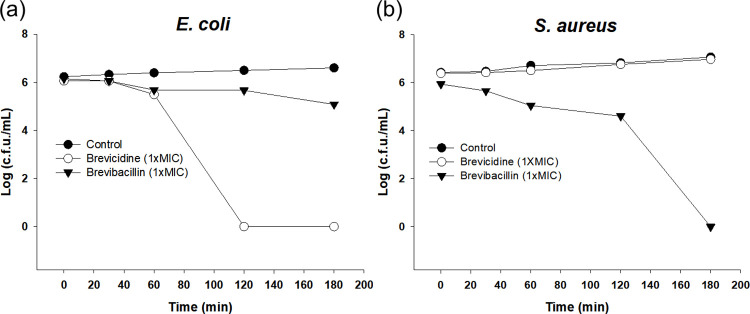
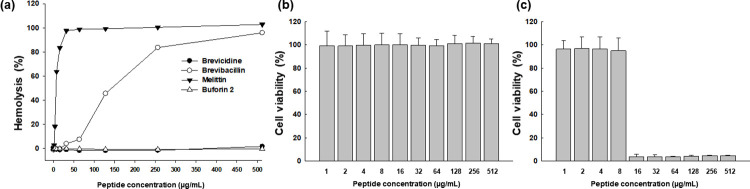
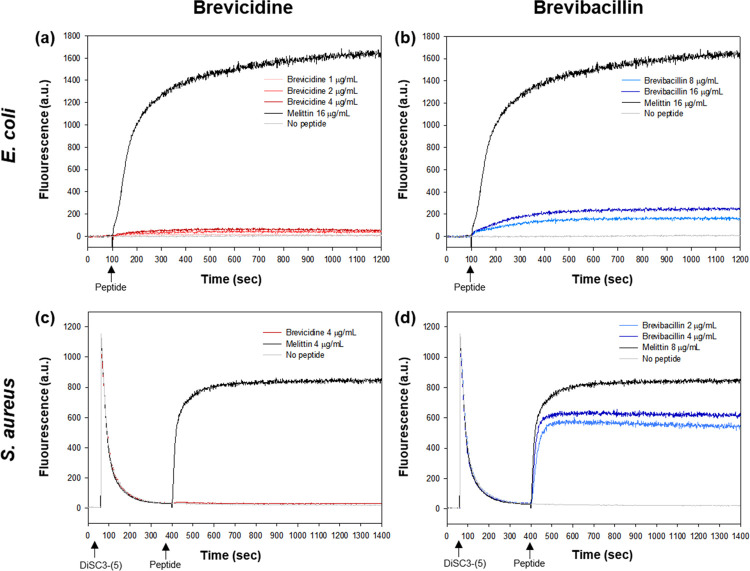
The growing prevalence of antibiotic resistance has made it imperative to search for new antimicrobial compounds derived from natural products. In the present study, Brevibacillus laterosporus TSA31-5, isolated from red clay soil, was chosen as the subject for conducting additional antibacterial investigations. The fractions exhibiting the highest antibacterial activity (30% acetonitrile eluent from solid phase extraction) were purified through RP-HPLC. Notably, two compounds (A and B) displayed the most potent antibacterial activity against both Escherichia coli and Staphylococcus aureus. ESI-MS/MS spectroscopy and NMR analysis confirmed that compound A corresponds to brevicidine and compound B to brevibacillin. Particularly, brevicidine displayed notable antibacterial activity against Gram-negative bacteria, with a minimum inhibitory concentration (MIC) range of 1-8 μg/mL. On the other hand, brevibacillin exhibited robust antimicrobial effectiveness against both Gram-positive bacterial strains (MIC range of 2-4 μg/mL) and Gram-negative bacteria (MIC range of 4-64 μg/mL). Scanning electron microscopy analysis and fluorescence assays uncovered distinctive morphological alterations in bacterial cell membranes induced by brevicidine and brevibacillin. These observations imply distinct mechanisms of antibacterial activity exhibited by the peptides. Brevicidine exhibited no hemolysis or cytotoxicity up to 512 μg/mL, comparable to the negative control. This suggests its promising therapeutic potential in treating infectious diseases. Conversely, brevibacillin demonstrated elevated cytotoxicity in in vitro assays. Nonetheless, owing to its noteworthy antimicrobial activity against pathogenic bacteria, brevibacillin could still be explored as a promising antimicrobial agent.
抗生素耐药性的日益普遍使得寻找新的抗菌化合物成为当务之急,这些化合物源自天然产物。在本研究中,从红粘土中分离出的短芽孢杆菌 TSA31-5 被选为进一步进行抗菌研究的对象。通过反相高效液相色谱法(RP-HPLC)对表现出最高抗菌活性(固相萃取 30%乙腈洗脱物)的馏分进行纯化。值得注意的是,两种化合物(A 和 B)对大肠杆菌和金黄色葡萄球菌均表现出最强的抗菌活性。ESI-MS/MS 光谱和 NMR 分析证实,化合物 A 对应于短杆菌肽,化合物 B 对应于短杆菌素。特别是,短杆菌肽对革兰氏阴性菌表现出显著的抗菌活性,最小抑菌浓度(MIC)范围为 1-8 μg/mL。另一方面,短杆菌素对革兰氏阳性菌(MIC 范围为 2-4 μg/mL)和革兰氏阴性菌(MIC 范围为 4-64 μg/mL)均表现出强大的抗菌效果。扫描电子显微镜分析和荧光测定揭示了短杆菌肽和短杆菌素诱导的细菌细胞膜的独特形态变化。这些观察结果表明这些肽表现出不同的抗菌活性机制。短杆菌肽在高达 512 μg/mL 的浓度下没有溶血或细胞毒性,与阴性对照相当。这表明它在治疗感染性疾病方面具有有前景的治疗潜力。相比之下,短杆菌素在体外试验中表现出更高的细胞毒性。然而,由于其对致病菌具有显著的抗菌活性,短杆菌素仍可作为一种有前途的抗菌药物进行探索。