Ebsa Girma, Gizaw Birhanu, Admassie Mesele, Degu Tizazu, Alemu Tesfaye
Department of Microbial, Cellular and Molecular Biology, Addis Ababa University, P. O. Box: 1176, Addis Ababa, Ethiopia.
Department of Crop Protection, Ethiopian Institute of Agricultural Research, P. O. Box: 2003, Addis Ababa, Ethiopia.
Biotechnol Rep (Amst). 2024 Mar 11;42:e00835. doi: 10.1016/j.btre.2024.e00835. eCollection 2024 Jun.
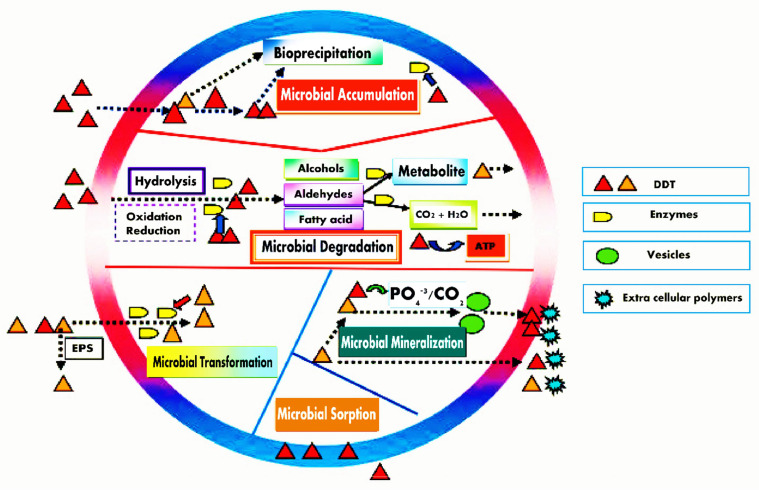
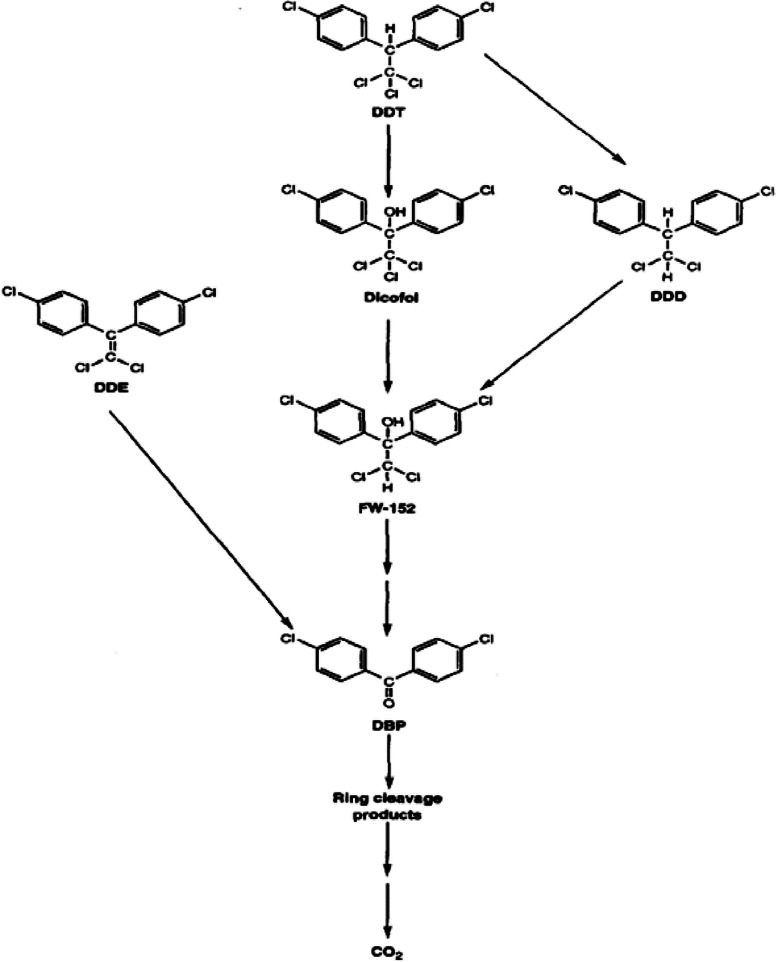
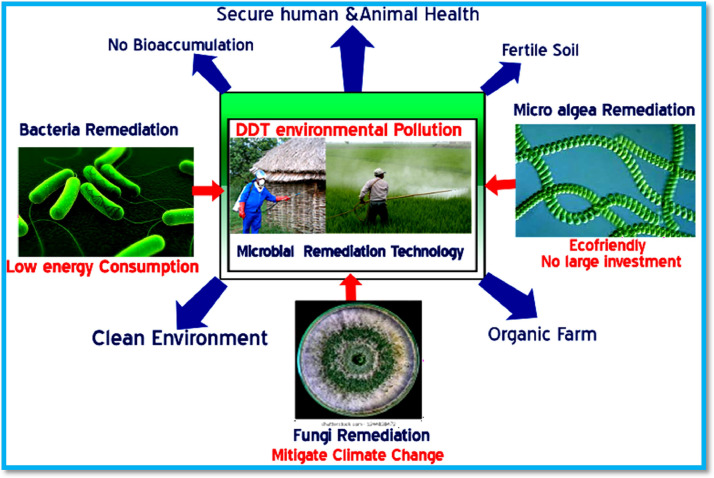
Environmental contamination with dichlorodiphenyltrichloroethane (DDT) has sever effects on the ecosystem worldwide. DDT is a recalcitrant synthetic chemical with high toxicity and lipophilicity. It is also bioaccumulated in the food chain and causes genotoxic, estrogenic, carcinogenic, and mutagenic effects on aquatic organisms and humans. Microbial remediation mechanism and its enzymes are very important for removing DDT from environment. DDT and its main residues dichlorodiphenyldichloroethylene (DDE) and dichlorodiphenyldichloroethane (DDD) can biodegrade slowly in soil and water. To enhance this process, a number of strategies are proposed, such as bio-attenuation, biostimulation, bioaugmentation and the manipulation of environmental conditions to enhance the activity of microbial enzymes. The addition of organic matter and flooding of the soil enhance DDT degradation. Microbial candidates for DDT remediation include micro-algae, fungi and bacteria. This review provide brief information and recommendation on microbial DDT remediation and its mechanisms.
二氯二苯三氯乙烷(DDT)对全球生态系统造成严重影响。DDT是一种具有高毒性和亲脂性的难降解合成化学品。它还会在食物链中生物累积,对水生生物和人类产生遗传毒性、雌激素效应、致癌和致突变作用。微生物修复机制及其酶对于从环境中去除DDT非常重要。DDT及其主要残留物二氯二苯二氯乙烯(DDE)和二氯二苯二氯乙烷(DDD)在土壤和水中可缓慢生物降解。为了加速这一过程,人们提出了多种策略,如生物衰减、生物刺激、生物强化以及操纵环境条件以增强微生物酶的活性。添加有机物和对土壤进行淹水可增强DDT的降解。用于DDT修复的微生物包括微藻、真菌和细菌。本综述提供了关于微生物修复DDT及其机制的简要信息和建议。