Research Institute for Sport and Exercise, University of Canberra, Canberra, Australia.
Applied Sports Science Technology and Medicine Research Centre (A-STEM), Faculty of Science and Engineering, Bay Campus, Swansea University, Swansea, Wales, SA1 8EN, UK.
Eur J Appl Physiol. 2024 Aug;124(8):2489-2502. doi: 10.1007/s00421-024-05460-z. Epub 2024 Apr 3.
Caffeine is a commonly used ergogenic aid for endurance events; however, its efficacy and safety have been questioned in hot environmental conditions. The aim of this study was to investigate the effects of acute caffeine supplementation on cycling time to exhaustion and thermoregulation in the heat.
In a double-blind, randomised, cross-over trial, 12 healthy caffeine-habituated and unacclimatised males cycled to exhaustion in the heat (35 °C, 40% RH) at an intensity associated with the thermoneutral gas exchange threshold, on two separate occasions, 60 min after ingesting caffeine (5 mg/kg) or placebo (5 mg/kg).
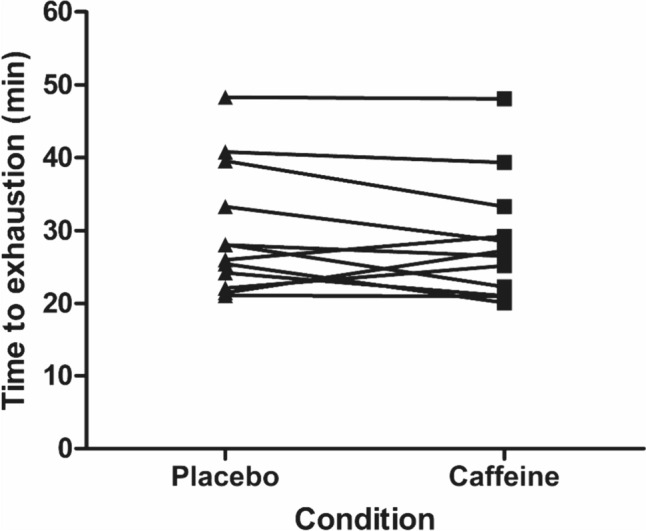
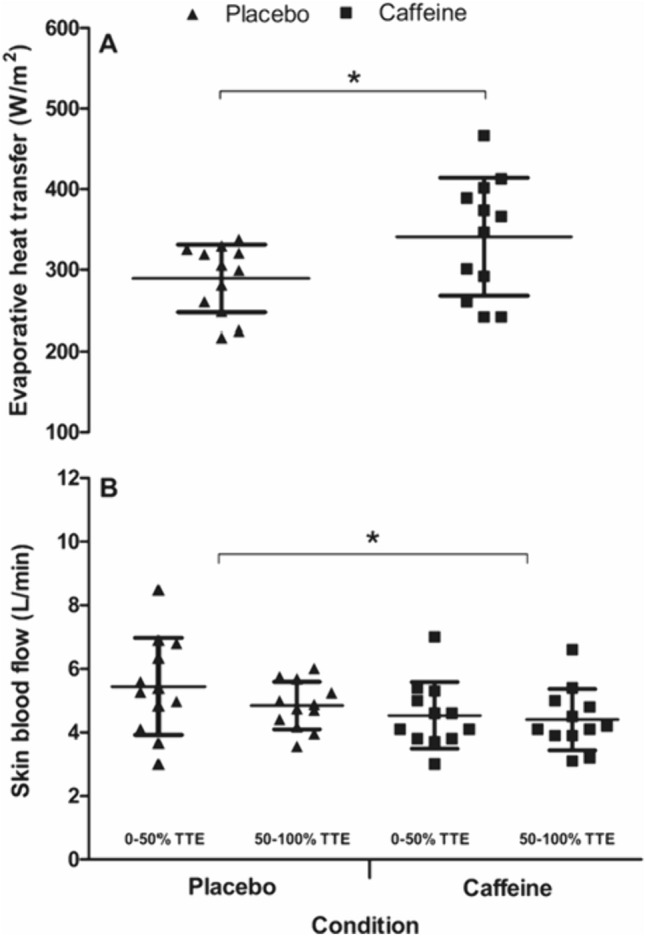
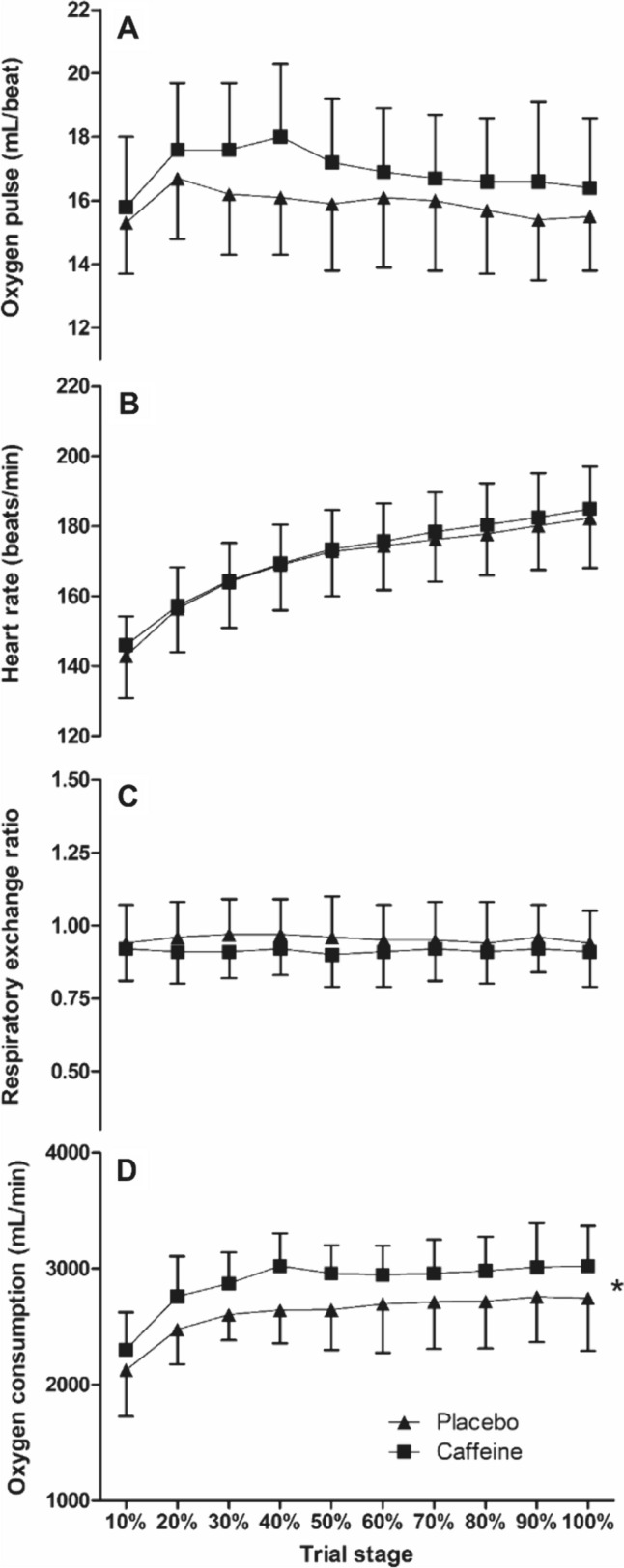
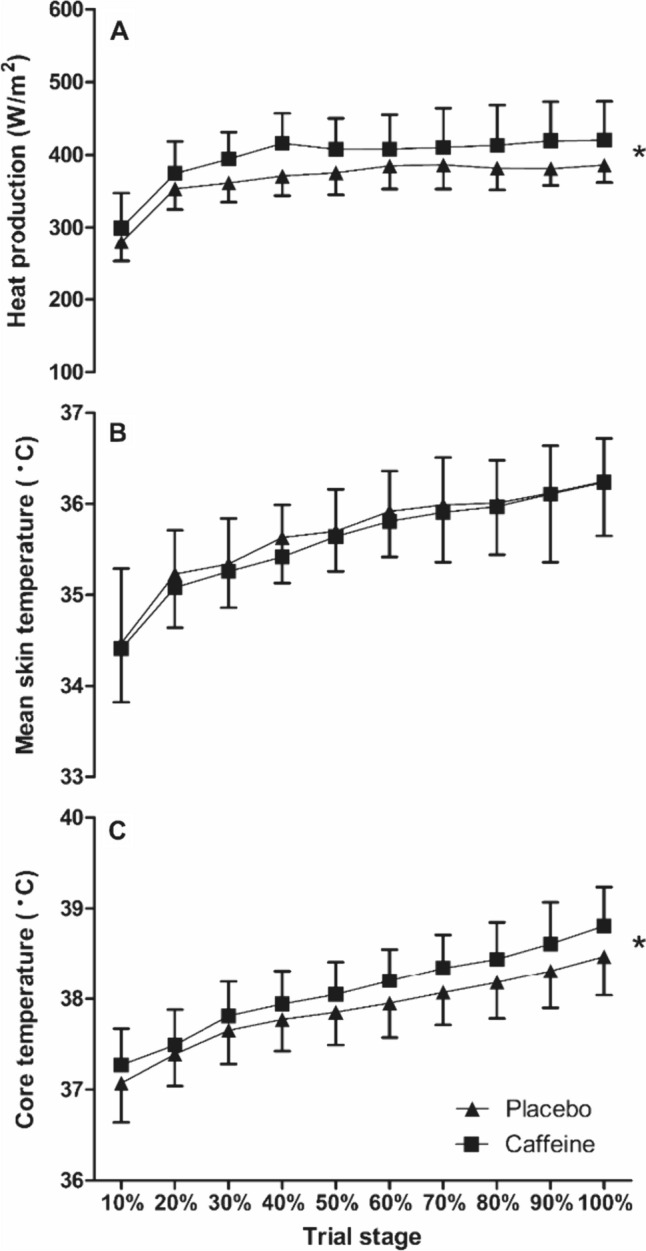
There was no effect of caffeine supplementation on cycling time to exhaustion (TTE) (caffeine; 28.5 ± 8.3 min vs. placebo; 29.9 ± 8.8 min, P = 0.251). Caffeine increased pulmonary oxygen uptake by 7.4% (P = 0.003), heat production by 7.9% (P = 0.004), whole-body sweat rate (WBSR) by 21% (P = 0.008), evaporative heat transfer by 16.5% (P = 0.006) and decreased estimated skin blood flow by 14.1% (P < 0.001) compared to placebo. Core temperature was higher by 0.6% (P = 0.013) but thermal comfort decreased by - 18.3% (P = 0.040), in the caffeine condition, with no changes in rate of perceived exertion (P > 0.05).
The greater heat production and storage, as indicated by a sustained increase in core temperature, corroborate previous research showing a thermogenic effect of caffeine ingestion. When exercising at the pre-determined gas exchange threshold in the heat, 5 mg/kg of caffeine did not provide a performance benefit and increased the thermal strain of participants.
咖啡因是一种常用于耐力运动的促效剂;然而,在炎热的环境条件下,其功效和安全性一直受到质疑。本研究旨在探讨急性咖啡因补充对热环境下骑行至力竭和体温调节的影响。
在一项双盲、随机、交叉试验中,12 名健康的咖啡因习惯者和未适应热环境的男性在热环境(35°C,40%相对湿度)中以与热中性气体交换阈值相关的强度进行两次单独的骑行至力竭测试,两次测试分别在摄入咖啡因(5mg/kg)或安慰剂(5mg/kg)后 60 分钟进行。
咖啡因补充对骑行至力竭时间(TTE)没有影响(咖啡因组:28.5±8.3 分钟 vs. 安慰剂组:29.9±8.8 分钟,P=0.251)。咖啡因使肺摄取氧气增加了 7.4%(P=0.003),产热增加了 7.9%(P=0.004),全身汗率(WBSR)增加了 21%(P=0.008),蒸发散热增加了 16.5%(P=0.006),估计皮肤血流量减少了 14.1%(P<0.001),与安慰剂相比。咖啡因组的核心温度升高了 0.6%(P=0.013),但热舒适度降低了-18.3%(P=0.040),而感知用力率(P>0.05)没有变化。
核心温度持续升高表明产热和储热增加,这与之前的研究结果一致,表明咖啡因摄入具有生热作用。在热环境下以预先确定的气体交换阈值进行运动时,5mg/kg 的咖啡因并没有提供性能优势,反而增加了参与者的热应激。