The Second Hospital of Jilin University, Nanguan District, Changchun City, Jilin Province, China.
PLoS One. 2024 Apr 3;19(4):e0300261. doi: 10.1371/journal.pone.0300261. eCollection 2024.
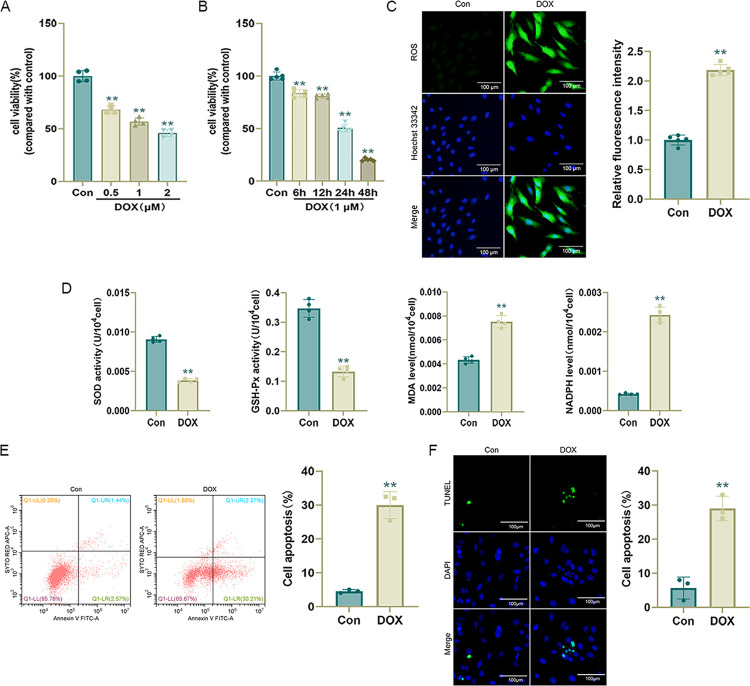
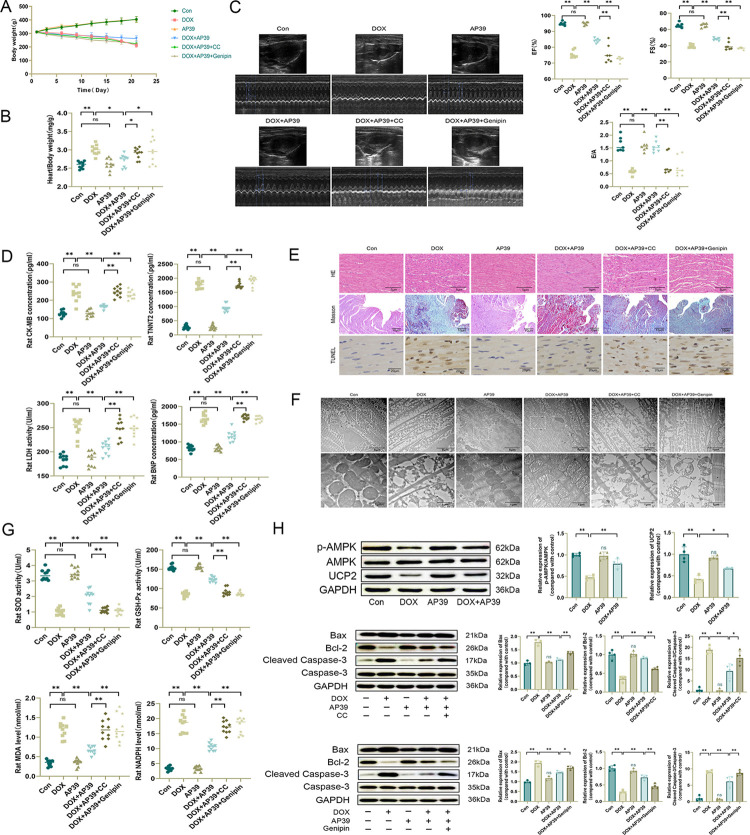
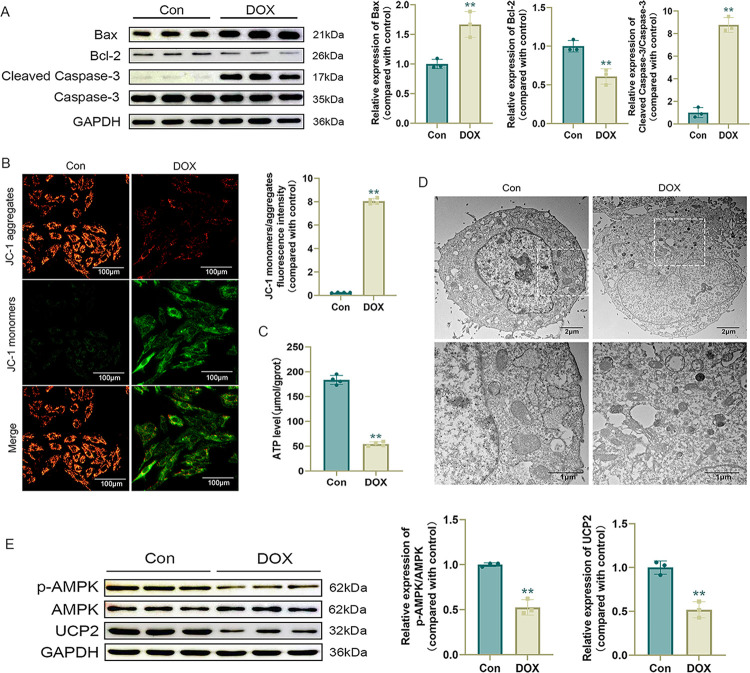
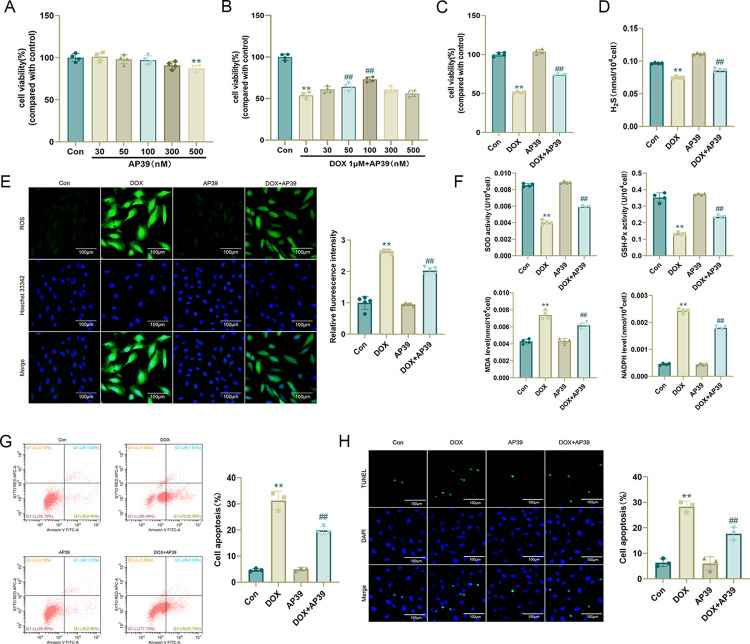
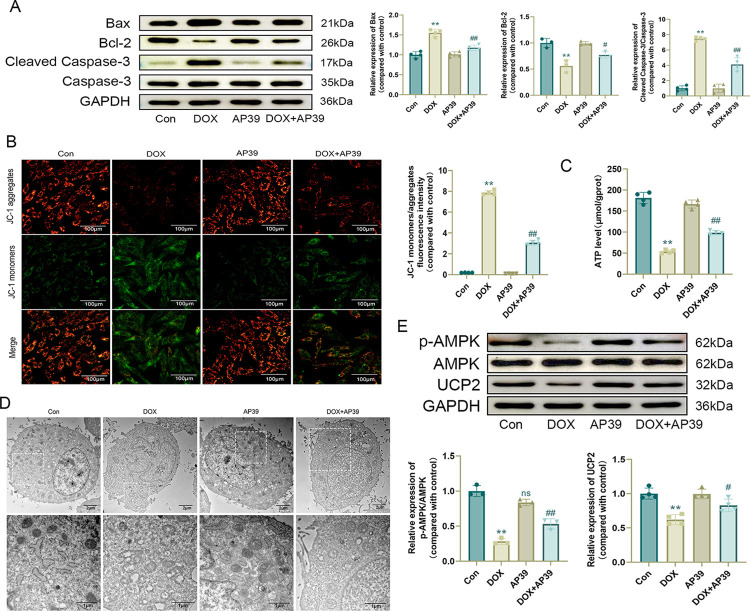
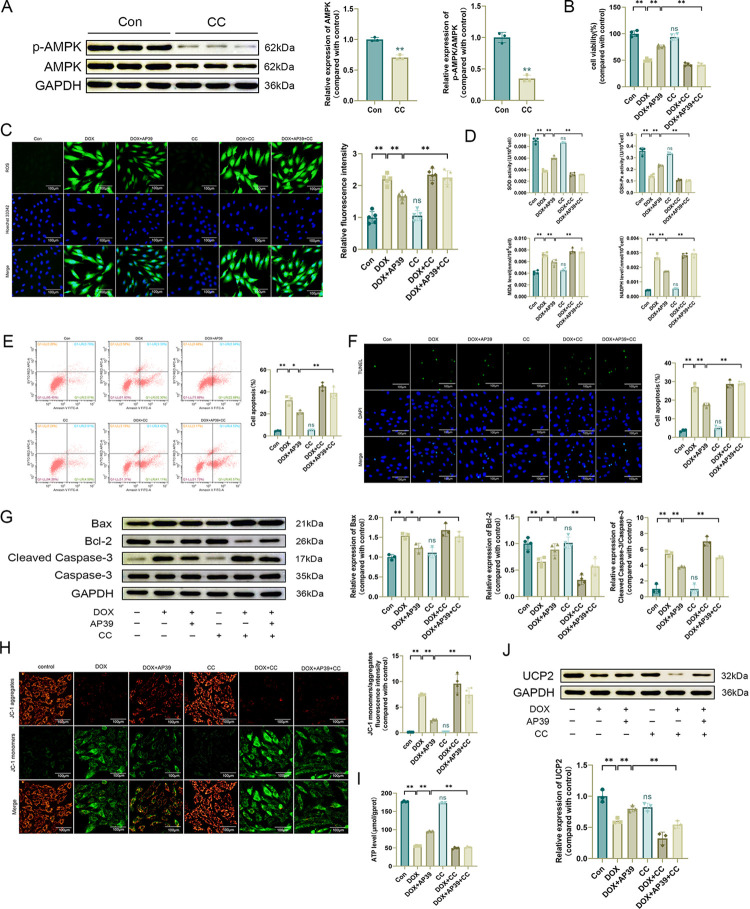
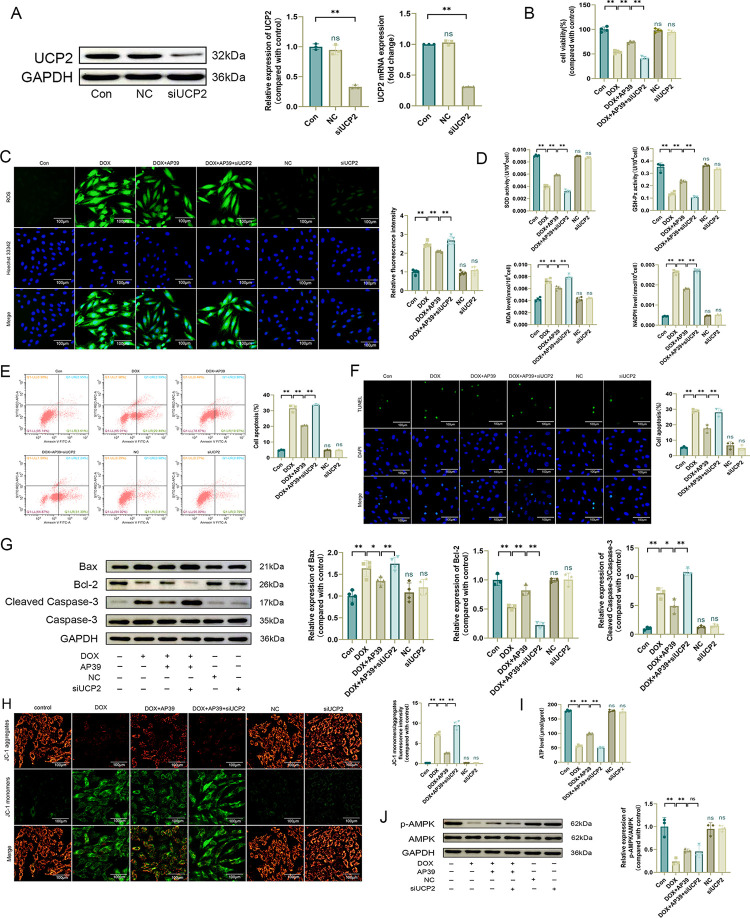
Doxorubicin (DOX) is a broad-spectrum, highly effective antitumor agent; however, its cardiotoxicity has greatly limited its use. Hydrogen sulfide (H2S) is an endogenous gaseous transmitter that exerts cardioprotective effects via the regulation of oxidative stress and apoptosis and maintenance of mitochondrial function, among other mechanisms. AP39 is a novel mitochondria-targeted H2S donor that, at appropriate concentrations, attenuates intracellular oxidative stress damage, maintains mitochondrial function, and ameliorates cardiomyocyte injury. In this study, DOX-induced cardiotoxicity models were established using H9c2 cells and Sprague-Dawley rats to evaluate the protective effect of AP39 and its mechanisms of action. Both in vivo and in vitro experiments showed that DOX induces oxidative stress injury, apoptosis, and mitochondrial damage in cardiomyocytes and decreases the expression of p-AMPK/AMPK and UCP2. All DOX-induced changes were attenuated by AP39 treatment. Furthermore, the protective effect of AP39 was significantly attenuated by the inhibition of AMPK and UCP2. The results suggest that AP39 ameliorates DOX-induced cardiotoxicity by regulating the expression of AMPK/UCP2.
阿霉素(DOX)是一种广谱、高效的抗肿瘤药物;然而,其心脏毒性极大地限制了它的应用。硫化氢(H2S)是一种内源性气体递质,通过调节氧化应激和细胞凋亡以及维持线粒体功能等机制发挥心脏保护作用。AP39 是一种新型的线粒体靶向 H2S 供体,在适当的浓度下,可减轻细胞内氧化应激损伤,维持线粒体功能,改善心肌细胞损伤。在这项研究中,使用 H9c2 细胞和 Sprague-Dawley 大鼠建立了 DOX 诱导的心脏毒性模型,以评估 AP39 的保护作用及其作用机制。体内和体外实验均表明,DOX 诱导心肌细胞氧化应激损伤、细胞凋亡和线粒体损伤,降低 p-AMPK/AMPK 和 UCP2 的表达。AP39 处理可减轻所有 DOX 诱导的变化。此外,AMPK 和 UCP2 的抑制显著减弱了 AP39 的保护作用。结果表明,AP39 通过调节 AMPK/UCP2 的表达来改善 DOX 诱导的心脏毒性。