IRCCS Neuromed, Pozzilli Isernia, Italy.
Department of Translational Research and New Technologies in Medicine and Surgery, University of Pisa, Pisa, Italy.
Curr Neuropharmacol. 2022;20(4):662-674. doi: 10.2174/1570159X19666210421094204.
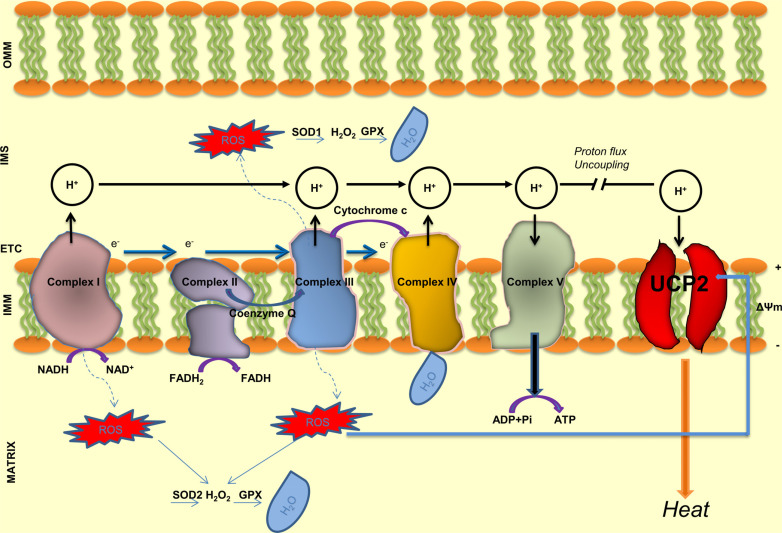
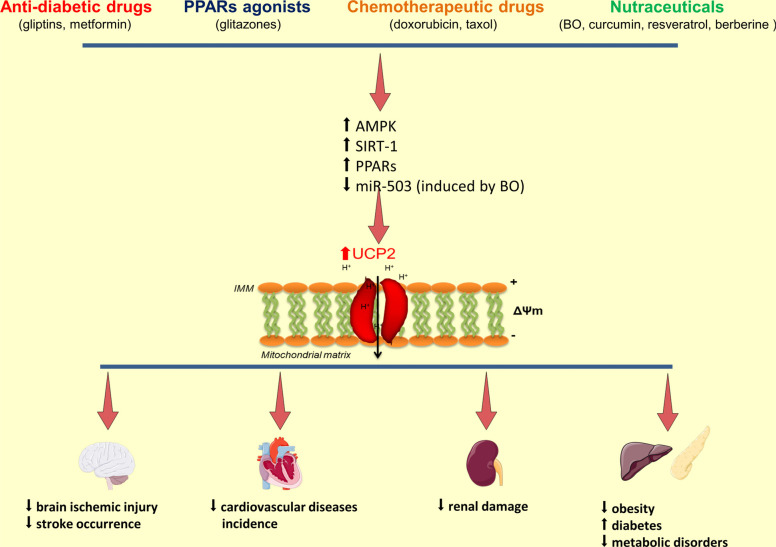
Uncoupling protein 2 (UCP2) is a mitochondrial protein that acts as an anion carrier. It is involved in the regulation of several processes, including mitochondrial membrane potential, generation of reactive oxygen species within the inner mitochondrial membrane and calcium homeostasis. UCP2 expression can be regulated at different levels: genetic (gene variants), transcriptional [by peroxisome proliferator-activated receptors (PPARs) and microRNAs], and post-translational. Experimental evidence indicates that activation of UCP2 expression through the AMPK/PPAR-α axis exerts a protective effect toward renal damage and stroke occurrence in an animal model of ischemic stroke (IS) associated with hypertension. UCP2 plays a key role in heart diseases (myocardial infarction and cardiac hypertrophy) and metabolic disorders (obesity and diabetes). In humans, UCP2 genetic variants (-866G/A and Ala55Val) associate with an increased risk of type 2 diabetes mellitus and IS development. Over the last few years, many agents that modulate UCP2 expression have been identified. Some of them are natural compounds of plant origin, such as Brassica oleracea, curcumin, berberine and resveratrol. Other molecules, currently used in clinical practice, include anti-diabetic (gliptin) and chemotherapeutic (doxorubicin and taxol) drugs. This evidence highlights the relevant role of UCP2 for the treatment of a wide range of diseases, which affect the national health systems of Western countries. We will review current knowledge on the physiological and pathological implications of UCP2 with particular regard to cardiovascular and metabolic disorders and will focus on the available therapeutic approaches affecting UCP2 level for the treatment of human diseases.
解偶联蛋白 2(UCP2)是一种作为阴离子载体的线粒体蛋白。它参与了多个过程的调节,包括线粒体膜电位、线粒体内膜中活性氧的产生和钙稳态。UCP2 的表达可以在不同水平上进行调节:遗传(基因变异)、转录[由过氧化物酶体增殖物激活受体(PPARs)和 microRNAs 调节]和翻译后。实验证据表明,通过 AMPK/PPAR-α 轴激活 UCP2 的表达对高血压相关缺血性中风(IS)动物模型中的肾损伤和中风发生具有保护作用。UCP2 在心脏病(心肌梗死和心肌肥厚)和代谢紊乱(肥胖和糖尿病)中起关键作用。在人类中,UCP2 基因变异(-866G/A 和 Ala55Val)与 2 型糖尿病和 IS 发展的风险增加相关。在过去的几年中,已经鉴定出许多调节 UCP2 表达的药物。其中一些是植物来源的天然化合物,如甘蓝型油菜、姜黄素、小檗碱和白藜芦醇。其他一些目前在临床实践中使用的分子包括抗糖尿病(gliptin)和化疗(多柔比星和紫杉醇)药物。这一证据强调了 UCP2 在治疗广泛疾病方面的重要作用,这些疾病影响西方国家的国家卫生系统。我们将回顾 UCP2 的生理和病理意义的现有知识,特别是在心血管和代谢紊乱方面,并将重点关注影响 UCP2 水平的可用治疗方法,以治疗人类疾病。