Blair Gordon, Appleton Jason P, Mhlanga Iris, Woodhouse Lisa J, Doubal Fergus, Bath Philip M, Wardlaw Joanna M
University of Edinburgh, Edinburgh, UK.
Stroke Trials Unit, Division of Clinical Neuroscience, University of Nottingham, Nottingham, UK.
Stroke Vasc Neurol. 2024 Dec 30;9(6):581-594. doi: 10.1136/svn-2023-003022.
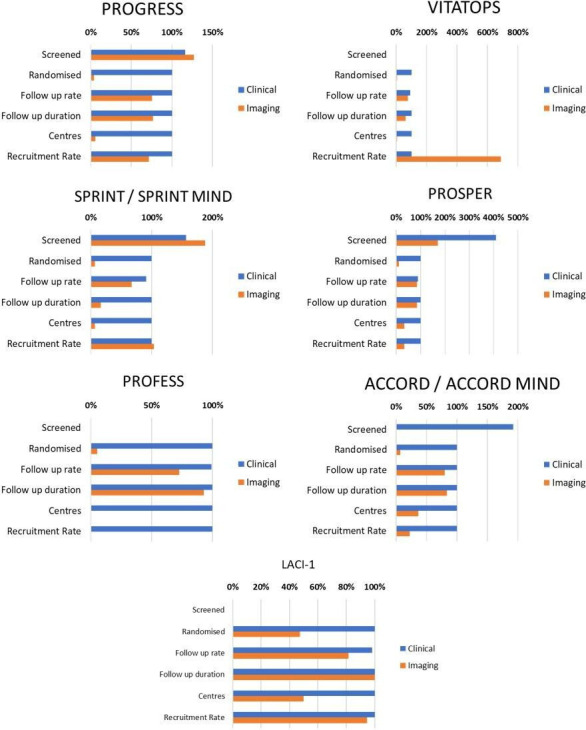
Cerebral small vessel disease (cSVD) causes lacunar stroke (25% of ischaemic strokes), haemorrhage, dementia, physical frailty, or is 'covert', but has no specific treatment. Uncertainties about the design of clinical trials in cSVD, which patients to include or outcomes to assess, may have delayed progress. Based on experience in recent cSVD trials, we reviewed ways to facilitate future trials in patients with cSVD.We assessed the literature and the LACunar Intervention Trial 2 (LACI-2) for data to inform choice of Participant, Intervention, Comparator, Outcome, including clinical versus intermediary endpoints, potential interventions, effect of outcome on missing data, methods to aid retention and reduce data loss. We modelled risk of missing outcomes by baseline prognostic variables in LACI-2 using binary logistic regression.Imaging versus clinical outcomes led to larger proportions of missing data. We present reasons for and against broad versus narrow entry criteria. We identified numerous repurposable drugs with relevant modes of action to test in various cSVD subtypes. Cognitive impairment is the most common clinical outcome after lacunar ischaemic stroke but was missing more frequently than dependency, quality of life or vascular events in LACI-2. Assessing cognitive status using Diagnostic and Statistical Manual for Mental Disorders Fifth Edition can use cognitive data from multiple sources and may help reduce data losses.Trials in patients with all cSVD subtypes are urgently needed and should use broad entry criteria and clinical outcomes and focus on ways to maximise collection of cognitive outcomes to avoid missing data.
脑小血管病(cSVD)可导致腔隙性卒中(占缺血性卒中的25%)、出血、痴呆、身体虚弱,或表现为“隐匿性”,但尚无特异性治疗方法。cSVD临床试验设计方面的不确定性,包括纳入哪些患者或评估哪些结局,可能延缓了研究进展。基于近期cSVD试验的经验,我们回顾了促进未来cSVD患者试验的方法。我们评估了文献和腔隙性脑梗死干预试验2(LACI-2)的数据,以指导参与者、干预措施、对照、结局的选择,包括临床终点与中间终点、潜在干预措施、结局对缺失数据的影响、有助于保留和减少数据丢失的方法。我们使用二元逻辑回归,通过LACI-2中的基线预后变量对缺失结局的风险进行建模。影像学结局与临床结局相比,导致更高比例的缺失数据。我们阐述了采用宽泛或严格纳入标准的支持和反对理由。我们确定了多种具有相关作用模式的可重新利用药物,用于在各种cSVD亚型中进行试验。认知障碍是腔隙性缺血性卒中后最常见的临床结局,但在LACI-2中,其缺失频率高于依赖、生活质量或血管事件。使用《精神疾病诊断与统计手册》第五版评估认知状态,可以利用来自多个来源的认知数据,可能有助于减少数据丢失。迫切需要对所有cSVD亚型的患者进行试验,应采用宽泛的纳入标准和临床结局,并关注如何最大限度地收集认知结局以避免数据缺失。