Ruth L. and David S. Gottesman Institute for Stem Cell and Regenerative Medicine Research, Albert Einstein College of Medicine, Bronx, New York, USA.
Department of Genetics, Albert Einstein College of Medicine, Bronx, New York, USA.
Commun Biol. 2024 Apr 5;7(1):415. doi: 10.1038/s42003-024-06120-w.
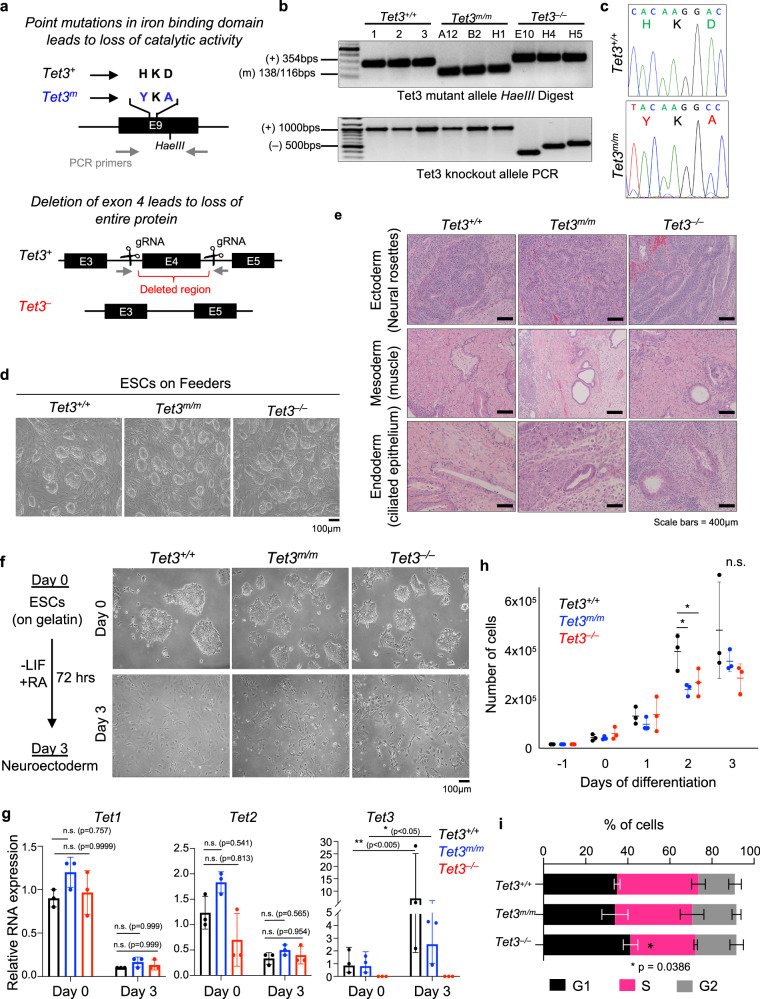
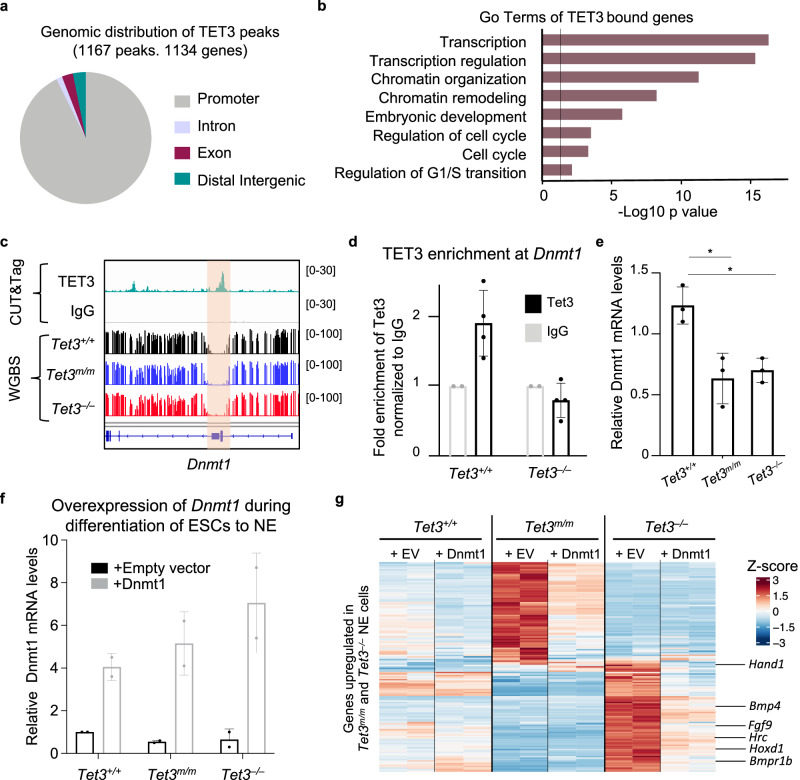
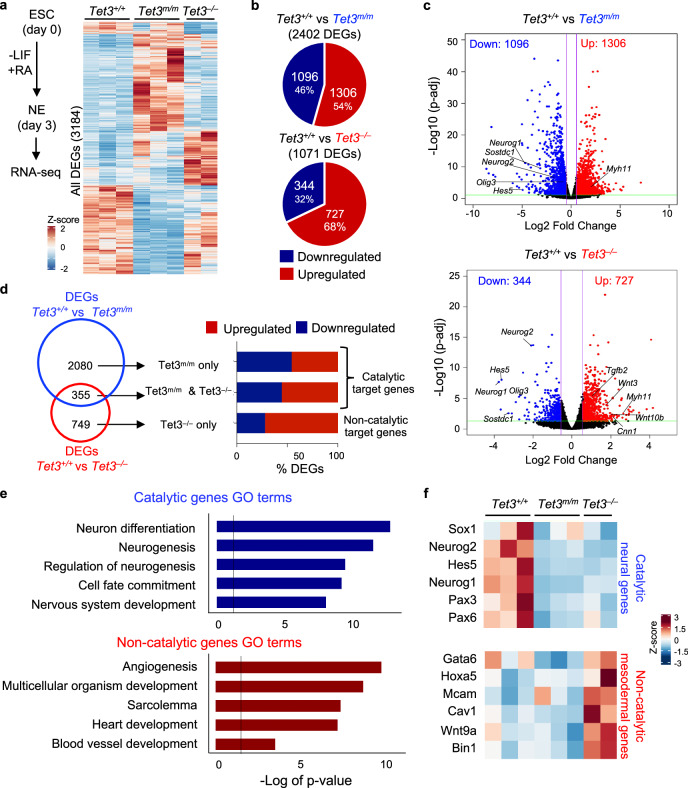
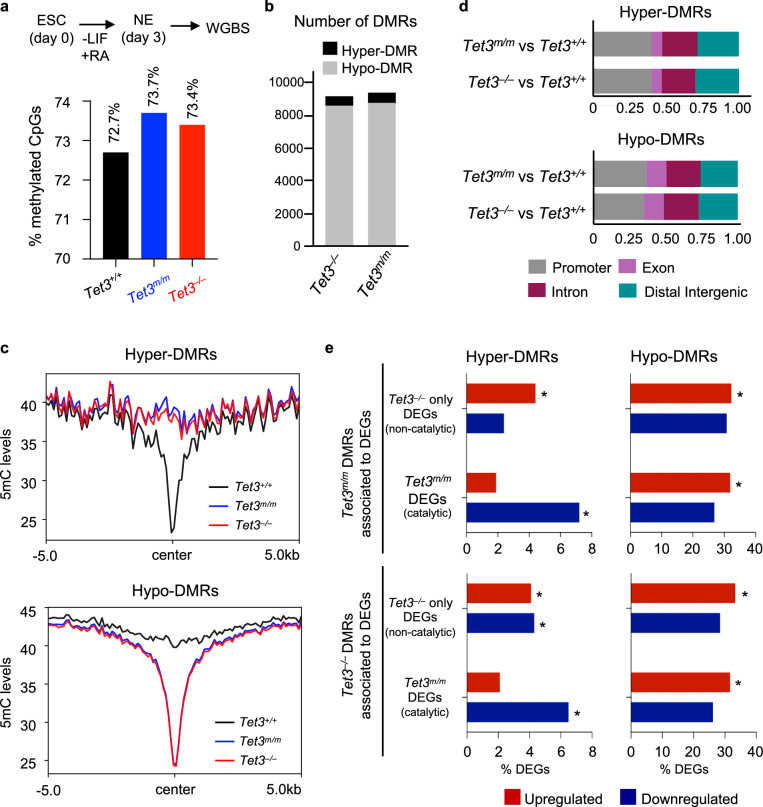
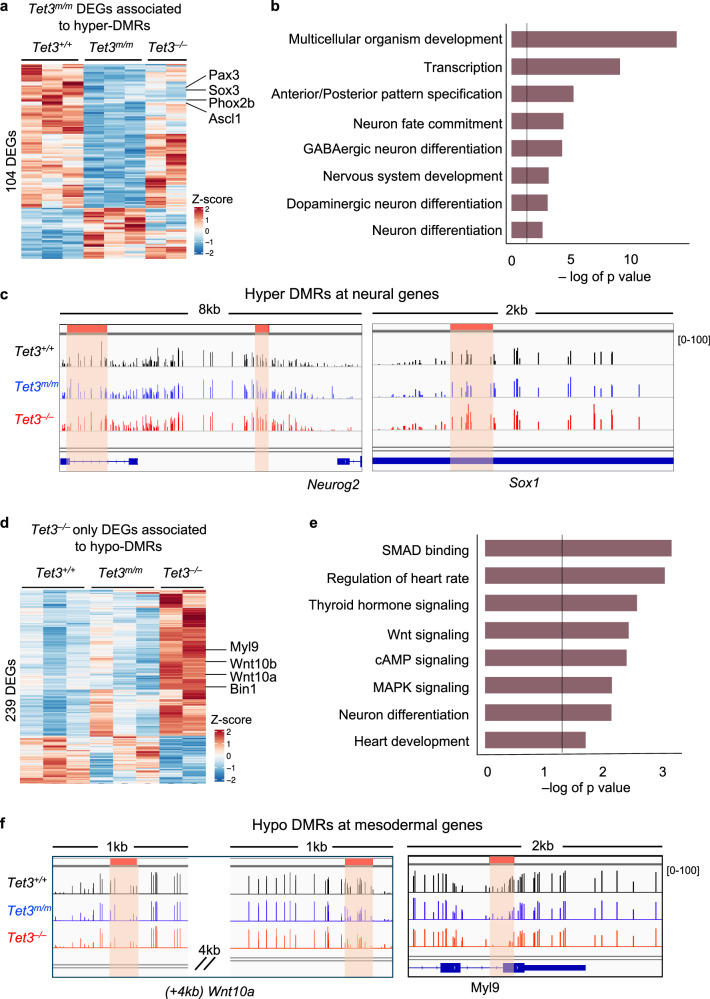
The ten-eleven-translocation family of proteins (TET1/2/3) are epigenetic regulators of gene expression. They regulate genes by promoting DNA demethylation (i.e., catalytic activity) and by partnering with regulatory proteins (i.e., non-catalytic functions). Unlike Tet1 and Tet2, Tet3 is not expressed in mouse embryonic stem cells (ESCs) but is induced upon ESC differentiation. However, the significance of its dual roles in lineage specification is less defined. By generating TET3 catalytic-mutant (Tet3) and knockout (Tet3) mouse ESCs and differentiating them to neuroectoderm (NE), we identify distinct catalytic-dependent and independent roles of TET3 in NE specification. We find that the catalytic activity of TET3 is important for activation of neural genes while its non-catalytic functions are involved in suppressing mesodermal programs. Interestingly, the vast majority of differentially methylated regions (DMRs) in Tet3 and Tet3 NE cells are hypomethylated. The hypo-DMRs are associated to aberrantly upregulated genes while the hyper-DMRs are linked to downregulated neural genes. We find the maintenance methyltransferase Dnmt1 as a direct target of TET3, which is downregulated in TET3-deficient NE cells and may contribute to the increased DNA hypomethylation. Our findings establish that the catalytic-dependent and -independent roles of TET3 have distinct contributions to NE specification with potential implications in development.
十-十一易位蛋白家族(TET1/2/3)是基因表达的表观遗传调控因子。它们通过促进 DNA 去甲基化(即催化活性)和与调节蛋白(即非催化功能)合作来调节基因。与 Tet1 和 Tet2 不同,Tet3 在小鼠胚胎干细胞(ESCs)中不表达,但在 ESC 分化时被诱导表达。然而,其在谱系特化中的双重作用的意义尚不明确。通过生成 TET3 催化突变(Tet3)和敲除(Tet3)小鼠 ESCs 并将其分化为神经外胚层(NE),我们确定了 TET3 在 NE 特化中的独特的催化依赖和非催化依赖作用。我们发现 TET3 的催化活性对于神经基因的激活很重要,而其非催化功能则参与抑制中胚层程序。有趣的是,在 Tet3 和 Tet3 NE 细胞中,绝大多数差异甲基化区域(DMRs)呈低甲基化。低甲基化 DMRs 与异常上调的基因相关,而高甲基化 DMRs 与下调的神经基因相关。我们发现维持甲基转移酶 Dnmt1 是 TET3 的直接靶标,TET3 在 Tet3 缺陷型 NE 细胞中下调,可能导致 DNA 低甲基化增加。我们的研究结果表明,TET3 的催化依赖和非依赖作用对 NE 特化具有不同的贡献,这可能对发育具有潜在影响。