Department of Preventive Veterinary Medicine, College of Veterinary Medicine, Northwest A&F University, Yangling Observing and Experimental Station of National Data Center of Animal Health, Ministry of Agriculture, Yangling, 712100, China.
Department of Preventive Veterinary Medicine, College of Veterinary Medicine, Northwest A&F University, Yangling Observing and Experimental Station of National Data Center of Animal Health, Ministry of Agriculture, Yangling, 712100, China.
Virol Sin. 2024 Jun;39(3):478-489. doi: 10.1016/j.virs.2024.04.002. Epub 2024 Apr 6.
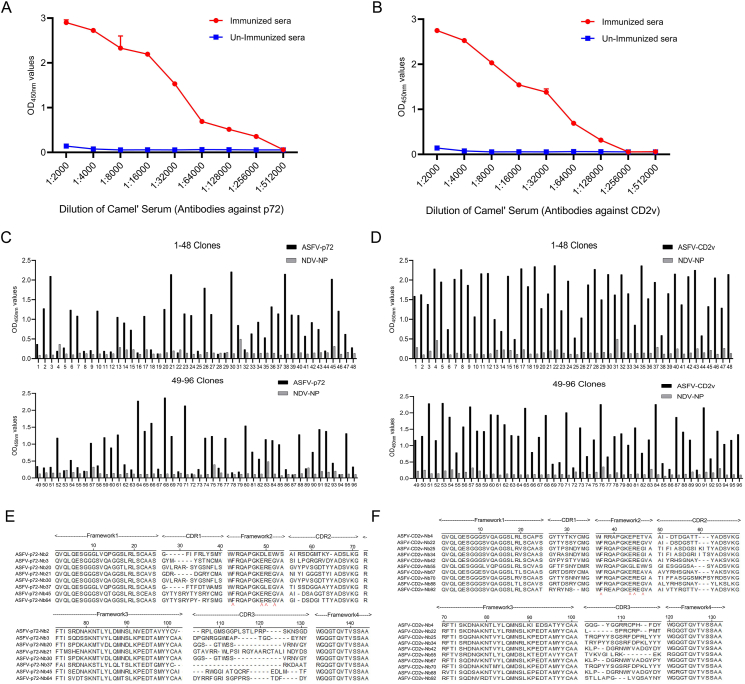
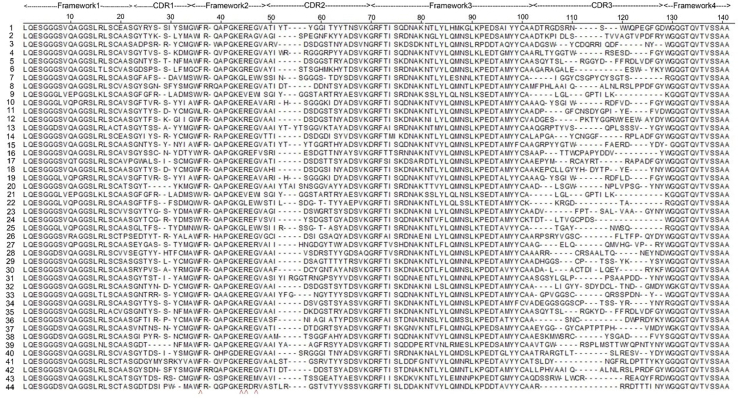
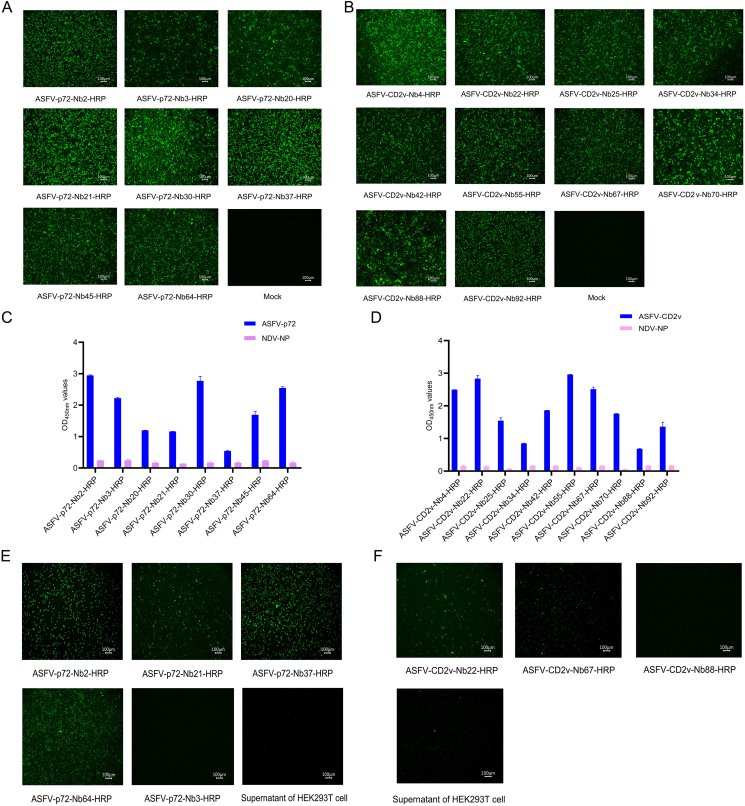
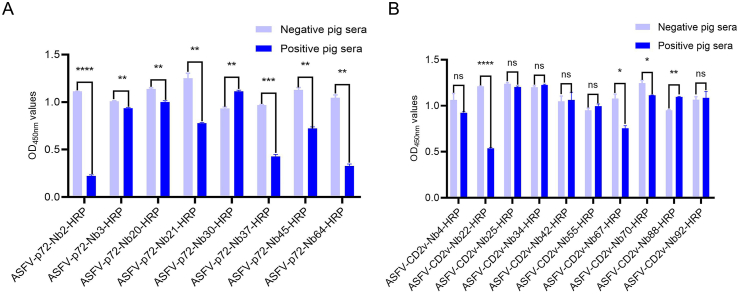
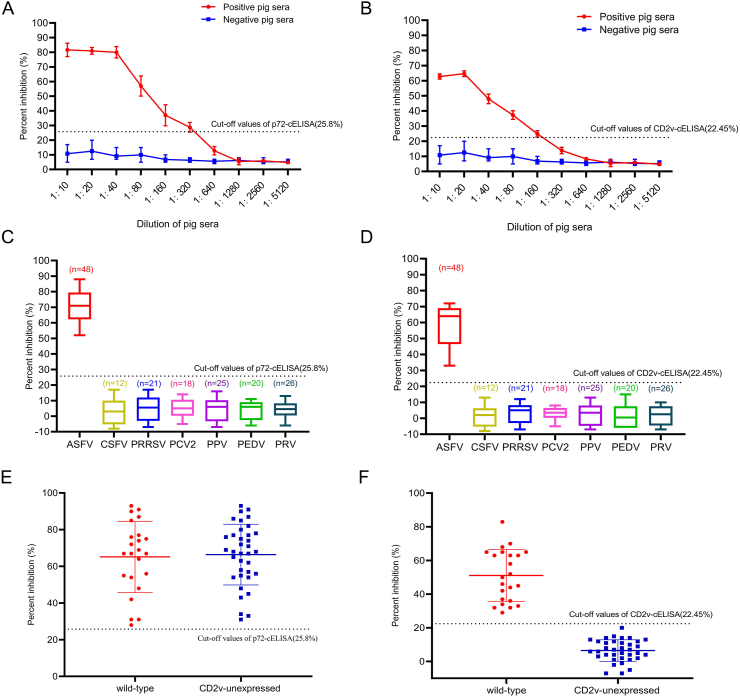
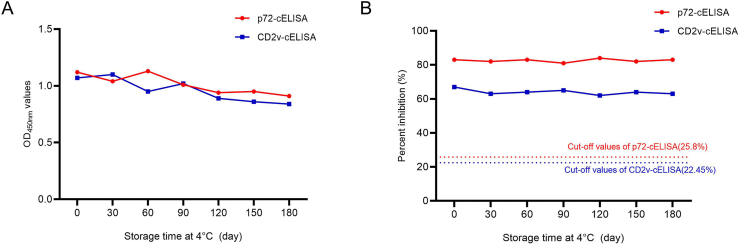
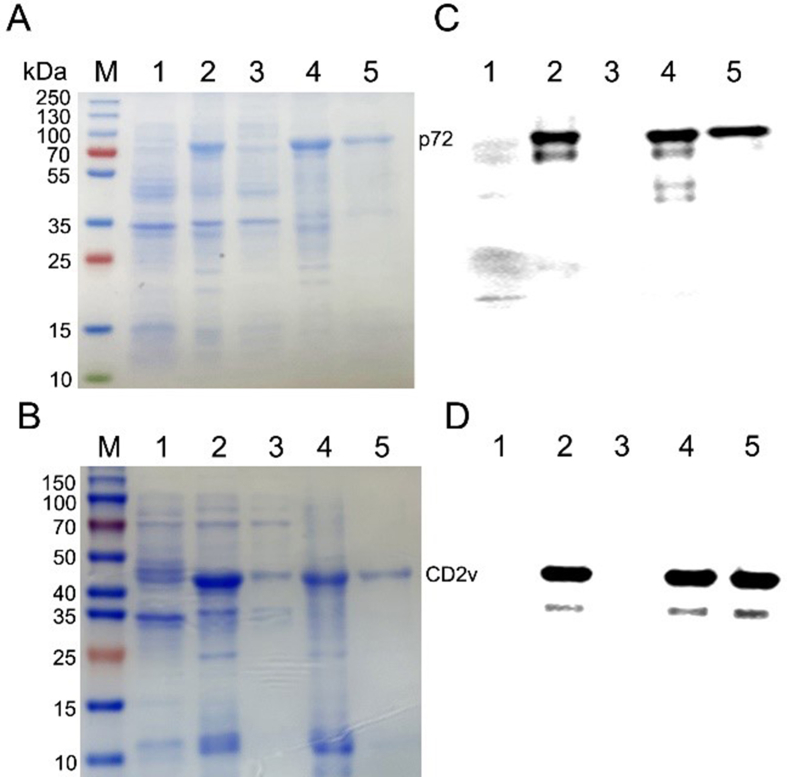
African swine fever virus (ASFV) poses a significant threat to the global swine industry. Currently, there are no effective vaccines or treatments available to combat ASFV infection in pigs. The primary means of controlling the spread of the disease is through rapid detection and subsequent elimination of infected pig. Recently, a lower virulent ASFV isolate with a deleted EP402R gene (CD2v-deleted) has been reported in China, which further complicates the control of ASFV infection in pig farms. Furthermore, an EP402R-deleted ASFV variant has been developed as a potential live attenuated vaccine candidate strain. Therefore, it is crucial to develop detection methods that can distinguish wild-type and EP402R-deleted ASFV infections. In this study, two recombinant ASFV-p72 and -CD2v proteins were expressed using a prokaryotic system and used to immunize Bactrian camels. Subsequently, eight nanobodies against ASFV-p72 and ten nanobodies against ASFV-CD2v were screened. Following the production of these nanobodies with horse radish peroxidase (HRP) fusion proteins, the ASFV-p72-Nb2-HRP and ASFV-CD2v-Nb22-HRP fusions were selected for the development of two competitive ELISAs (cELISAs) to detect anti-ASFV antibodies. The two cELISAs exhibited high sensitivity, good specificity, repeatability, and stability. The coincidence rate between the two cELISAs and commercial ELISA kits was 98.6% and 97.6%, respectively. Collectively, the two cELISA for detecting antibodies against ASFV demonstrated ease of operation, a low cost, and a simple production process. The two cELISAs could determine whether pigs were infected with wild-type or CD2v-deleted ASFV, and could play an important role in monitoring ASFV infections in pig farms.
非洲猪瘟病毒(ASFV)对全球养猪业构成重大威胁。目前,尚无有效疫苗或治疗方法可用于对抗猪感染 ASFV。控制疾病传播的主要手段是通过快速检测和随后消除感染猪。最近,中国报道了一种 EP402R 基因缺失(CD2v 缺失)的低毒力 ASFV 分离株,这进一步增加了控制猪场 ASFV 感染的难度。此外,EP402R 缺失的 ASFV 变体已被开发为潜在的活减毒疫苗候选株。因此,开发能够区分野生型和 EP402R 缺失型 ASFV 感染的检测方法至关重要。在本研究中,使用原核系统表达了两种重组 ASFV-p72 和 -CD2v 蛋白,并用于免疫双峰驼。随后,筛选了针对 ASFV-p72 的 8 种纳米抗体和针对 ASFV-CD2v 的 10 种纳米抗体。这些纳米抗体与辣根过氧化物酶(HRP)融合蛋白产生后,选择 ASFV-p72-Nb2-HRP 和 ASFV-CD2v-Nb22-HRP 融合蛋白,开发了两种竞争 ELISA(cELISA)来检测抗 ASFV 抗体。这两种 cELISA 具有高灵敏度、良好的特异性、重复性和稳定性。两种 cELISA 与商业 ELISA 试剂盒的符合率分别为 98.6%和 97.6%。总之,这两种用于检测抗 ASFV 抗体的 cELISA 具有操作简单、成本低和生产工艺简单的特点。这两种 cELISA 可用于确定猪是否感染了野生型或 CD2v 缺失型 ASFV,可在猪场 ASFV 感染监测中发挥重要作用。