• 文献检索
  • 文档翻译
  • 深度研究
  • 学术资讯
  • Suppr Zotero 插件Zotero 插件
  • 邀请有礼
  • 套餐&价格
  • 历史记录
应用&插件
Suppr Zotero 插件Zotero 插件浏览器插件Mac 客户端Windows 客户端微信小程序
定价
高级版会员购买积分包购买API积分包
服务
文献检索文档翻译深度研究API 文档MCP 服务
关于我们
关于 Suppr公司介绍联系我们用户协议隐私条款
关注我们

Suppr 超能文献

核心技术专利:CN118964589B侵权必究
粤ICP备2023148730 号-1Suppr @ 2026

文献检索

告别复杂PubMed语法,用中文像聊天一样搜索,搜遍4000万医学文献。AI智能推荐,让科研检索更轻松。

立即免费搜索

文件翻译

保留排版,准确专业,支持PDF/Word/PPT等文件格式,支持 12+语言互译。

免费翻译文档

深度研究

AI帮你快速写综述,25分钟生成高质量综述,智能提取关键信息,辅助科研写作。

立即免费体验

预测 COVID-19 大流行的跨境传播:中国境外输入病例的预测模型。

Prediction of cross-border spread of the COVID-19 pandemic: A predictive model for imported cases outside China.

机构信息

Science and Technology Research Center of China Customs, Beijing, China.

School of Epidemiology and Public Health, Shanxi Medical University, Taiyuan, China.

出版信息

PLoS One. 2024 Apr 9;19(4):e0301420. doi: 10.1371/journal.pone.0301420. eCollection 2024.

DOI:10.1371/journal.pone.0301420
PMID:38593140
原文链接:https://pmc.ncbi.nlm.nih.gov/articles/PMC11003692/
Abstract

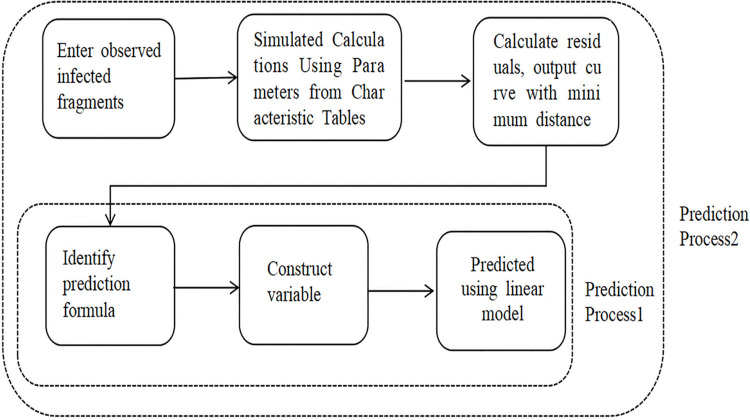
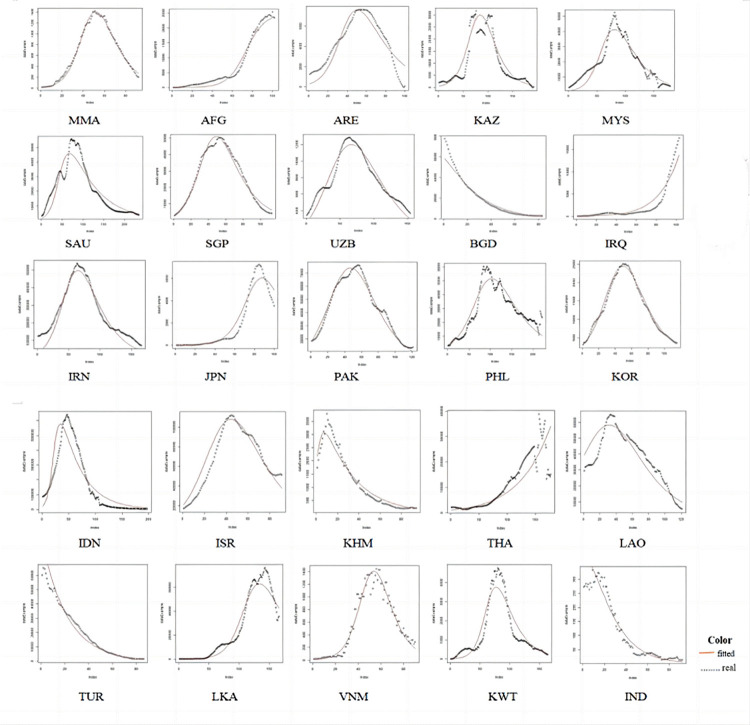
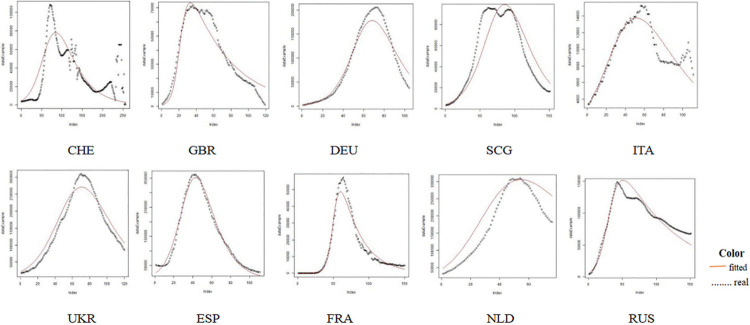
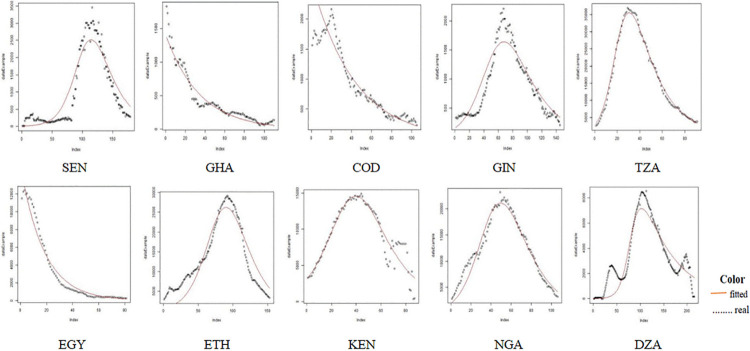
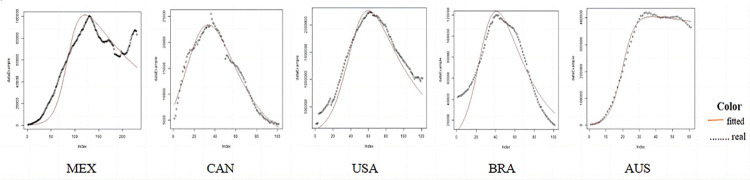
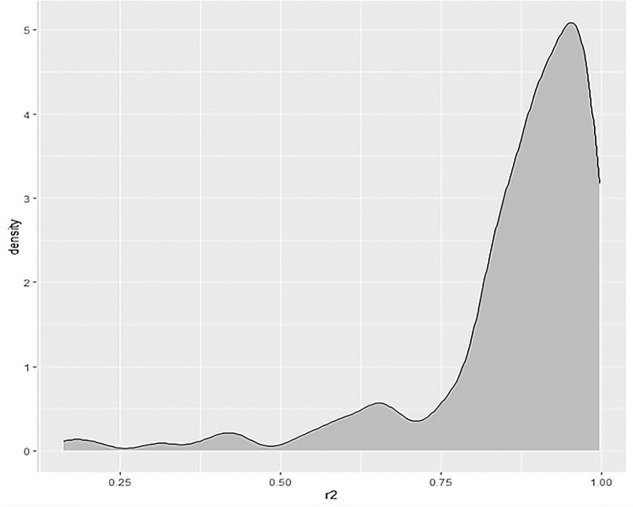
The COVID-19 pandemic has been present globally for more than three years, and cross-border transmission has played an important role in its spread. Currently, most predictions of COVID-19 spread are limited to a country (or a region), and models for cross-border transmission risk assessment remain lacking. Information on imported COVID-19 cases reported from March 2020 to June 2022 was collected from the National Health Commission of China, and COVID-19 epidemic data of the countries of origin of the imported cases were collected on data websites such as WHO and Our World in Data. It is proposed to establish a prediction model suitable for the prevention and control of overseas importation of COVID-19. Firstly, the SIR model was used to fit the epidemic infection status of the countries where the cases were exported, and most of the r2 values of the fitted curves obtained were above 0.75, which indicated that the SIR model could well fit different countries and the infection status of the region. After fitting the epidemic infection status data of overseas exporting countries, on this basis, a SIR-multiple linear regression overseas import risk prediction combination model was established, which can predict the risk of overseas case importation, and the established overseas import risk model overall P <0.05, the adjusted R2 = 0.7, indicating that the SIR-multivariate linear regression overseas import risk prediction combination model can obtain better prediction results. Our model effectively estimates the risk of imported cases of COVID-19 from abroad.

摘要

新冠疫情已在全球持续了三年多,跨境传播在其传播中发挥了重要作用。目前,大多数新冠传播预测仅限于一个国家(或地区),跨境传播风险评估模型仍然缺乏。本研究收集了 2020 年 3 月至 2022 年 6 月中国国家卫生健康委员会报告的输入性新冠病例信息,并从世界卫生组织(WHO)和 Our World in Data 等数据网站收集了输入性病例来源国的新冠疫情数据。本研究旨在建立一种适合海外输入性新冠防控的预测模型。首先,使用 SIR 模型拟合出口病例国家的疫情感染状况,获得的拟合曲线的 r2 值大多在 0.75 以上,表明 SIR 模型可以很好地拟合不同国家和地区的感染状况。在拟合海外出口国的疫情感染状况数据后,在此基础上建立了 SIR-多元线性回归海外输入风险预测组合模型,可以预测海外病例输入的风险,建立的海外输入风险模型整体 P<0.05,调整后的 R2=0.7,表明 SIR-多元线性回归海外输入风险预测组合模型可以获得更好的预测结果。我们的模型有效地估计了来自国外的输入性新冠病例的风险。

https://cdn.ncbi.nlm.nih.gov/pmc/blobs/cfdf/11003692/e2f6e483969b/pone.0301420.g014.jpg
https://cdn.ncbi.nlm.nih.gov/pmc/blobs/cfdf/11003692/6d9e32e4e44c/pone.0301420.g001.jpg
https://cdn.ncbi.nlm.nih.gov/pmc/blobs/cfdf/11003692/5ca25492fd06/pone.0301420.g002.jpg
https://cdn.ncbi.nlm.nih.gov/pmc/blobs/cfdf/11003692/acd33c66c768/pone.0301420.g003.jpg
https://cdn.ncbi.nlm.nih.gov/pmc/blobs/cfdf/11003692/1b3a28f29a9e/pone.0301420.g004.jpg
https://cdn.ncbi.nlm.nih.gov/pmc/blobs/cfdf/11003692/d8c4efcacce0/pone.0301420.g005.jpg
https://cdn.ncbi.nlm.nih.gov/pmc/blobs/cfdf/11003692/03af0e232429/pone.0301420.g006.jpg
https://cdn.ncbi.nlm.nih.gov/pmc/blobs/cfdf/11003692/1713c6a87a6b/pone.0301420.g007.jpg
https://cdn.ncbi.nlm.nih.gov/pmc/blobs/cfdf/11003692/b2b80f93d3e2/pone.0301420.g008.jpg
https://cdn.ncbi.nlm.nih.gov/pmc/blobs/cfdf/11003692/0cb04808da46/pone.0301420.g009.jpg
https://cdn.ncbi.nlm.nih.gov/pmc/blobs/cfdf/11003692/20028b4bc054/pone.0301420.g010.jpg
https://cdn.ncbi.nlm.nih.gov/pmc/blobs/cfdf/11003692/46e81305abb0/pone.0301420.g011.jpg
https://cdn.ncbi.nlm.nih.gov/pmc/blobs/cfdf/11003692/fadfd6a6632e/pone.0301420.g012.jpg
https://cdn.ncbi.nlm.nih.gov/pmc/blobs/cfdf/11003692/885fdc02e356/pone.0301420.g013.jpg
https://cdn.ncbi.nlm.nih.gov/pmc/blobs/cfdf/11003692/e2f6e483969b/pone.0301420.g014.jpg
https://cdn.ncbi.nlm.nih.gov/pmc/blobs/cfdf/11003692/6d9e32e4e44c/pone.0301420.g001.jpg
https://cdn.ncbi.nlm.nih.gov/pmc/blobs/cfdf/11003692/5ca25492fd06/pone.0301420.g002.jpg
https://cdn.ncbi.nlm.nih.gov/pmc/blobs/cfdf/11003692/acd33c66c768/pone.0301420.g003.jpg
https://cdn.ncbi.nlm.nih.gov/pmc/blobs/cfdf/11003692/1b3a28f29a9e/pone.0301420.g004.jpg
https://cdn.ncbi.nlm.nih.gov/pmc/blobs/cfdf/11003692/d8c4efcacce0/pone.0301420.g005.jpg
https://cdn.ncbi.nlm.nih.gov/pmc/blobs/cfdf/11003692/03af0e232429/pone.0301420.g006.jpg
https://cdn.ncbi.nlm.nih.gov/pmc/blobs/cfdf/11003692/1713c6a87a6b/pone.0301420.g007.jpg
https://cdn.ncbi.nlm.nih.gov/pmc/blobs/cfdf/11003692/b2b80f93d3e2/pone.0301420.g008.jpg
https://cdn.ncbi.nlm.nih.gov/pmc/blobs/cfdf/11003692/0cb04808da46/pone.0301420.g009.jpg
https://cdn.ncbi.nlm.nih.gov/pmc/blobs/cfdf/11003692/20028b4bc054/pone.0301420.g010.jpg
https://cdn.ncbi.nlm.nih.gov/pmc/blobs/cfdf/11003692/46e81305abb0/pone.0301420.g011.jpg
https://cdn.ncbi.nlm.nih.gov/pmc/blobs/cfdf/11003692/fadfd6a6632e/pone.0301420.g012.jpg
https://cdn.ncbi.nlm.nih.gov/pmc/blobs/cfdf/11003692/885fdc02e356/pone.0301420.g013.jpg
https://cdn.ncbi.nlm.nih.gov/pmc/blobs/cfdf/11003692/e2f6e483969b/pone.0301420.g014.jpg

相似文献

1
Prediction of cross-border spread of the COVID-19 pandemic: A predictive model for imported cases outside China.预测 COVID-19 大流行的跨境传播:中国境外输入病例的预测模型。
PLoS One. 2024 Apr 9;19(4):e0301420. doi: 10.1371/journal.pone.0301420. eCollection 2024.
2
[Risk assessment of global COVID-19 imported cases into China].[中国境外输入新型冠状病毒肺炎病例风险评估]
Zhonghua Liu Xing Bing Xue Za Zhi. 2020 Oct 10;41(10):1582-1587. doi: 10.3760/cma.j.cn112338-20200415-00577.
3
Travel-related control measures to contain the COVID-19 pandemic: a rapid review.旅行相关的控制措施以遏制 COVID-19 大流行:快速综述。
Cochrane Database Syst Rev. 2020 Oct 5;10:CD013717. doi: 10.1002/14651858.CD013717.
4
International travel-related control measures to contain the COVID-19 pandemic: a rapid review.国际旅行相关防控措施以遏制 COVID-19 大流行:快速综述。
Cochrane Database Syst Rev. 2021 Mar 25;3(3):CD013717. doi: 10.1002/14651858.CD013717.pub2.
5
Should we remain hopeful? The key 8 weeks: spatiotemporal epidemic characteristics of COVID-19 in Sichuan Province and its comparative analysis with other provinces in China and global epidemic trends.我们是否应该保持希望?关键的 8 周:四川省 COVID-19 的时空流行特征及其与中国其他省份和全球流行趋势的比较分析。
BMC Infect Dis. 2020 Nov 5;20(1):807. doi: 10.1186/s12879-020-05494-6.
6
[Management of coronavirus disease 2019 (COVID-19): experiences from imported malaria control in China].[2019年冠状病毒病(COVID-19)的管理:中国输入性疟疾防控的经验]
Zhongguo Xue Xi Chong Bing Fang Zhi Za Zhi. 2020 Mar 18;32(2):113-118. doi: 10.16250/j.32.1374.2020063.
7
Tracing and analysis of 288 early SARS-CoV-2 infections outside China: A modeling study.对中国境外 288 例 SARS-CoV-2 早期感染的追踪和分析:一项建模研究。
PLoS Med. 2020 Jul 17;17(7):e1003193. doi: 10.1371/journal.pmed.1003193. eCollection 2020 Jul.
8
Study on the COVID-19 infection status, prevention and control strategies among people entering Shenzhen.深圳入境人员新冠病毒感染状况及防控策略研究
BMC Public Health. 2021 Mar 20;21(1):551. doi: 10.1186/s12889-021-10548-8.
9
Models to assess imported cases on the rebound of COVID-19 and design a long-term border control strategy in Heilongjiang Province, China.评估新冠肺炎反弹期间输入病例的模型,并为中国黑龙江省制定长期的边境管控策略。
Math Biosci Eng. 2022 Jan;19(1):1-33. doi: 10.3934/mbe.2022001. Epub 2021 Nov 8.
10
Risk assessment and evaluation of China's policy to prevent COVID-19 cases imported by plane.风险评估与评价:中国防止飞机输入新冠肺炎病例政策。
PLoS Negl Trop Dis. 2020 Dec 7;14(12):e0008908. doi: 10.1371/journal.pntd.0008908. eCollection 2020 Dec.

本文引用的文献

1
Modeling the spread dynamics of multiple-variant coronavirus disease under public health interventions: A general framework.公共卫生干预下多变异株冠状病毒病传播动力学建模:一个通用框架
Inf Sci (N Y). 2023 May;628:469-487. doi: 10.1016/j.ins.2023.02.001. Epub 2023 Feb 6.
2
Impact of cross-border-associated cases on the SARS-CoV-2 epidemic in Switzerland during summer 2020 and 2021.2020 年和 2021 年夏季瑞士 SARS-CoV-2 疫情中跨境相关病例的影响。
Epidemics. 2022 Dec;41:100654. doi: 10.1016/j.epidem.2022.100654. Epub 2022 Nov 17.
3
Compartmental structures used in modeling COVID-19: a scoping review.
用于建模 COVID-19 的隔室结构:范围综述。
Infect Dis Poverty. 2022 Jun 21;11(1):72. doi: 10.1186/s40249-022-01001-y.
4
Application of genetic algorithm combined with improved SEIR model in predicting the epidemic trend of COVID-19, China.遗传算法与改进的 SEIR 模型在中国预测 COVID-19 疫情趋势中的应用。
Sci Rep. 2022 May 26;12(1):8910. doi: 10.1038/s41598-022-12958-z.
5
A Robust Framework for Epidemic Analysis, Prediction and Detection of COVID-19.用于 COVID-19 的疫情分析、预测和检测的稳健框架。
Front Public Health. 2022 May 6;10:805086. doi: 10.3389/fpubh.2022.805086. eCollection 2022.
6
A novel reliability-based regression model to analyze and forecast the severity of COVID-19 patients.一种新颖的基于可靠性的回归模型,用于分析和预测 COVID-19 患者的严重程度。
BMC Med Inform Decis Mak. 2022 May 5;22(1):123. doi: 10.1186/s12911-022-01861-2.
7
A Multi-Period Curve Fitting Model for Short-Term Prediction of the COVID-19 Spread in the U.S. Metropolitans.一种用于美国大都市 COVID-19 传播短期预测的多时期曲线拟合模型。
Front Public Health. 2022 Jan 18;9:809877. doi: 10.3389/fpubh.2021.809877. eCollection 2021.
8
A multiple information model incorporating limited attention and information environment.一个包含有限注意力和信息环境的多信息模型。
PLoS One. 2021 Oct 7;16(10):e0257844. doi: 10.1371/journal.pone.0257844. eCollection 2021.
9
[SIR model of the pandemic trend of COVID-19 in Peru].[秘鲁新冠疫情趋势的SIR模型]
Rev Fac Cien Med Univ Nac Cordoba. 2021 Aug 23;78(3):236-242. doi: 10.31053/1853.0605.v78.n3.31142.
10
Epidemiological features of domestic and imported cases with COVID-19 between January 2020 and March 2021 in Taiwan.2020 年 1 月至 2021 年 3 月台湾地区 COVID-19 本地和输入病例的流行病学特征。
Medicine (Baltimore). 2021 Oct 1;100(39):e27360. doi: 10.1097/MD.0000000000027360.