Meléndez-Vázquez Natalie M, Nguyen Teresa T, Fan Xuejun, López-Rivas Andrés R, Fueyo Juan, Gomez-Manzano Candelaria, Godoy-Vitorino Filipa
Department of Microbiology and Medical Zoology, University of Puerto Rico, School of Medicine, Medical Sciences Campus, San Juan 00918 PR, USA.
Department of Neuro-Oncology, The University of Texas MD Anderson Cancer Center, Houston, TX 77030, USA.
Mol Ther Oncol. 2024 Feb 28;32(1):200787. doi: 10.1016/j.omton.2024.200787. eCollection 2024 Mar 21.
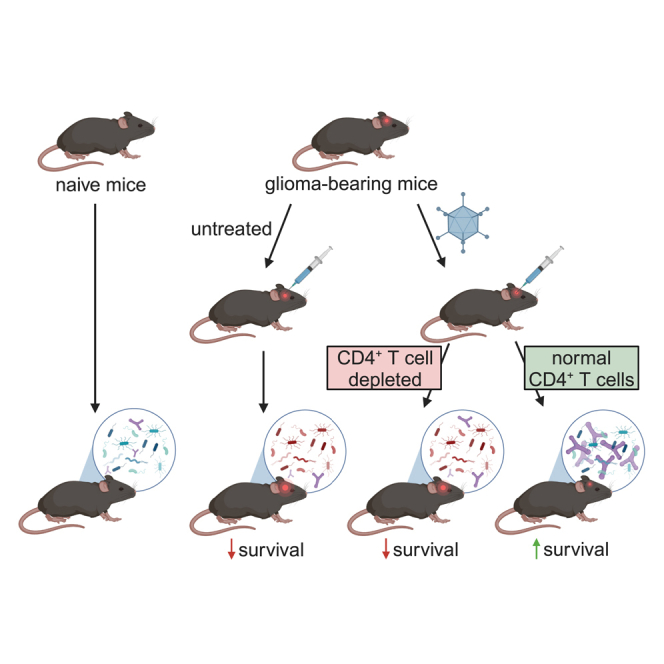
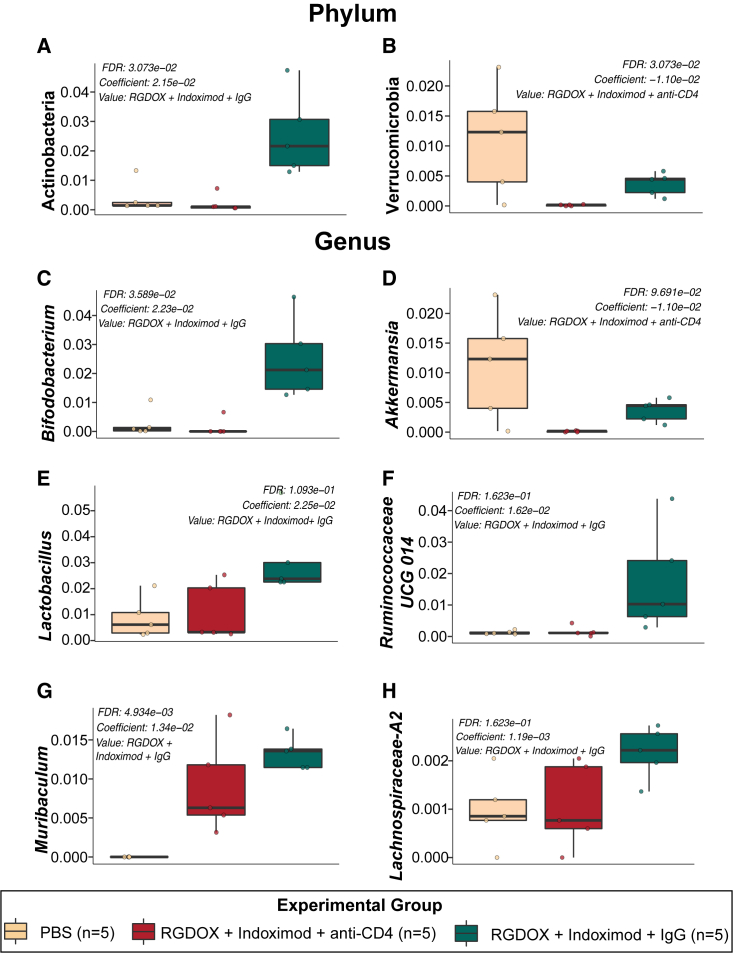
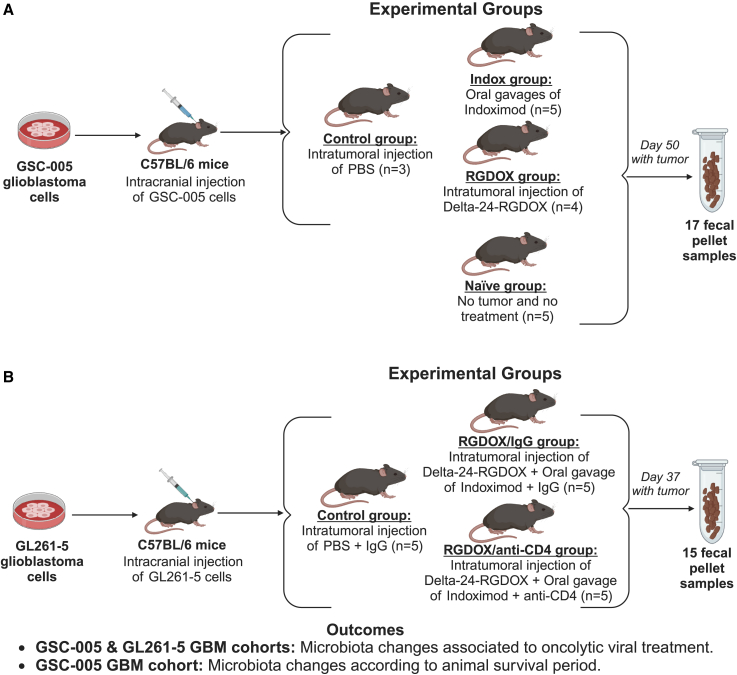
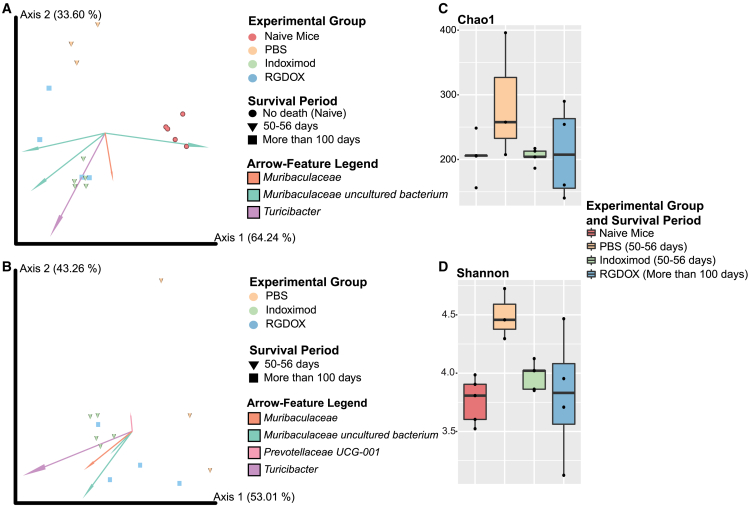
Glioblastoma, the most common primary brain tumor, has a 6.8% survival rate 5 years post diagnosis. Our team developed an oncolytic adenovirus with an OX-40L expression cassette named Delta-24-RGDOX. While studies have revealed the interaction between the gut microbiota and immunotherapy agents, there are no studies linking the gut microbiota with viroimmunotherapy efficacy. We hypothesize that gut bacterial signatures will be associated with oncolytic viral therapy efficacy. To test this hypothesis, we evaluated the changes in gut microbiota in two mouse cohorts: (1) GSC-005 glioblastoma-bearing mice treated orally with indoximod, an immunotherapeutic agent, or with Delta-24-RGDOX by intratumoral injection and (2) a mouse cohort harboring GL261-5 tumors used to mechanistically evaluate the importance of CD4 T cells in relation to viroimmunotherapy efficacy. Microbiota assessment indicated significant differences in the structure of the gut bacterial communities in viroimmunotherapy-treated animals with higher survival compared with control or indoximod-treated animals. Moreover, viroimmunotherapy-treated mice with prolonged survival had a higher abundance of . The CD4 T cell depletion was associated with gut dysbiosis, lower mouse survival, and lower antitumor efficacy of the therapy. These findings suggest that microbiota modulation along the gut-glioma axis contributes to the clinical efficacy and patient survival of viroimmunotherapy treated animals.
胶质母细胞瘤是最常见的原发性脑肿瘤,确诊后5年生存率为6.8%。我们的团队开发了一种带有OX - 40L表达盒的溶瘤腺病毒,名为Delta - 24 - RGDOX。虽然研究揭示了肠道微生物群与免疫治疗药物之间的相互作用,但尚无研究将肠道微生物群与病毒免疫治疗效果联系起来。我们假设肠道细菌特征将与溶瘤病毒治疗效果相关。为了验证这一假设,我们评估了两个小鼠队列中肠道微生物群的变化:(1)携带GSC - 005胶质母细胞瘤的小鼠,口服免疫治疗药物吲哚莫德或通过瘤内注射给予Delta - 24 - RGDOX;(2)一个携带GL261 - 5肿瘤的小鼠队列,用于从机制上评估CD4 T细胞与病毒免疫治疗效果的关系。微生物群评估表明,与对照或吲哚莫德治疗的动物相比,接受病毒免疫治疗且生存率较高的动物肠道细菌群落结构存在显著差异。此外,生存时间延长的病毒免疫治疗小鼠具有更高丰度的……。CD4 T细胞耗竭与肠道生态失调、小鼠生存率降低以及治疗的抗肿瘤效果降低相关。这些发现表明,沿肠道 - 胶质瘤轴的微生物群调节有助于病毒免疫治疗动物的临床疗效和患者生存。