Odhiambo Martin T O, Vulule John M, Afrane Yaw A, Ombok Maurice, Bosselmann Rune, Skovmand Ole
Centre for Global Health Research, Kenya Medical Research Institute, PO Box 1578, Kisumu, Kenya.
Jaramogi Oginga Odinga University of Science and Technology, PO Box 210-40601, Bondo, Kenya.
Malariaworld J. 2016 Aug 16;7:11. doi: 10.5281/zenodo.10818166. eCollection 2016.
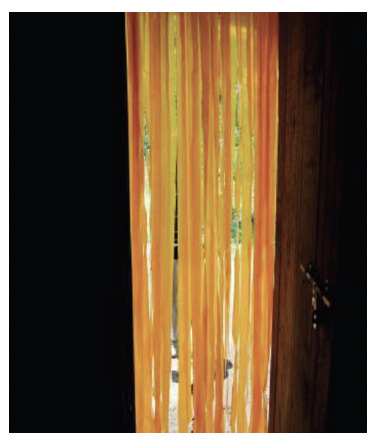
Use of insecticide treated bednets (ITNs) was a breakthrough in the fight against malaria. However, ITNs are only effective when properly used. Recent reports indicate low compliance in ITN usage and changes in biting times of malaria vectors with early and late biting cases recorded when people are not sleeping under their nets. Hence, there is a need to develop methods to supplement or replace the use of ITNs for malaria vector control. A field trial was conducted to investigate the effect and longevity of prototypes of long lasting impregnated UV protected eave nets, curtains and door hangers (fully screened houses), compared to houses with bednets only, in traditional East African houses.
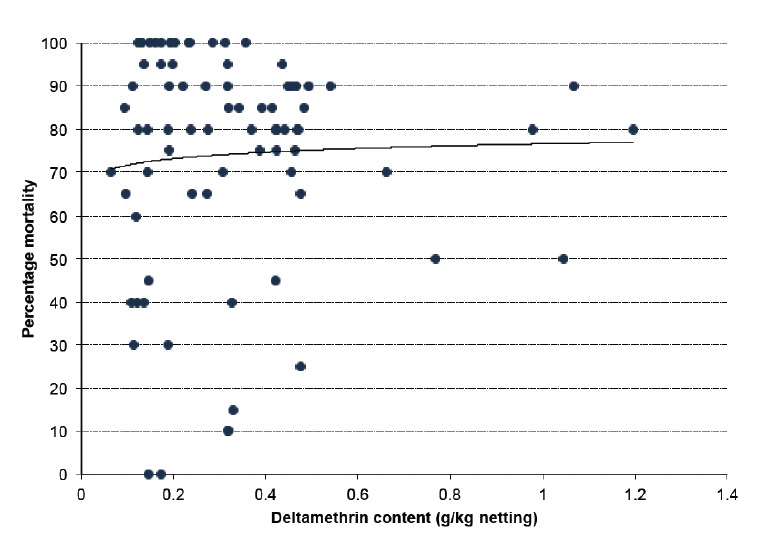
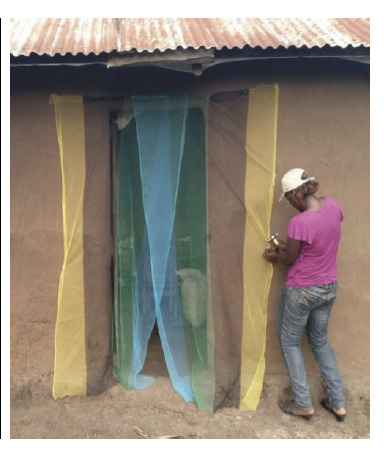
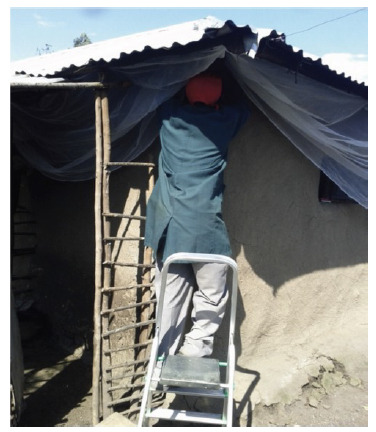
A randomised controlled trial was carried out in the Ahero rice irrigation scheme in Nyando district, Western Kenya. Eighty houses with open eaves were randomly selected. Forty of these houses were fully screened (FSH+LLINs) with long lasting insecticide-treated nets/curtains used to screen the eaves, windows and doors. The FSH materials were produced with anti-UV additives. The other 40 houses served as controls. Long lasting insecticide-treated bednets (LLINs) were suspended over all sleeping areas in the control and intervention houses. Indoor resting mosquitoes were collected using pyrethrum spray catches (PSC) during both dry and wet seasons. Indoor population densities of anophelines were compared between intervention (FSH+LLINs) and control (LLINs) houses. Loss of insecticide (deltamethrin) was compared after 12 and 24 months for both the FSH materials and LLINs through bioassays and chemical analyses.
In the FSH+LLINs houses densities of indoor resting and were reduced by 82% (RR=0.18, 95% CI 0.09-0.36, P<0.0001) and 70% (RR=0.30, 95% CI 0.15-0.58, P<0.0001), respectively. No significant difference was recorded for indoor resting spp. (RR=0.95, 95% CI 0.48-1.86, P=0.8). The population of indoor resting bloodfed and was reduced by 72% (RR=0.22, 95% CI 0.09-0.51, P<0.0001) and 84% (RR=0.16, 95% CI 0.07-0.33, P<0.0001) in the FSH+LLINs houses and LLIN houses, respectively. Insecticide loss in eave nets did not depend on the side of the house where the nets were placed. The eave nets showed little loss of bio efficacy over the 12-24 months period.
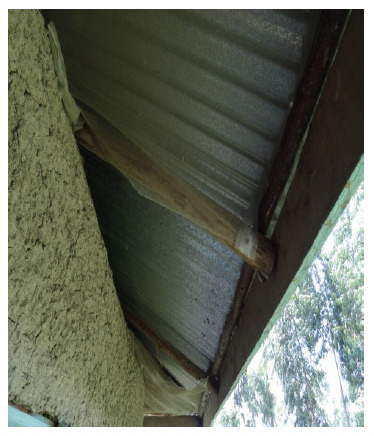
The study revealed that the use of insecticide-treated nets on the eaves and windows combined with door hangers largely impeded entrance of anopheline mosquitoes into houses and can be used to compliment LLINs for household protection. The eave nets were suspended from wood structures near the eave and remained in place when walls were re-plastered. The nets are therefore not depending on daily compliance behaviour and provide protection for the entire household.
使用经杀虫剂处理的蚊帐(ITN)是抗击疟疾的一项突破。然而,只有正确使用时,ITN才有效。最近的报告显示,ITN的使用依从性较低,而且疟疾病媒的叮咬时间发生了变化,出现了人们未在蚊帐下睡觉时早晚叮咬的情况。因此,需要开发补充或替代使用ITN来控制疟疾病媒的方法。在东非传统房屋中,进行了一项现场试验,以研究持久浸渍的防紫外线屋檐网、窗帘和门帘(全封闭房屋)的原型与仅使用蚊帐的房屋相比的效果和使用寿命。
在肯尼亚西部尼扬多区的阿赫罗水稻灌溉区进行了一项随机对照试验。随机选择了80间有开放式屋檐的房屋。其中40间房屋用持久杀虫剂处理过的蚊帐/窗帘进行全封闭(FSH + LLINs),用于遮挡屋檐、窗户和门。FSH材料添加了抗紫外线添加剂。另外40间房屋作为对照。在对照房屋和干预房屋的所有睡眠区域都悬挂了持久杀虫剂处理过的蚊帐(LLIN)。在旱季和雨季,使用除虫菊酯喷雾捕捉法(PSC)收集室内栖息的蚊子。比较干预(FSH + LLINs)房屋和对照(LLINs)房屋中按蚊的室内种群密度。通过生物测定和化学分析,比较12个月和24个月后FSH材料和LLIN中杀虫剂(溴氰菊酯)的损失情况。
在FSH + LLINs房屋中,室内栖息的[具体蚊子种类1]和[具体蚊子种类2]的密度分别降低了82%(RR = 0.18,95% CI 0.09 - 0.36,P < 0.0001)和70%(RR = 0.30, 95% CI 0.15 - 0.58, P < 0.0001)。室内栖息的[另一种蚊子种类]没有显著差异(RR = 0.95,95% CI 0.48 - 1.86, P = 0.8)。在FSH + LLINs房屋和LLIN房屋中,室内栖息的吸血[具体蚊子种类1]和[具体蚊子种类2]的数量分别减少了72%(RR = 0.22,95% CI 0.09 - 0.51,P < 0.0001)和84%(RR = 0.16,95% CI 0.07 - 0.