Kim Beomsu, Kim Suhyun, Park Sungyeon, Ko Jesang
Division of Life Sciences, Korea University, Seoul, 02841, South Korea.
Heliyon. 2024 Apr 4;10(7):e29292. doi: 10.1016/j.heliyon.2024.e29292. eCollection 2024 Apr 15.
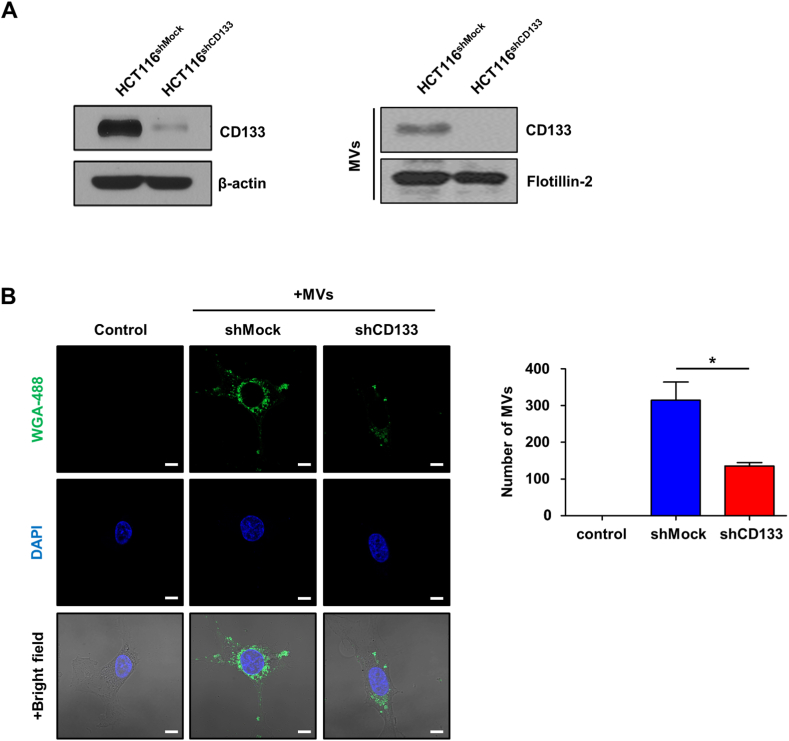
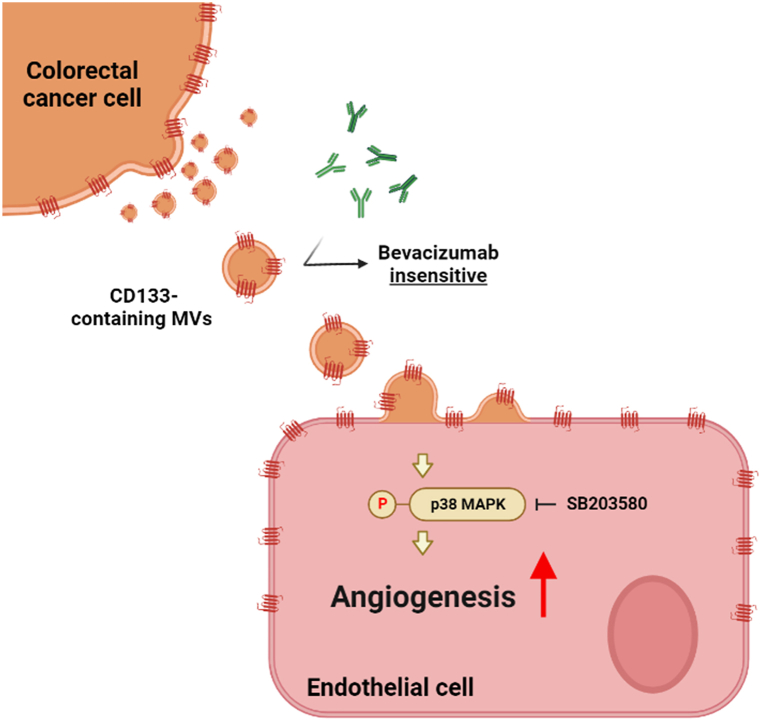
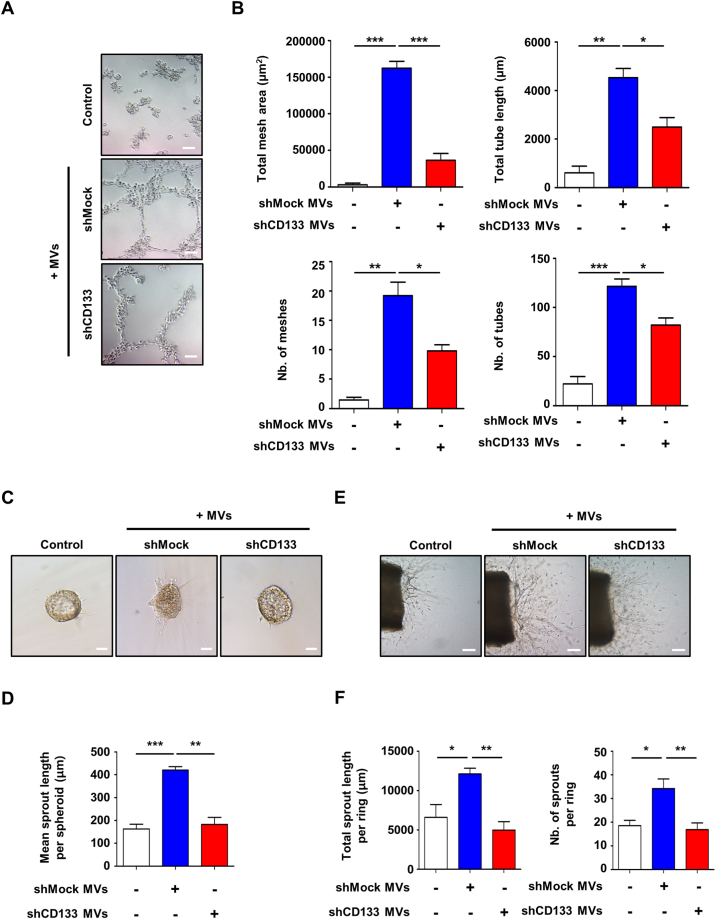
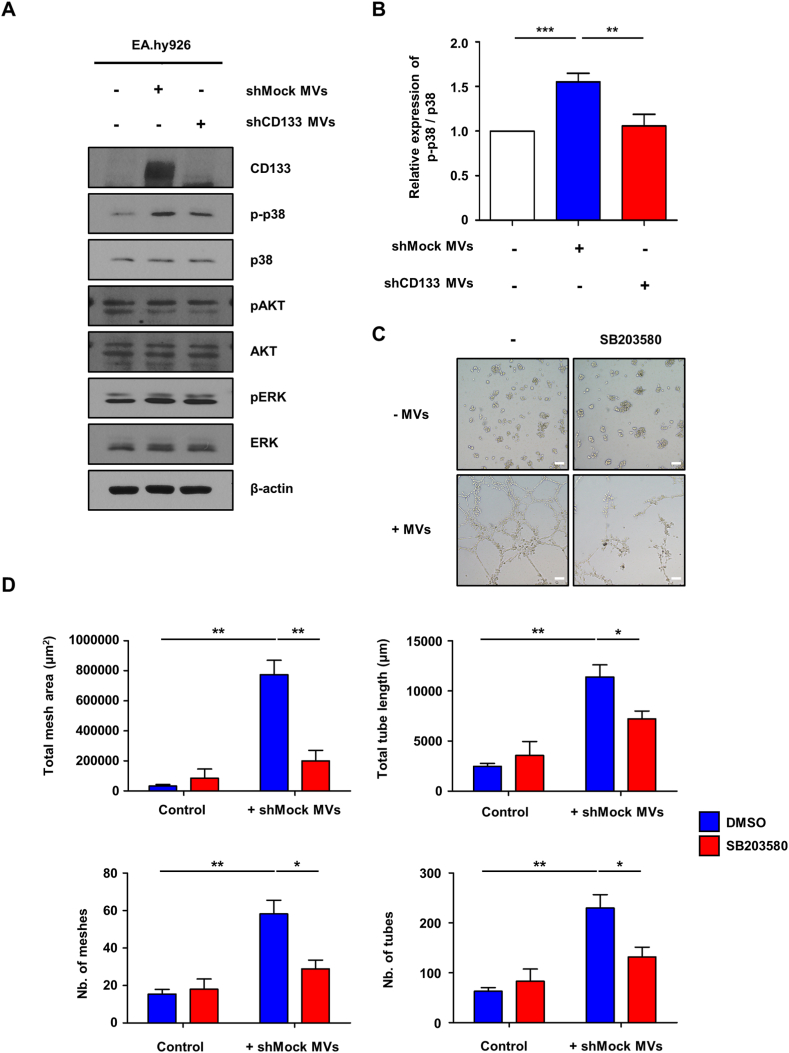
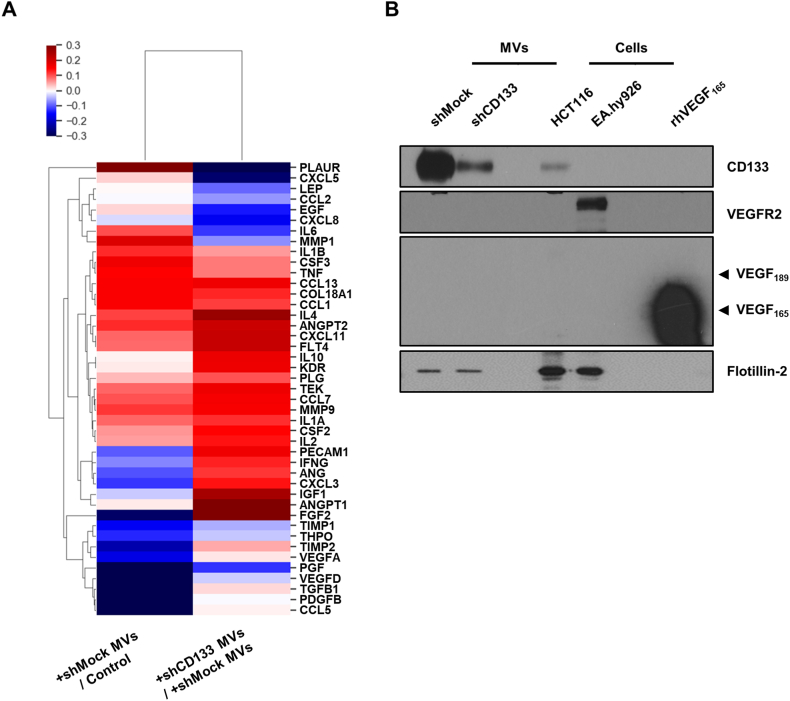
Angiogenesis is an indispensable mechanism in cancer progression, as cancer cells need to establish blood vessels to supply oxygen and nutrients. Extracellular vesicles (EVs) derived from cancer cells act as messengers in the tumor microenvironment and induce resistance to anti-angiogenic cancer treatment. EVs can be classified into two categories: exosomes and microvesicles (MVs). Although exosomes are involved in angiogenesis, the role of MVs in angiogenesis and cancer progression remains unclear. CD133 plays a key role in MV formation and oncoprotein trafficking. In this study, we investigated the role of CD133-containing MVs derived from colorectal cancer (CRC) in angiogenesis and cancer progression. CRC-derived MVs were incorporated into endothelial cells and increased the mesh area and tube length of endothelial cells. CD133-containing MVs also stimulate vessel sprouting in endothelial cell spheroids and mouse thoracic aortas. However, MVs derived from CD133-knockdown CRC cells exerted a limited effect on tube formation and vessel sprouting. CD133-containing MVs induced angiogenesis through p38 activation and angiogenesis induced by CD133-containing MVs was insensitive to the anti-vascular endothelial growth factor antibody bevacizumab. Survival analysis revealed that high expression level of CD133 correlated with poor prognosis in patients with metastatic CRC. These findings suggest that CD133-containing MVs act as key regulators of angiogenesis and are related to the prognosis of CRC patients.
血管生成是癌症进展中不可或缺的机制,因为癌细胞需要建立血管来供应氧气和营养物质。癌细胞衍生的细胞外囊泡(EVs)在肿瘤微环境中充当信使,并诱导对癌症抗血管生成治疗的抗性。EVs可分为两类:外泌体和微泡(MVs)。尽管外泌体参与血管生成,但MVs在血管生成和癌症进展中的作用仍不清楚。CD133在MV形成和癌蛋白运输中起关键作用。在本研究中,我们研究了源自结直肠癌(CRC)的含CD133的MVs在血管生成和癌症进展中的作用。CRC衍生的MVs被内皮细胞摄取,并增加了内皮细胞的网孔面积和管长度。含CD133的MVs还刺激内皮细胞球体和小鼠胸主动脉中的血管发芽。然而,源自CD133基因敲低的CRC细胞的MVs对管形成和血管发芽的影响有限。含CD133的MVs通过p38激活诱导血管生成,并且含CD133的MVs诱导的血管生成对抗血管内皮生长因子抗体贝伐单抗不敏感。生存分析显示,CD133的高表达水平与转移性CRC患者的不良预后相关。这些发现表明,含CD133的MVs是血管生成的关键调节因子,并且与CRC患者的预后相关。