Almac Discovery Ltd., Health Science Building, Belfast, UK.
Patrick G Johnston Centre for Cancer Research, Queen's University Belfast, Belfast, UK.
Clin Transl Med. 2024 Apr;14(4):e1648. doi: 10.1002/ctm2.1648.
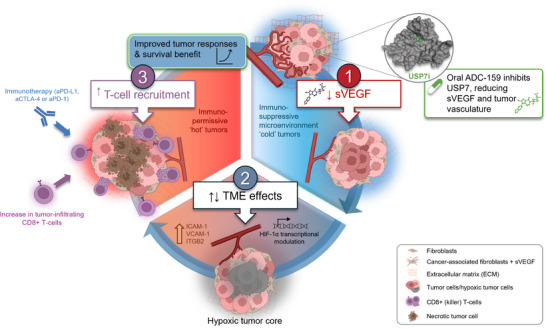
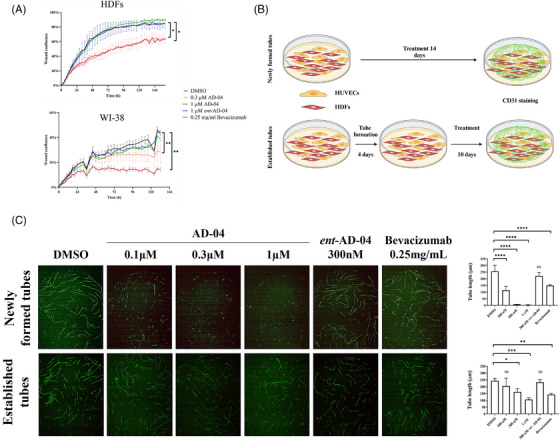
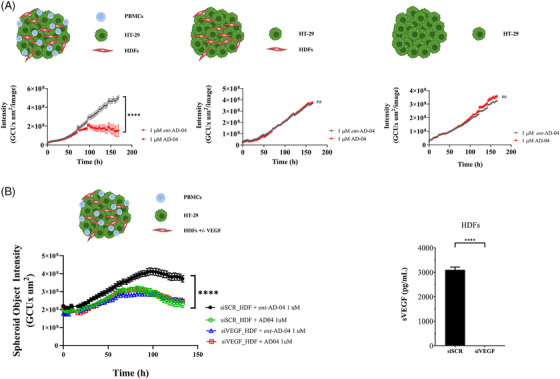
Understanding how to modulate the microenvironment of tumors that are resistant to immune checkpoint inhibitors represents a major challenge in oncology.Here we investigate the ability of USP7 inhibitors to reprogram the tumor microenvironment (TME) by inhibiting secretion of vascular endothelial growth factor (VEGF) from fibroblasts.
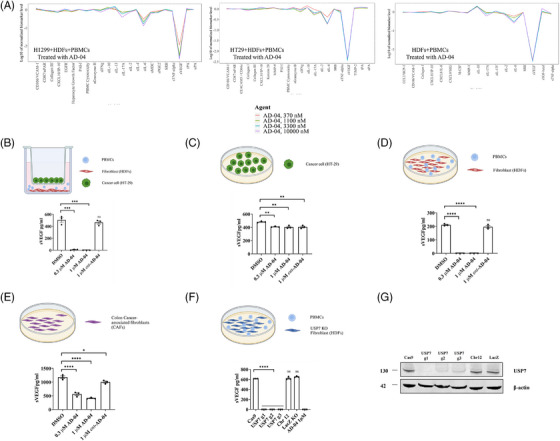
To understand the role played by USP7 in the TME, we systematically evaluated the effects of potent, selective USP7 inhibitors on co-cultures comprising components of the TME, using human primary cells. We also evaluated the effects of USP7 inhibition on tumor growth inhibition in syngeneic models when dosed in combination with immune checkpoint inhibitors (ICIs).
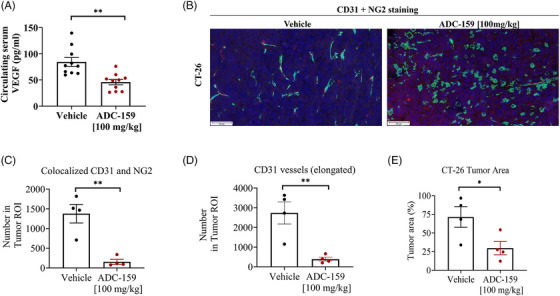
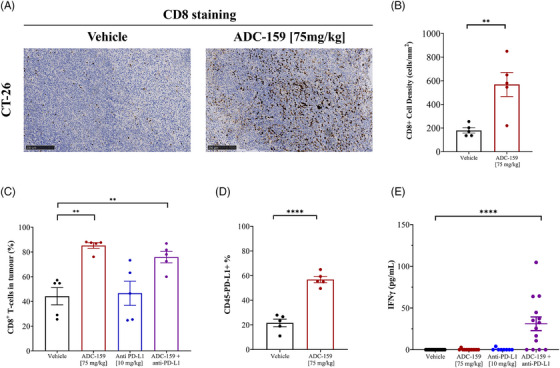
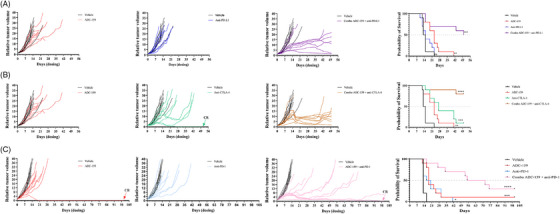
Abrogation of VEGF secretion from fibroblasts in response to USP7 inhibition resulted in inhibition of tumor neoangiogenesis and increased tumor recruitment of CD8-positive T-lymphocytes, leading to significantly improved sensitivity to immune checkpoint inhibitors. In syngeneic models, treatment with USP7 inhibitors led to striking tumor responses resulting in significantly improved survival.
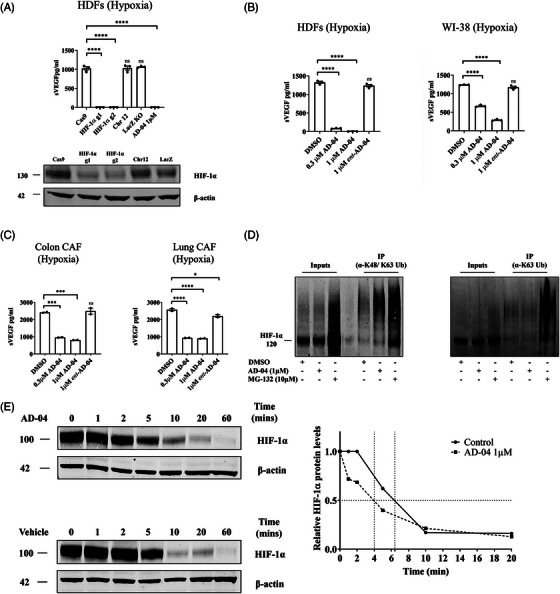
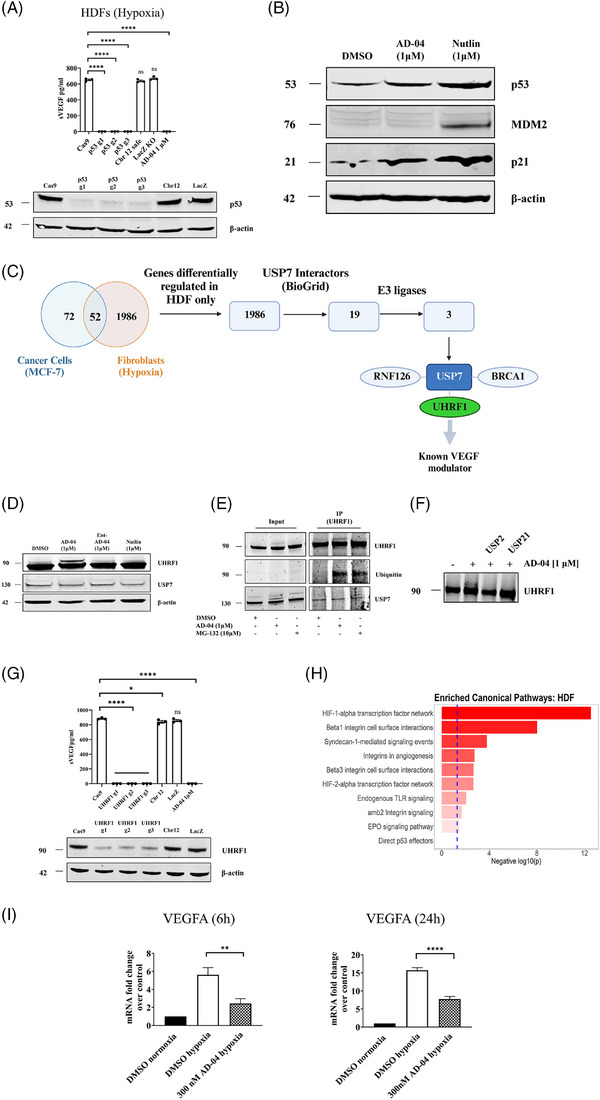
USP7-mediated reprograming of the TME is not linked to its previously characterized role in modulating MDM2 but does require p53 and UHRF1 in addition to the well-characterized VEGF transcription factor, HIF-1α. This represents a function of USP7 that is unique to fibroblasts, and which is not observed in cancer cells or other components of the TME. Given the potential for USP7 inhibitors to transform "immune desert" tumors into "immune responsive" tumors, this paves the way for a novel therapeutic strategy combining USP7 inhibitors with immune checkpoint inhibitors (ICIs).
了解如何调节对免疫检查点抑制剂耐药的肿瘤微环境是肿瘤学的一个主要挑战。在这里,我们研究了 USP7 抑制剂通过抑制成纤维细胞分泌血管内皮生长因子 (VEGF) 来重新编程肿瘤微环境 (TME) 的能力。
为了了解 USP7 在 TME 中所起的作用,我们使用人原代细胞系统地评估了强效、选择性 USP7 抑制剂对包含 TME 成分的共培养物的影响。我们还评估了在与免疫检查点抑制剂 (ICIs) 联合给药时,USP7 抑制对同源模型中肿瘤生长抑制的影响。
USP7 抑制导致成纤维细胞对 VEGF 分泌的阻断,从而抑制肿瘤新生血管生成,并增加 CD8 阳性 T 淋巴细胞在肿瘤中的募集,导致对免疫检查点抑制剂的敏感性显著提高。在同源模型中,USP7 抑制剂的治疗导致显著的肿瘤反应,显著改善了生存。
USP7 介导的 TME 重编程与其先前在调节 MDM2 方面的作用无关,但除了众所周知的 VEGF 转录因子 HIF-1α 外,还需要 p53 和 UHRF1。这代表了 USP7 在成纤维细胞中特有的功能,而在癌细胞或 TME 的其他成分中则没有观察到。鉴于 USP7 抑制剂有可能将“免疫荒漠”肿瘤转化为“免疫反应性”肿瘤,这为 USP7 抑制剂与免疫检查点抑制剂 (ICIs) 联合的新治疗策略铺平了道路。