Cancer Center, Union Hospital, Tongji Medical College, Huazhong University of Science and Technology, Wuhan 430022, China.
Department of Biomedical Engineering, University at Buffalo, State University of New York. Buffalo, New York 14260, USA.
Theranostics. 2020 Jul 23;10(20):9332-9347. doi: 10.7150/thno.47137. eCollection 2020.
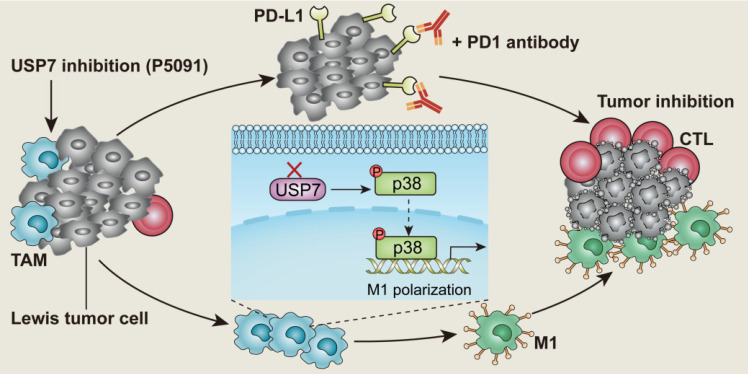
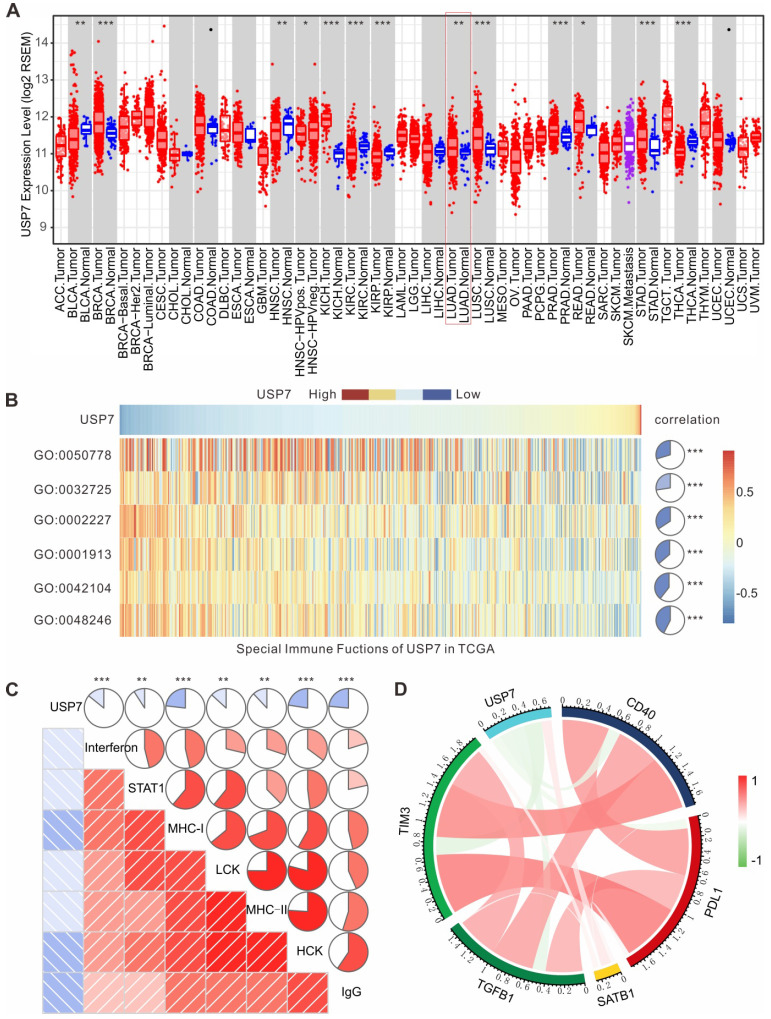
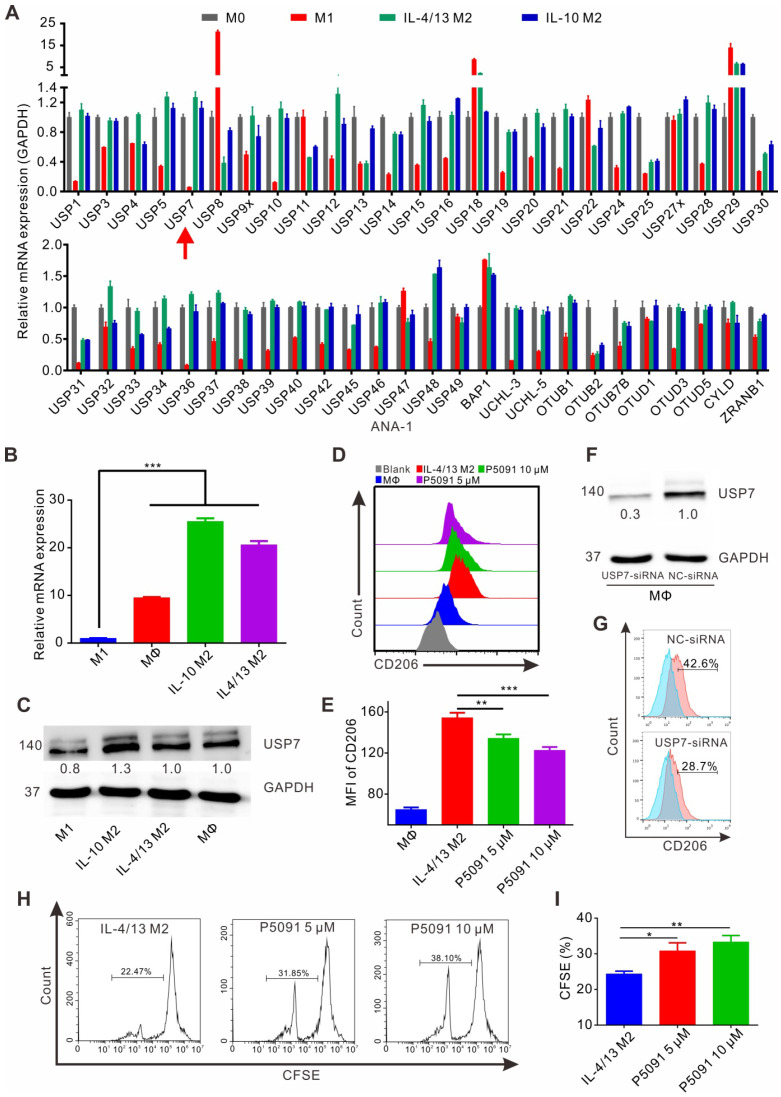
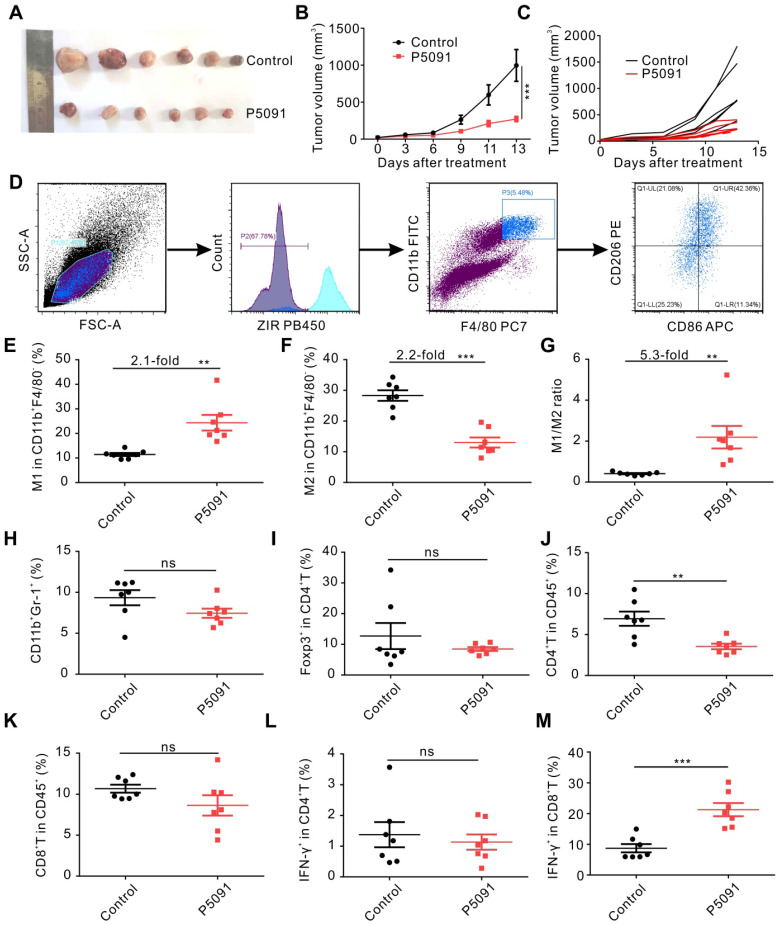
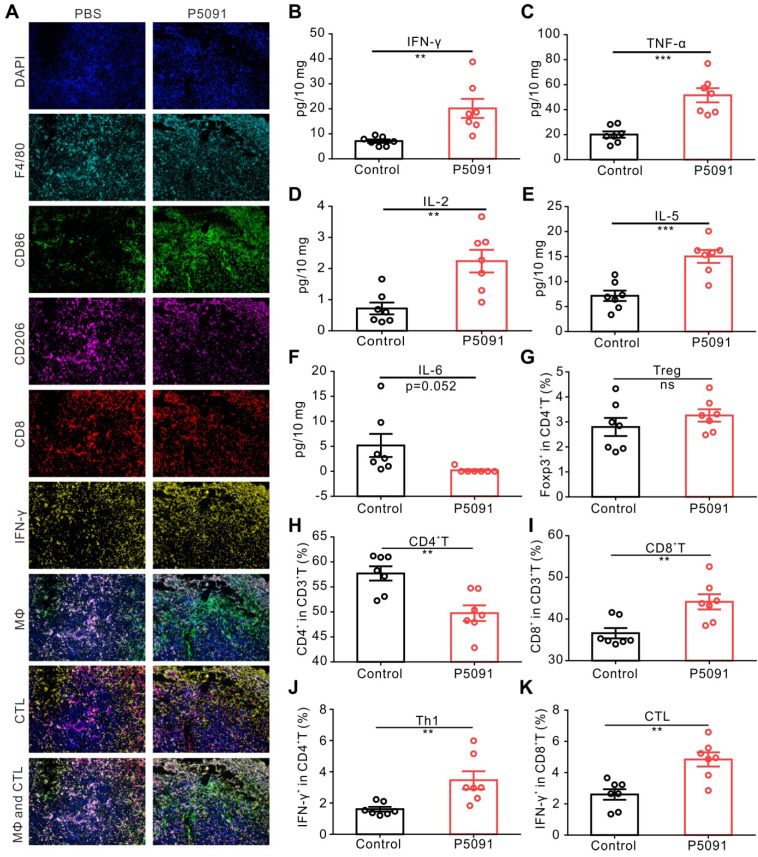
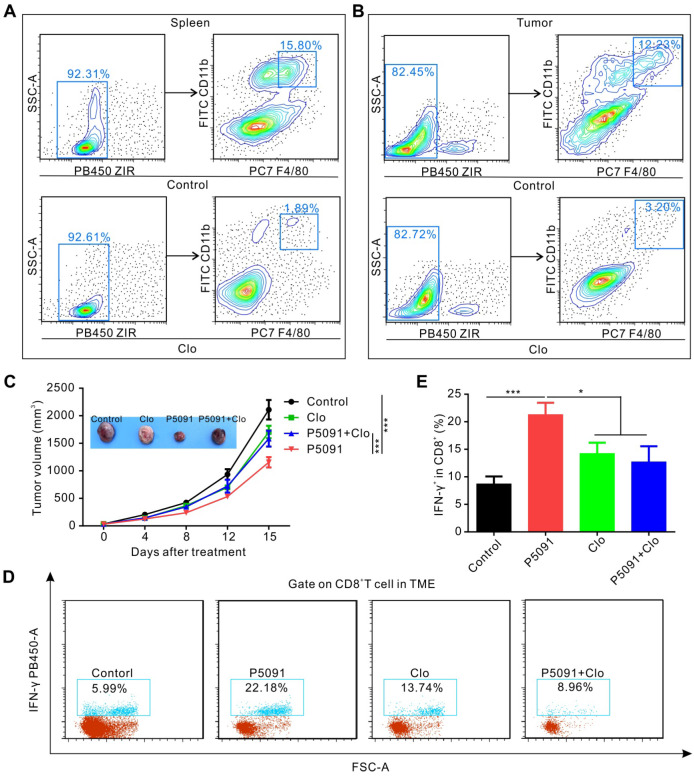
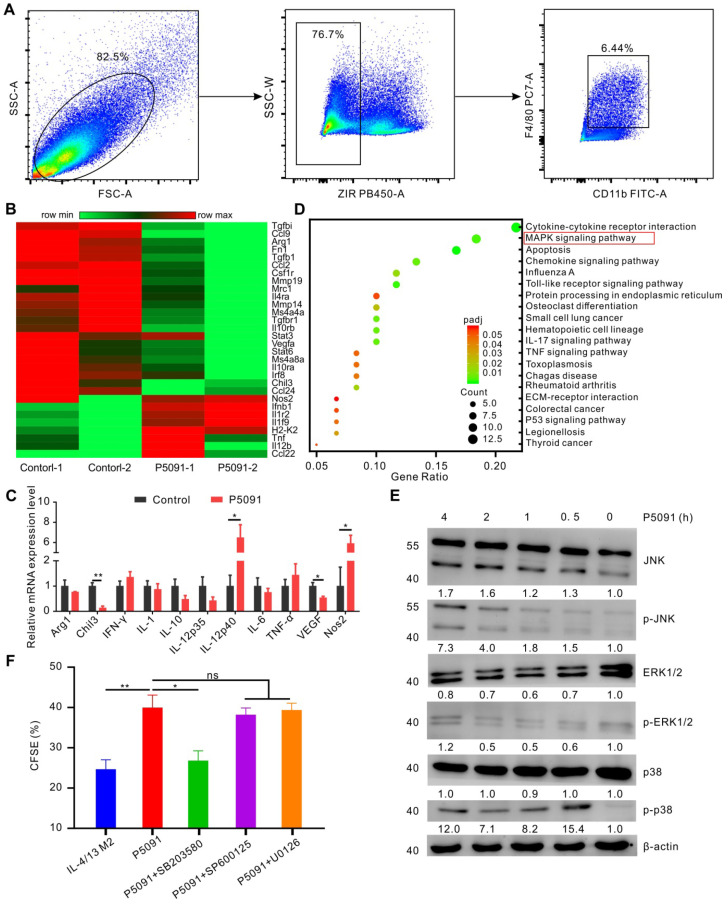
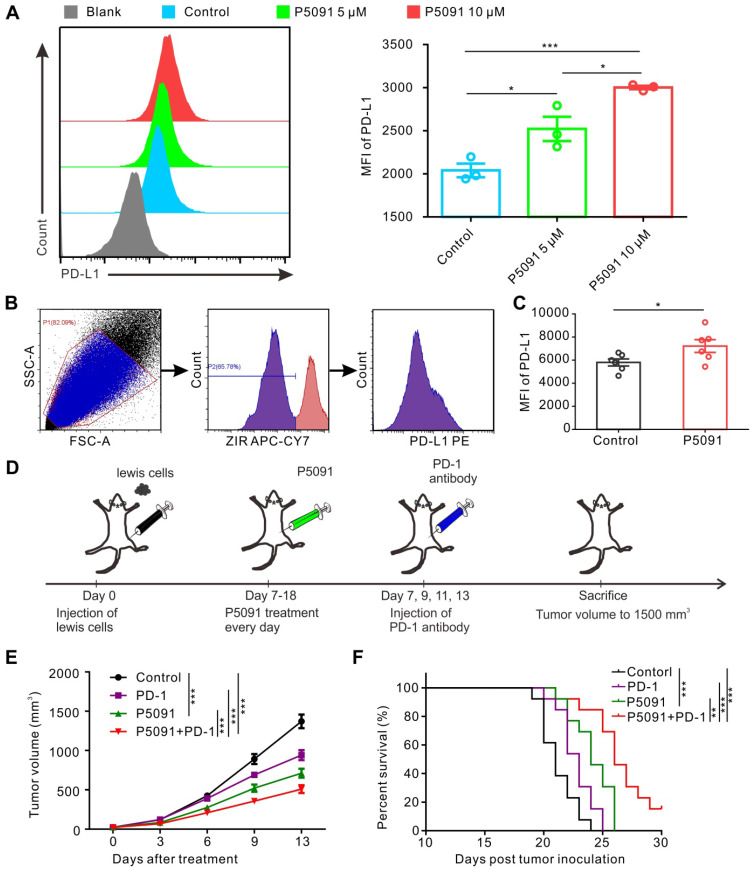
Tumor associated macrophages (TAMs) have strong plasticity and if reprogrammed, can clear tumor cells and regulate the adaptive immune system for cancer immunotherapy. Deubiquitinating enzymes (DUBs), which can remove ubiquitin (Ub) from Ub-modified substrates, have been associated with oncogenic metabolism but are not well-known for regulating TAMs repolarization. The expression of DUB related genes in macrophages (MΦs) was detected by reverse transcription-PCR. Flow cytometry and immunofluorescence were used to detect the changes of immune cells in the tumor microenvironment and spleen, including M1 (CD11bF4/80CD86CD206), and M2 (CD11bF4/80CD86CD206) MΦs, and IFN-γCD8T cells. A proliferation assay was used to determine the effect of M2 MΦs treated with a USP7 inhibitor on T cell proliferation. Western blotting was used to detect the expression of USP7 and the activation of the MAPK pathway. The TGCA database was used to assess the role of USP7 in the immune microenvironment of human lung adenocarcinoma (LUAD). 51 DUB genes were screened and USP7 was identified as a highly expressed gene in M2 but not M1 MΦs. Specific silencing of USP7 using siRNA or USP7 inhibitors led to phenotypical and functional changes in M2 MΦs, favoring CD8T cells proliferation . USP7 inhibitors delayed tumor growth in mice with Lewis lung carcinoma, and promoted tumor infiltration of M1 MΦs and IFN-γCD8T cells. Depletion of TAMs attenuated these therapeutic effects. USP7 inhibition was shown to mediate MΦs reprogramming by activating the p38 MAPK pathway. Administration of USP7 inhibitors increased the expression of programmed cell death ligand 1 (PD-L1) in tumors, while blocking programmed cell death protein 1 (PD-1) provided an effective anti-tumor response. Clinical databases suggest that high expression of USP7 in LUAD was negatively correlated with innate and adaptive immunity. Taken together, these results provide evidence to suggest that therapeutic approaches targeting USP7, in combination with immunotherapy, should be considered for lung cancer treatment.
肿瘤相关巨噬细胞(TAMs)具有很强的可塑性,如果被重新编程,可以清除肿瘤细胞并调节适应性免疫系统,用于癌症免疫治疗。去泛素化酶(DUBs)可以从泛素(Ub)修饰的底物上去除 Ub,与致癌代谢有关,但对于调节 TAMs 极化的作用并不为人所知。通过逆转录-PCR 检测巨噬细胞(MΦs)中 DUB 相关基因的表达。流式细胞术和免疫荧光检测肿瘤微环境和脾脏中免疫细胞的变化,包括 M1(CD11bF4/80CD86CD206)和 M2(CD11bF4/80CD86CD206)MΦs 和 IFN-γCD8T 细胞。增殖试验用于确定用 USP7 抑制剂处理的 M2 MΦ 对 T 细胞增殖的影响。Western blot 用于检测 USP7 的表达和 MAPK 通路的激活。TCGA 数据库用于评估 USP7 在人肺腺癌(LUAD)免疫微环境中的作用。筛选出 51 个 DUB 基因,鉴定出 USP7 是 M2 中而非 M1 MΦ 中高表达的基因。使用 siRNA 或 USP7 抑制剂特异性沉默 USP7 导致 M2 MΦ 的表型和功能发生变化,有利于 CD8T 细胞的增殖。USP7 抑制剂延迟了 Lewis 肺癌小鼠肿瘤的生长,并促进了 M1 MΦ 和 IFN-γCD8T 细胞的肿瘤浸润。耗尽 TAMs 减弱了这些治疗效果。USP7 抑制通过激活 p38 MAPK 通路介导 MΦ 重编程。USP7 抑制剂的给药增加了肿瘤中程序性细胞死亡配体 1(PD-L1)的表达,而阻断程序性细胞死亡蛋白 1(PD-1)提供了有效的抗肿瘤反应。临床数据库表明,LUAD 中 USP7 的高表达与先天和适应性免疫呈负相关。综上所述,这些结果表明,针对 USP7 的治疗方法与免疫疗法相结合,应考虑用于肺癌治疗。