Head Katharine J, Kasting Monica L, Sturm Lynne A, Hartsock Jane A, Zimet Gregory D
Indiana University-Purdue University Indianapolis, Indianapolis, IN, USA.
Purdue University, West Lafayette, IN, USA.
Sci Commun. 2020 Oct;42(5):698-723. doi: 10.1177/1075547020960463.
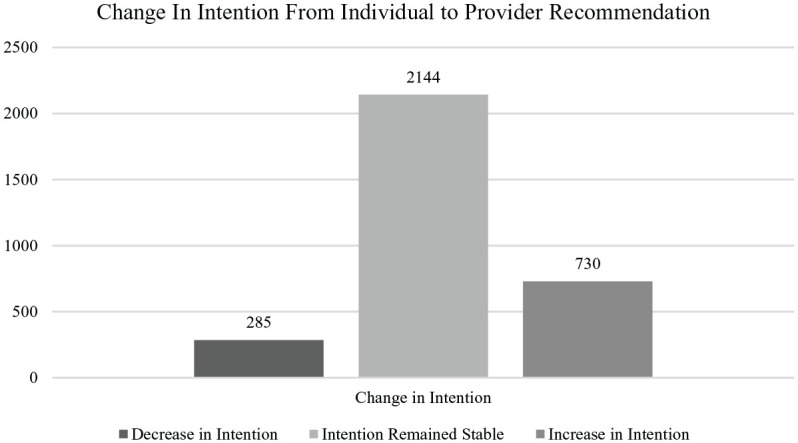
With SARS-CoV-2 vaccines under development, research is needed to assess intention to vaccinate. We conducted a survey ( = 3,159) with U.S. adults in May 2020 assessing SARS-CoV-2 vaccine intentions, intentions with a provider recommendation, and sociodemographic and psychosocial variables. Participants had high SARS-CoV-2 vaccine intentions ( = 5.23/7-point scale), which increased significantly with a provider recommendation ( = 5.47). Hierarchical linear regression showed that less education and working in health care were associated with lower intent, and liberal political views, altruism, and COVID-19-related health beliefs were associated with higher intent. This work can inform interventions to increase vaccine uptake, ultimately reducing COVID-19-related morbidity and mortality.
随着针对严重急性呼吸综合征冠状病毒2(SARS-CoV-2)的疫苗正在研发,需要开展研究来评估接种疫苗的意愿。2020年5月,我们对美国成年人进行了一项调查(n = 3159),评估了他们接种SARS-CoV-2疫苗的意愿、在有医疗服务提供者建议时的意愿,以及社会人口统计学和心理社会变量。参与者接种SARS-CoV-2疫苗的意愿较高(7分制中平均分为5.23),在有医疗服务提供者建议时显著增加(平均分为5.47)。分层线性回归显示,受教育程度较低和从事医疗保健工作与较低的意愿相关,而自由派政治观点、利他主义和与2019冠状病毒病相关的健康信念与较高的意愿相关。这项工作可为增加疫苗接种率的干预措施提供参考,最终降低与2019冠状病毒病相关的发病率和死亡率。