Programa de Genómica Evolutiva, Centro de Ciencias Genómicas, Universidad Nacional Autónoma de México, Cuernavaca, México.
Pecuarius Laboratorios S.A. de C.V., Ciudad Obregón, Sonora, México.
mSphere. 2024 May 29;9(5):e0016224. doi: 10.1128/msphere.00162-24. Epub 2024 Apr 12.
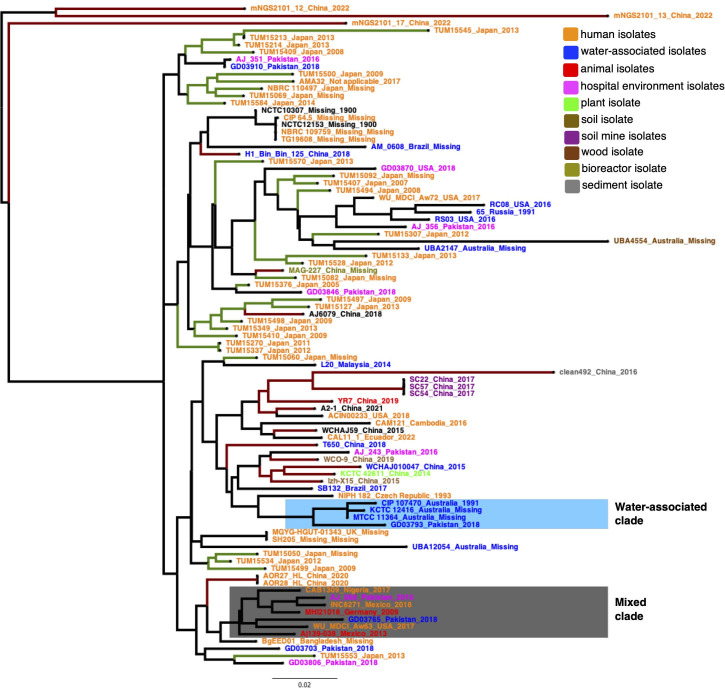
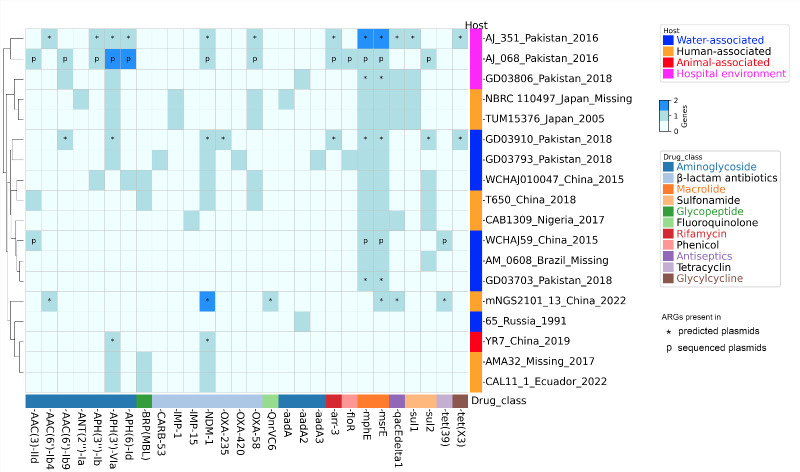
is an opportunistic human and animal pathogen severely understudied. Here, we conducted the largest genomic epidemiological study on this pathogen to date. Our data show that this bacterium has spread globally. Also, we found that some human and non-human isolates are not well differentiated from one another, implying transmission between clinical and non-clinical, non-human settings. Remarkably, human but also some non-human isolates have clinically important antibiotic resistance genes, and some of these genes are located in plasmids. Given these results, we put forward that should be considered an emerging One Health problem. In this regard, future molecular epidemiological studies about this species will go beyond human isolates and will consider animal-, plant-, and water-associated environments.
is the most well-known species from the genus . However, other much less studied species could be important opportunistic pathogens of animals, plants and humans. Here, we conducted the largest genomic epidemiological study of , which has been described as a source not only of human but also of animal infections. Our analyses show that this bacterium has spread globally and that, in some instances, human and non-human isolates are not well differentiated. Remarkably, some non-human isolates have important antibiotic resistance genes against important antibiotics used in human medicine. Based on our results, we propose that this pathogen must be considered an issue not only for humans but also for veterinary medicine.
是一种机会性的人类和动物病原体,研究严重不足。在这里,我们进行了迄今为止对此病原体最大的基因组流行病学研究。我们的数据表明,这种细菌已经在全球范围内传播。此外,我们发现一些人类和非人类的分离株彼此之间没有很好地区分,这意味着在临床和非临床、非人类环境之间有传播。值得注意的是,人类和一些非人类的分离株具有临床上重要的抗生素耐药基因,其中一些基因位于质粒上。鉴于这些结果,我们提出应该将 视为一个新兴的“One Health”问题。在这方面,未来关于该物种的分子流行病学研究将不仅限于人类分离株,还将考虑动物、植物和水相关环境。
是属中最知名的物种。然而,其他研究较少的 物种也可能是动物、植物和人类的重要机会性病原体。在这里,我们进行了迄今为止对此 最大的基因组流行病学研究,该研究被描述为不仅是人类感染的来源,也是动物感染的来源。我们的分析表明,这种细菌已经在全球范围内传播,并且在某些情况下,人类和非人类的分离株没有很好地区分。值得注意的是,一些非人类的分离株对人类医学中使用的重要抗生素具有重要的抗生素耐药基因。基于我们的结果,我们提出该病原体不仅是人类医学,也是兽医医学的一个问题。