
诱导剂处理后,小鼠红白血病细胞在细胞周期中的c-myc mRNA水平发生变化。
c-myc mRNA levels in the cell cycle change in mouse erythroleukemia cells following inducer treatment.
作者信息
Lachman H M, Hatton K S, Skoultchi A I, Schildkraut C L
出版信息
Proc Natl Acad Sci U S A. 1985 Aug;82(16):5323-7. doi: 10.1073/pnas.82.16.5323.
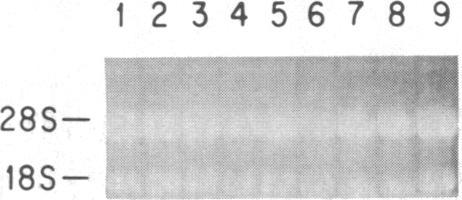
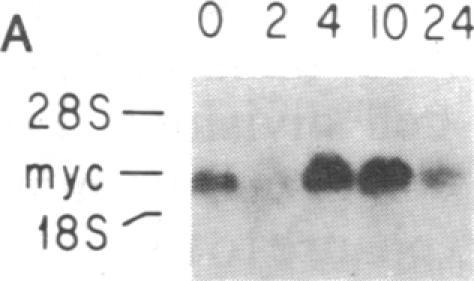
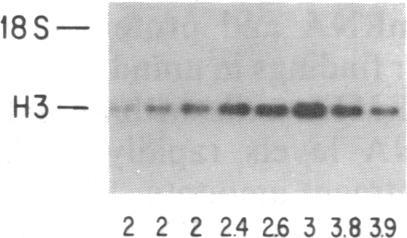
Several lines of evidence suggest that the c-myc protooncogene is involved in some aspect of cell division in mammalian cells. We have been investigating changes in the expression of c-myc mRNA in mouse erythroleukemia cells during chemically induced terminal erythroid differentiation. In vitro induction of erythroleukemia cell differentiation results in a switch from cells with unlimited proliferative capacity to cells that undergo a small number of terminal cell divisions. The level of c-myc mRNA changes rapidly following treatment with inducing agents. After a very rapid decline the mRNA is restored to pretreatment levels and then declines again. We have now measured the level of c-myc mRNA with respect to position in the cell cycle. Prior to inducer treatment the level of c-myc mRNA is relatively constant throughout the cell cycle. However, when the mRNA is restored following treatment with hypoxanthine or hexamethylenebisacetamide, it is found primarily in cells in the G1 phase. Thus, treatment with inducers of differentiation leads to a change in the cell cycle regulation of c-myc mRNA. This change may be involved in the altered proliferative capacity of the cells that occurs during terminal differentiation.
多条证据表明,c-myc原癌基因参与哺乳动物细胞分裂的某些方面。我们一直在研究化学诱导小鼠红白血病细胞终末红系分化过程中c-myc mRNA表达的变化。体外诱导红白血病细胞分化导致细胞从具有无限增殖能力转变为进行少量终末细胞分裂的细胞。用诱导剂处理后,c-myc mRNA水平迅速变化。在非常快速下降后,mRNA恢复到预处理水平,然后再次下降。我们现在已经测量了c-myc mRNA水平与细胞周期位置的关系。在诱导剂处理之前,c-myc mRNA水平在整个细胞周期中相对恒定。然而,当用次黄嘌呤或六甲撑双乙酰胺处理后mRNA恢复时,主要在G1期细胞中发现。因此,用分化诱导剂处理会导致c-myc mRNA细胞周期调控的变化。这种变化可能与终末分化过程中细胞增殖能力的改变有关。





 Zotero 插件