Faculty of Life science and Technology, Kunming University of Science and Technology, Kunming, China.
Medical school, Kunming University of Science and Technology, Kunming, China.
J Ovarian Res. 2024 Apr 12;17(1):79. doi: 10.1186/s13048-024-01407-2.
IR emerges as a feature in the pathophysiology of PCOS, precipitating ovulatory anomalies and endometrial dysfunctions that contribute to the infertility challenges characteristic of this condition. Despite its clinical significance, a consensus on the precise mechanisms by which IR exacerbates PCOS is still lacking. This study aims to harness bioinformatics tools to unearth key IR-associated genes in PCOS patients, providing a platform for future therapeutic research and potential intervention strategies.
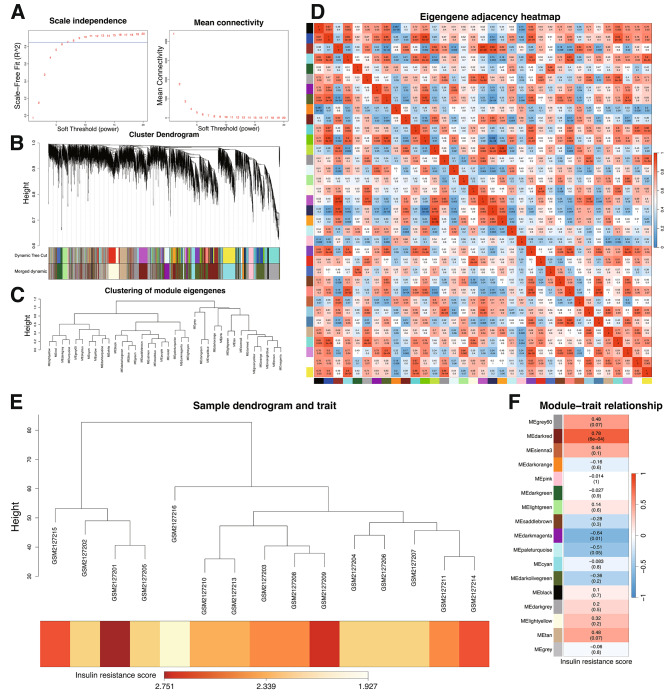
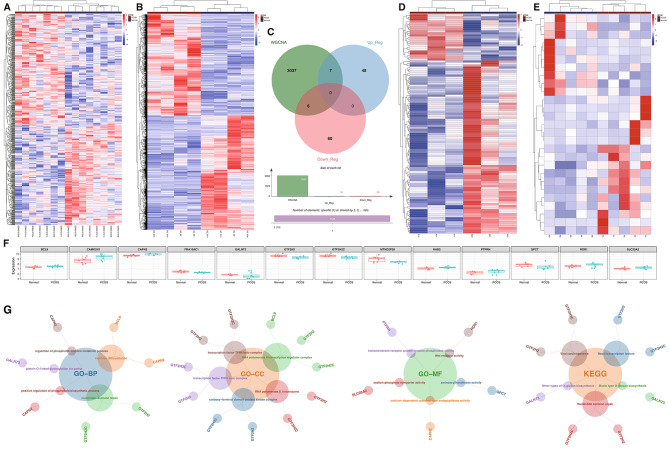
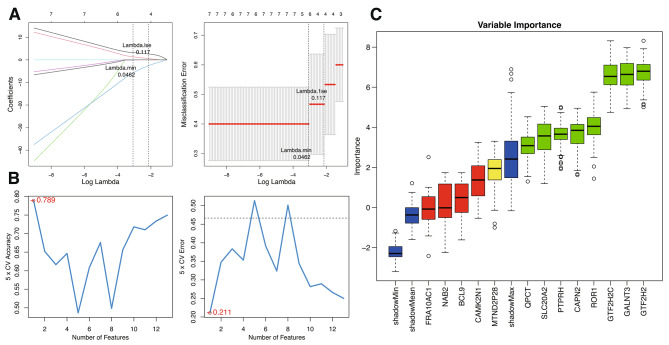
We retrieved 4 datasets detailing PCOS from the GEO, and sourced IRGs from the MSigDB. We applied WGCNA to identify gene modules linked to insulin resistance, utilizing IR scores as a phenotypic marker. Gene refinement was executed through the LASSO, SVM, and Boruta feature selection algorithms. qPCR was carried out on selected samples to confirm findings. We predicted both miRNA and lncRNA targets using the ENCORI database, which facilitated the construction of a ceRNA network. Lastly, a drug-target network was derived from the CTD.
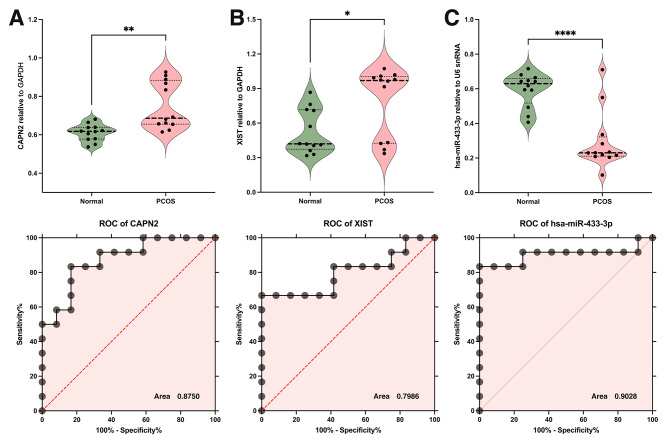
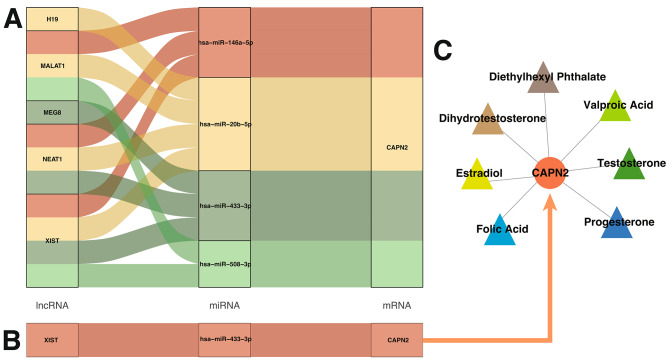
Thirteen genes related to insulin resistance in PCOS were identified via WGCNA analysis. LASSO, SVM, and Boruta algorithms further isolated CAPN2 as a notably upregulated gene, corroborated by biological verification. The ceRNA network involving lncRNA XIST and hsa-miR-433-3p indicated a possible regulatory link with CAPN2, supported by ENCORI database. Drug prediction analysis uncovered seven pharmacological agents, most being significant regulators of the endocrine system, as potential candidates for addressing insulin resistance in PCOS.
This study highlights the pivotal role of CAPN2 in insulin resistance within the context of PCOS, emphasizing its importance as both a critical biomarker and a potential therapeutic target. By identifying CAPN2, our research contributes to the expanding evidence surrounding the CAPN family, particularly CAPN10, in insulin resistance studies beyond PCOS. This work enriches our understanding of the mechanisms underlying insulin resistance, offering insights that bridge gaps in the current scientific landscape.
IR 是 PCOS 病理生理学的一个特征,引发排卵异常和子宫内膜功能障碍,导致这种疾病特有的不孕挑战。尽管它具有临床意义,但对于 IR 如何加剧 PCOS 的精确机制仍缺乏共识。本研究旨在利用生物信息学工具挖掘 PCOS 患者中与 IR 相关的关键基因,为未来的治疗研究和潜在的干预策略提供一个平台。
我们从 GEO 中检索了 4 个详细描述 PCOS 的数据集,并从 MSigDB 中获取了 IRGs。我们应用 WGCNA 来识别与胰岛素抵抗相关的基因模块,利用 IR 分数作为表型标记。通过 LASSO、SVM 和 Boruta 特征选择算法进行基因精炼。对选定的样本进行 qPCR 以验证结果。我们使用 ENCORI 数据库预测了 miRNA 和 lncRNA 的靶标,这有助于构建 ceRNA 网络。最后,从 CTD 中得出了一个药物-靶标网络。
通过 WGCNA 分析,我们确定了 13 个与 PCOS 中胰岛素抵抗相关的基因。LASSO、SVM 和 Boruta 算法进一步分离出 CAPN2 作为一个显著上调的基因,这与生物学验证结果一致。涉及 lncRNA XIST 和 hsa-miR-433-3p 的 ceRNA 网络表明与 CAPN2 可能存在调节关系,这得到了 ENCORI 数据库的支持。药物预测分析发现了七种药理学制剂,其中大多数是内分泌系统的重要调节剂,作为治疗 PCOS 中胰岛素抵抗的潜在候选药物。
本研究强调了 CAPN2 在 PCOS 中胰岛素抵抗中的关键作用,强调了它作为一个关键生物标志物和潜在治疗靶点的重要性。通过鉴定 CAPN2,我们的研究为 CAPN 家族在胰岛素抵抗研究中的作用提供了更多的证据,特别是在 PCOS 之外。这项工作丰富了我们对胰岛素抵抗机制的理解,为填补当前科学领域的空白提供了新的见解。