Yan Mingke, Yang Dongming, He Yijun, Ma Yonglong, Zhang Xin, Wang Quanzhen, Gao Jinghui
College of Grassland Agriculture, Northwest A&F University, Yangling 712100, China.
University of Chinese Academy of Sciences, Beijing 100049, China.
Plants (Basel). 2024 Mar 26;13(7):953. doi: 10.3390/plants13070953.
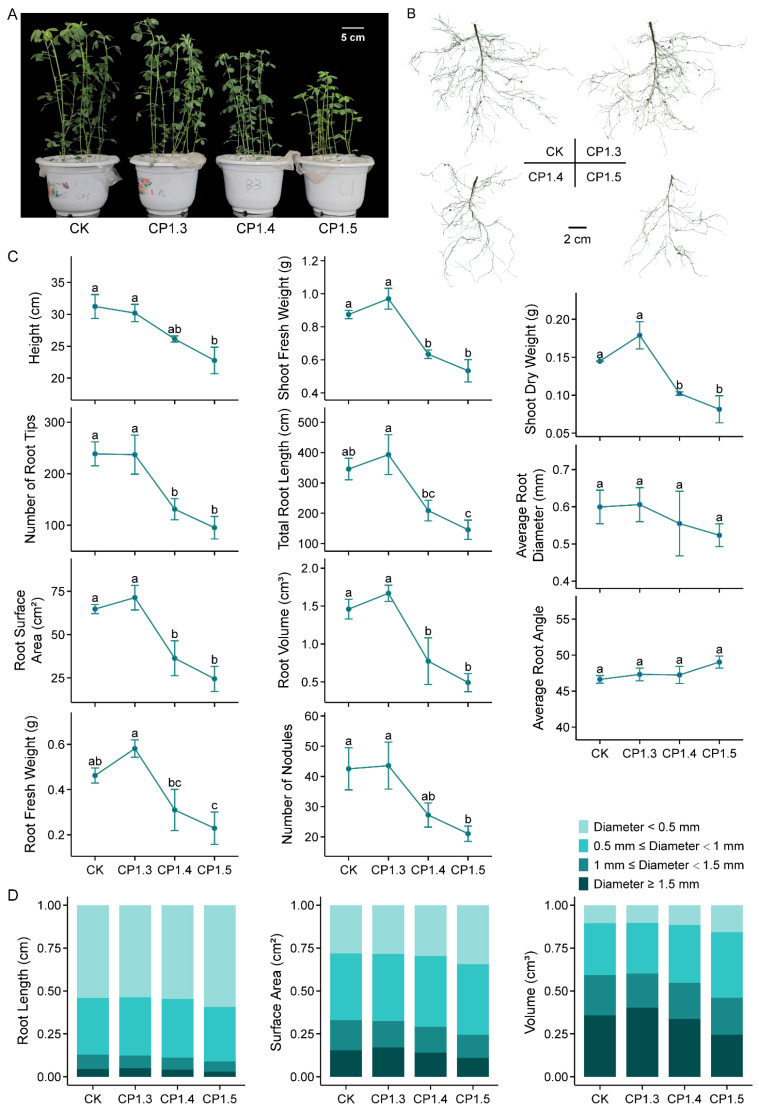
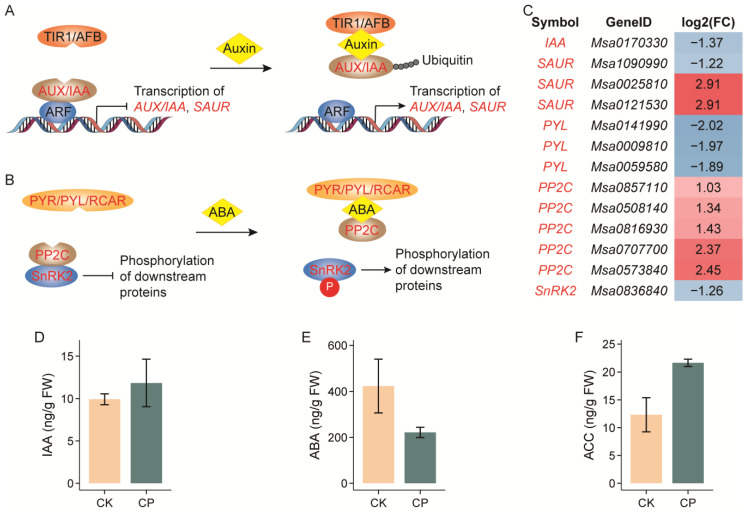
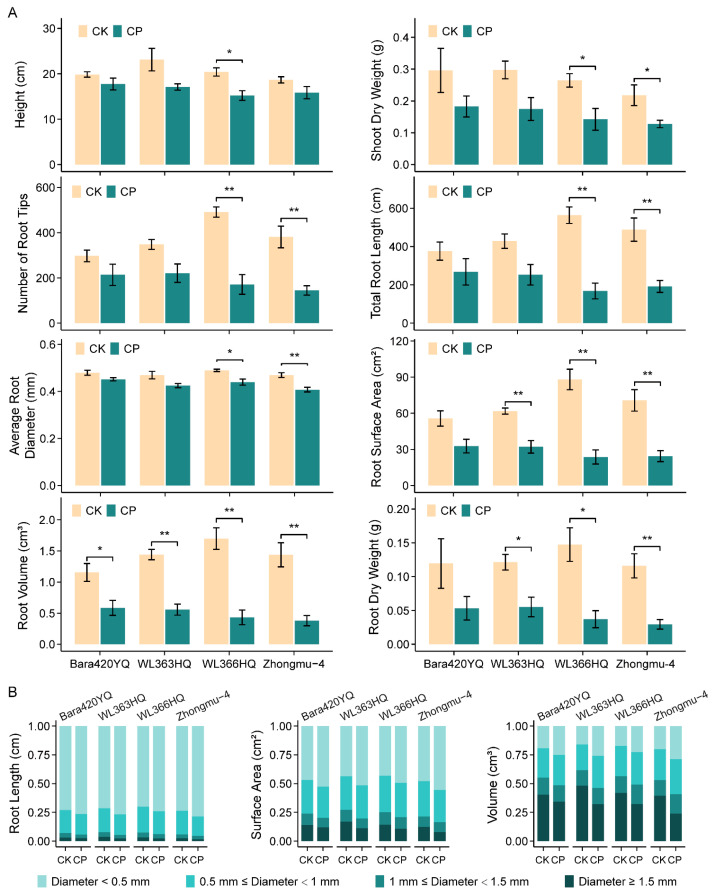
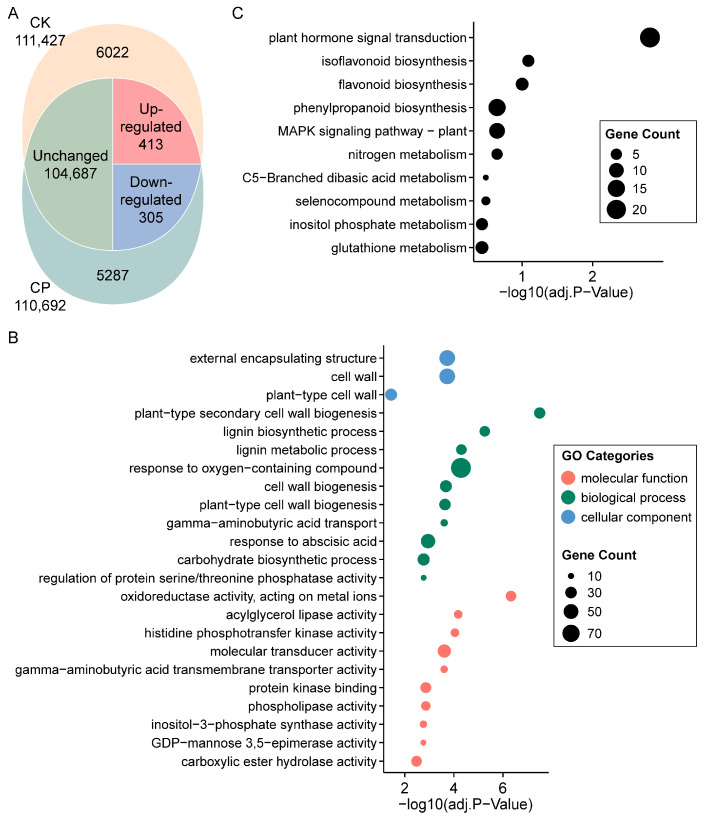
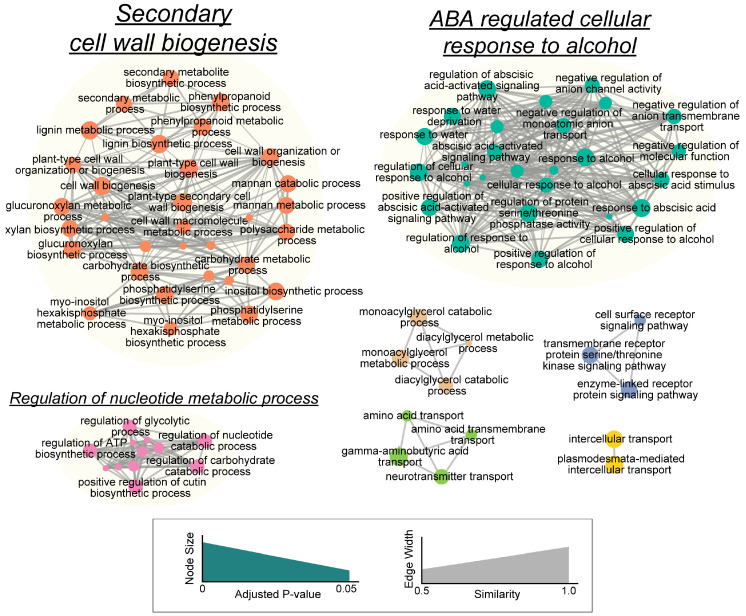
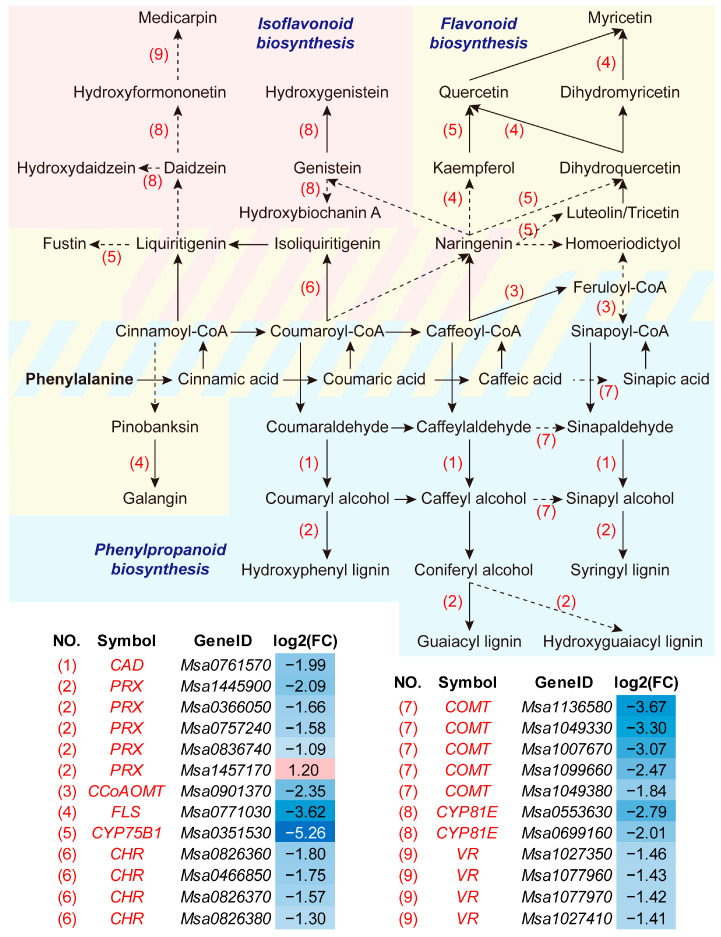
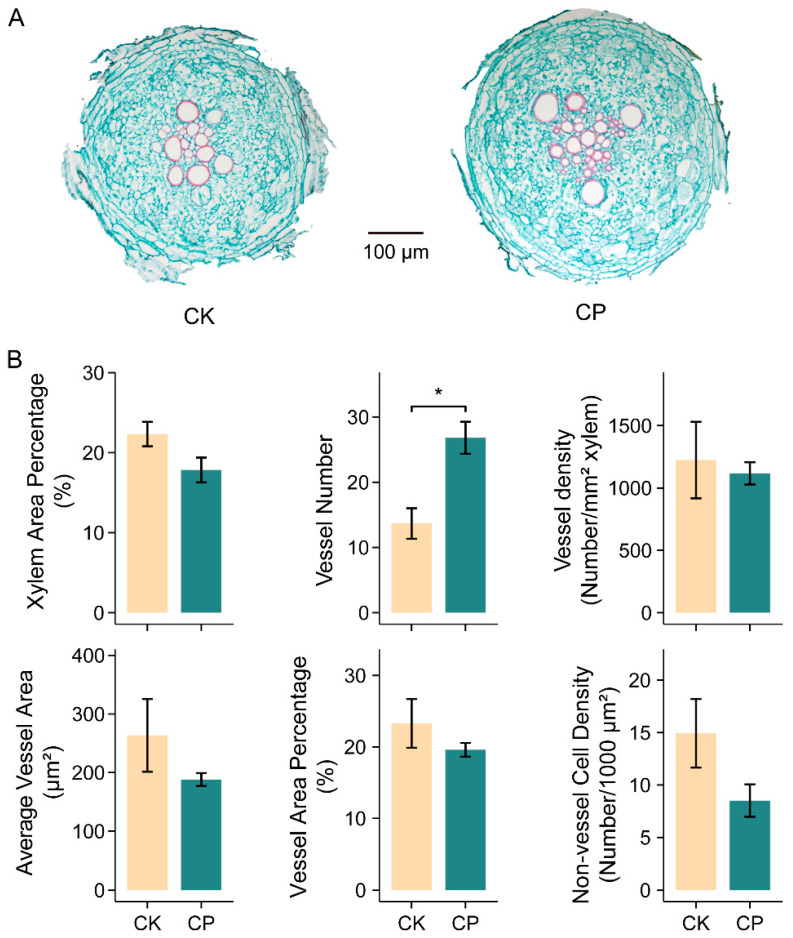
The perennial legume alfalfa ( L.) is of high value in providing cheap and high-nutritive forages. Due to a lack of tillage during the production period, the soil in which alfalfa grows prunes to become compacted through highly mechanized agriculture. Compaction deteriorates the soil's structure and fertility, leading to compromised alfalfa development and productivity. However, the way alfalfa responses to different levels of soil compaction and the underlying molecular mechanism are still unclear. In this study, we systematically evaluated the effects of gradient compacted soil on the growth of different cultivars of alfalfa, especially the root system architecture, phytohormones and internal gene expression profile alterations. The results showed that alfalfa growth was facilitated by moderate soil compaction, but drastically inhibited when compaction was intensified. The inhibition effect was universal across different cultivars, but with different severity. Transcriptomic and physiological studies revealed that the expression of a set of genes regulating the biosynthesis of lignin and flavonoids was significantly repressed in compaction treated alfalfa roots, and this might have resulted in a modified secondary cell wall and xylem vessel formation. Phytohormones, like ABA, are supposed to play pivotal roles in the regulation of the overall responses. These findings provide directions for the improvement of field soil management in alfalfa production and the molecular breeding of alfalfa germplasm with better soil compaction resilience.
多年生豆科植物紫花苜蓿在提供廉价且营养丰富的草料方面具有很高的价值。由于在生产期间缺乏耕作,紫花苜蓿生长的土壤因高度机械化农业而趋于压实。土壤压实会使土壤结构和肥力恶化,导致紫花苜蓿的发育和生产力受损。然而,紫花苜蓿对不同程度土壤压实的响应方式及其潜在的分子机制仍不清楚。在本研究中,我们系统地评估了梯度压实土壤对不同品种紫花苜蓿生长的影响,特别是根系结构、植物激素和内部基因表达谱的变化。结果表明,适度的土壤压实促进了紫花苜蓿的生长,但当压实加剧时则受到显著抑制。这种抑制作用在不同品种中普遍存在,但严重程度不同。转录组学和生理学研究表明,在压实处理的紫花苜蓿根中,一组调节木质素和类黄酮生物合成的基因表达受到显著抑制,这可能导致次生细胞壁和木质部导管形成的改变。植物激素,如脱落酸,被认为在整体反应的调节中起关键作用。这些发现为改善紫花苜蓿生产中的田间土壤管理以及培育具有更好土壤压实抗性的紫花苜蓿种质提供了方向。