Lang Xinmei, Zhao Xuan, Zhao Jiateng, Ren Tiantian, Nie Lanchun, Zhao Wensheng
College of Horticulture, Hebei Agricultural University, Baoding 071000, China.
Hebei Key Laboratory of Vegetable Germplasm Innovation and Utilization, Baoding 071000, China.
Plants (Basel). 2024 Apr 2;13(7):1016. doi: 10.3390/plants13071016.
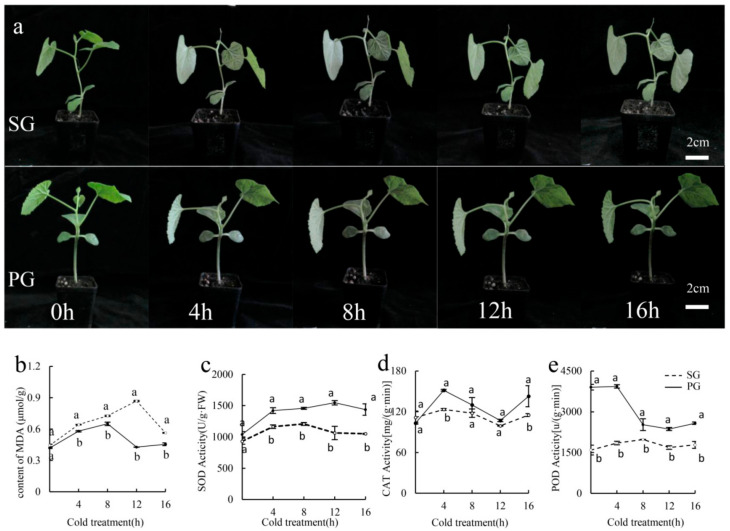
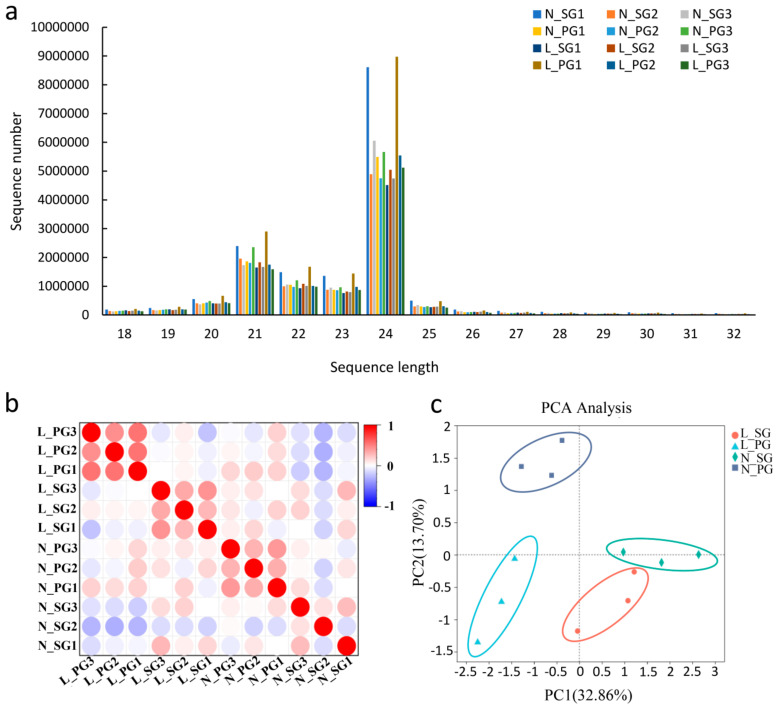
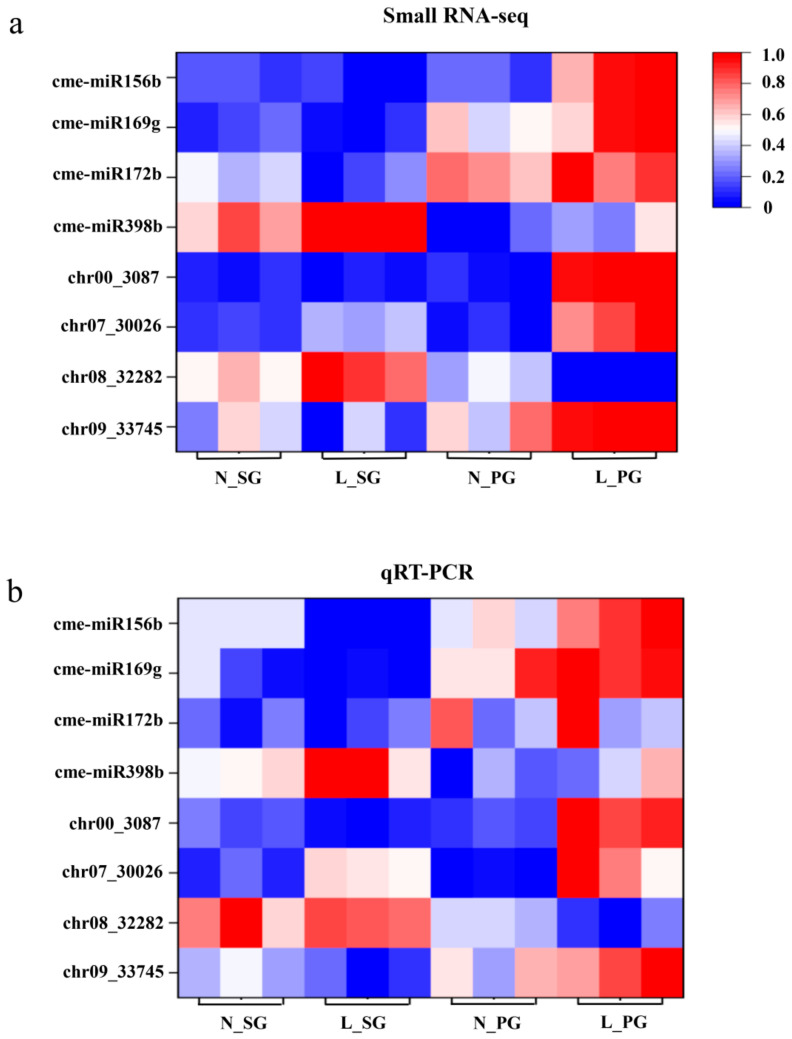
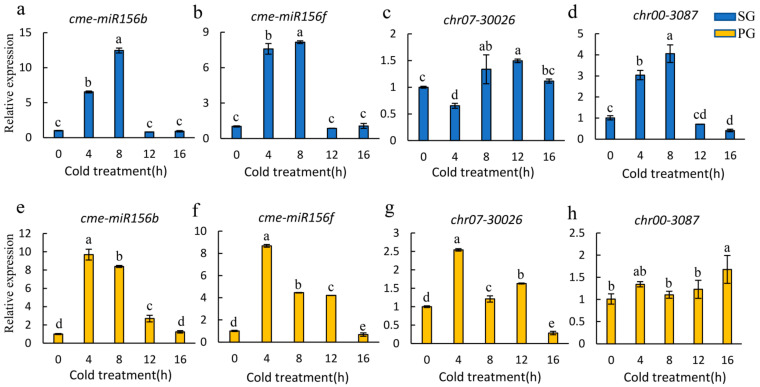
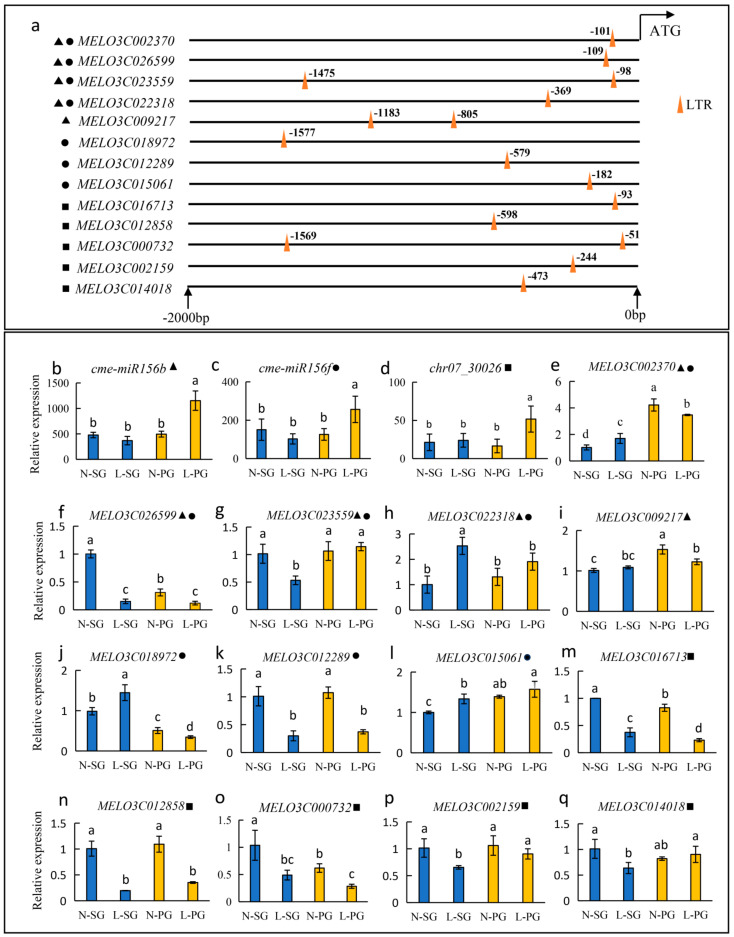
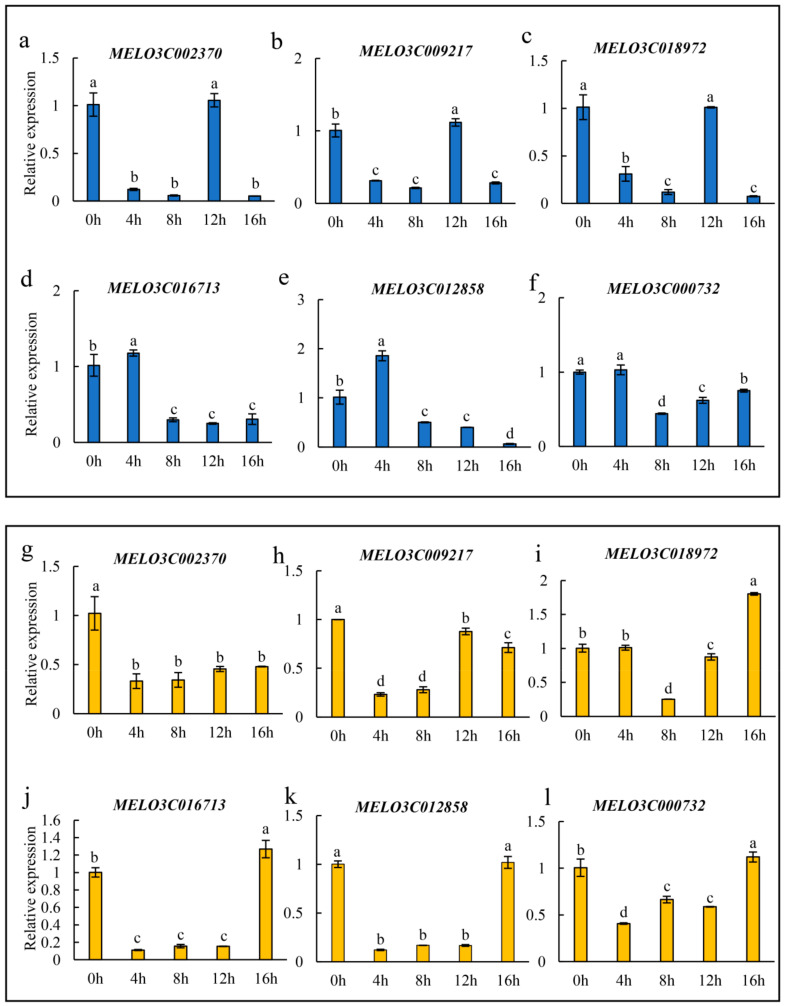
Grafting is widely used to improve the resistance to abiotic stresses in cucurbit plants, but the effect and molecular mechanism of grafting on cold stress are still unknown in melon. In this study, phenotypic characteristics, physiological indexes, small-RNA sequencing and expression analyses were performed on grafted plants with pumpkin rootstock (PG) and self-grafted plants (SG) to explore the mechanism of changed cold tolerance by grafting in melon. Compared with SG plants, the cold tolerance was obviously enhanced, the malondialdehyde (MDA) content was significantly decreased and the activities of antioxidant enzymes (superoxide dismutase, SOD; catalase, CAT; peroxidase, POD) were significantly increased in PG plants. Depend on differentially expressed miRNA (DEM) identification and expression pattern analyses, , and were thought to play a key role in enhancing low-temperature resistance resulting from grafting. Subsequently, 24, 37 and 17 target genes of , and were respectively predicted, and 21 target genes were co-regulated by and . Among these 57 unique target genes, the putative promoter of 13 target genes contained the low-temperature responsive (LTR) -acting element. The results of qRT-PCR indicated that six target genes (, , , , and ) displayed the opposite expression pattern to their corresponding miRNAs. Furthermore, , and were significantly downregulated in cold-resistant cultivars and upregulated in cold-sensitive varieties after cold stimulus, and they acted as the key negative regulators of low-temperature response in melon. This study revealed three key miRNAs and three putative target genes involved in the cold tolerance of melon and provided a molecular basis underlying how grafting improved the low-temperature resistance of melon plants.
嫁接广泛用于提高葫芦科植物对非生物胁迫的抗性,但嫁接对甜瓜冷胁迫的影响及分子机制尚不清楚。本研究对南瓜砧木嫁接植株(PG)和自嫁接种株(SG)进行了表型特征、生理指标、小RNA测序及表达分析,以探究嫁接改变甜瓜耐寒性的机制。与SG植株相比,PG植株的耐寒性明显增强,丙二醛(MDA)含量显著降低,抗氧化酶(超氧化物歧化酶,SOD;过氧化氢酶,CAT;过氧化物酶,POD)活性显著提高。通过差异表达miRNA(DEM)鉴定和表达模式分析,认为miR166、miR397和miR398在增强嫁接引起的低温抗性中起关键作用。随后,分别预测了miR166、miR397和miR398的24、37和17个靶基因,其中21个靶基因受miR166和miR397共同调控。在这57个独特的靶基因中,13个靶基因的推定启动子含有低温响应(LTR)作用元件。qRT-PCR结果表明,6个靶基因(CsbZIP60、CsbZIP28、CsbZIP17、Cu/Zn-SOD、APX1和CAT1)与其相应miRNA的表达模式相反。此外,miR166、miR397和miR398在冷刺激后在耐寒品种中显著下调,在冷敏感品种中上调,它们是甜瓜低温响应的关键负调控因子。本研究揭示了参与甜瓜耐寒性的3个关键miRNA和3个推定靶基因,为嫁接提高甜瓜植株低温抗性的分子机制提供了依据。