Department of Pharmaceutical Sciences, School of Pharmacy, College of Health and Human Sciences, North Dakota State University, Fargo, ND 58105, USA.
Int J Mol Sci. 2024 Apr 3;25(7):3995. doi: 10.3390/ijms25073995.
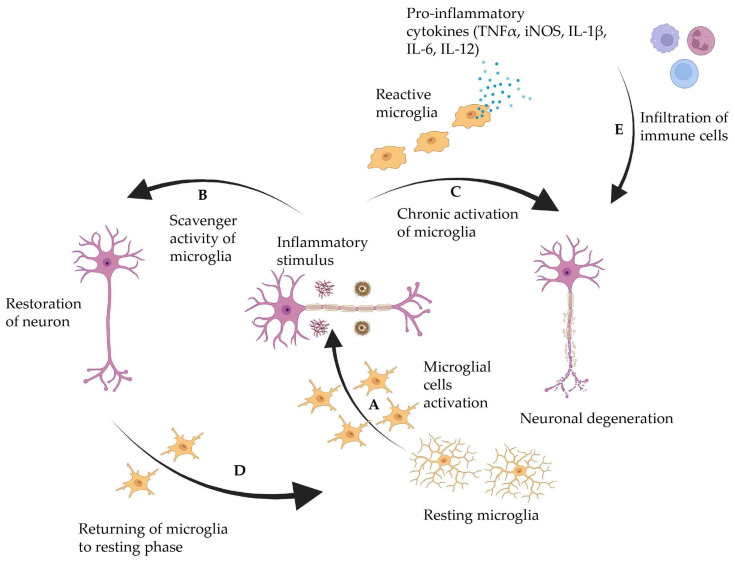
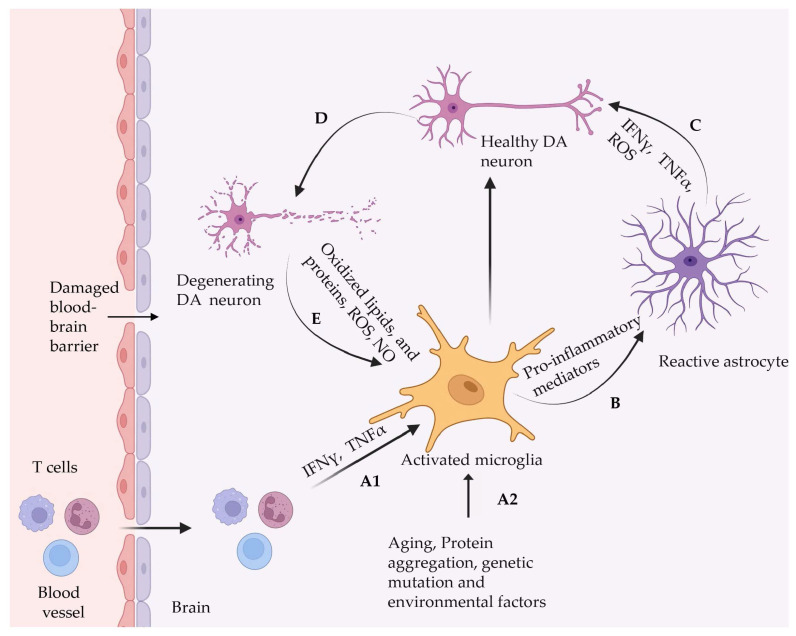
Neurodegenerative disorders (NDs) have become increasingly common during the past three decades. Approximately 15% of the total population of the world is affected by some form of NDs, resulting in physical and cognitive disability. The most common NDs include Alzheimer's disease, Parkinson's disease, amyotrophic lateral sclerosis, and Huntington's disease. Although NDs are caused by a complex interaction of genetic, environmental, and lifestyle variables, neuroinflammation is known to be associated with all NDs, often leading to permanent damage to neurons of the central nervous system. Furthermore, numerous emerging pieces of evidence have demonstrated that inflammation not only supports the progression of NDs but can also serve as an initiator. Hence, various medicines capable of preventing or reducing neuroinflammation have been investigated as ND treatments. While anti-inflammatory medicine has shown promising benefits in several preclinical models, clinical outcomes are often questionable. In this review, we discuss various NDs with their current treatment strategies, the role of neuroinflammation in the pathophysiology of NDs, and the use of anti-inflammatory agents as a potential therapeutic option.
神经退行性疾病(NDs)在过去三十年中变得越来越普遍。大约 15%的世界总人口受到某种形式的 NDs 的影响,导致身体和认知残疾。最常见的 NDs 包括阿尔茨海默病、帕金森病、肌萎缩侧索硬化症和亨廷顿病。尽管 NDs 是由遗传、环境和生活方式变量的复杂相互作用引起的,但已知神经炎症与所有 NDs 都有关联,常常导致中枢神经系统神经元的永久性损伤。此外,越来越多的新证据表明,炎症不仅支持 NDs 的进展,而且还可以作为启动因素。因此,已经研究了各种能够预防或减少神经炎症的药物作为 NDs 的治疗方法。虽然抗炎药物在几种临床前模型中显示出有希望的益处,但临床结果往往值得怀疑。在这篇综述中,我们讨论了各种 NDs 及其当前的治疗策略、神经炎症在 NDs 病理生理学中的作用以及抗炎药物作为潜在治疗选择的应用。