Laboratory of Gene Therapy, Department of Biochemistry, College of Life Sciences, Shaanxi Normal University, 199 South Chang'an Road, Xi'an, 710062, P.R. China.
The State Laboratory of Cancer Biology, Department of Biochemistry and Molecular Biology, Air Force Medical University, No. 169 Changle West Road, Xi'an, 710032, P.R. China.
Signal Transduct Target Ther. 2023 Jul 12;8(1):267. doi: 10.1038/s41392-023-01486-5.
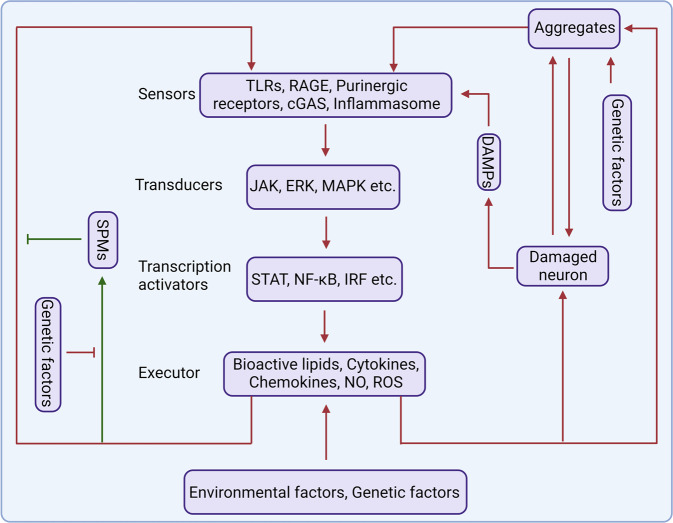
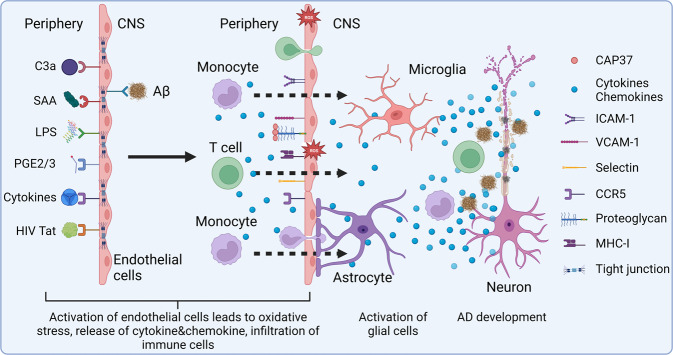
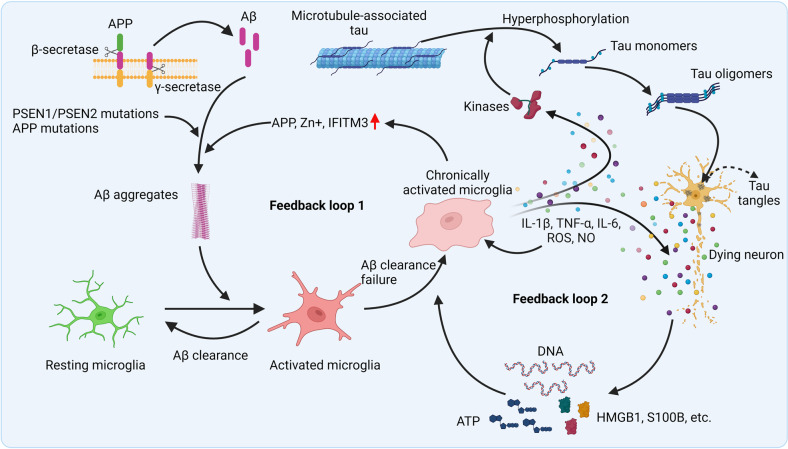
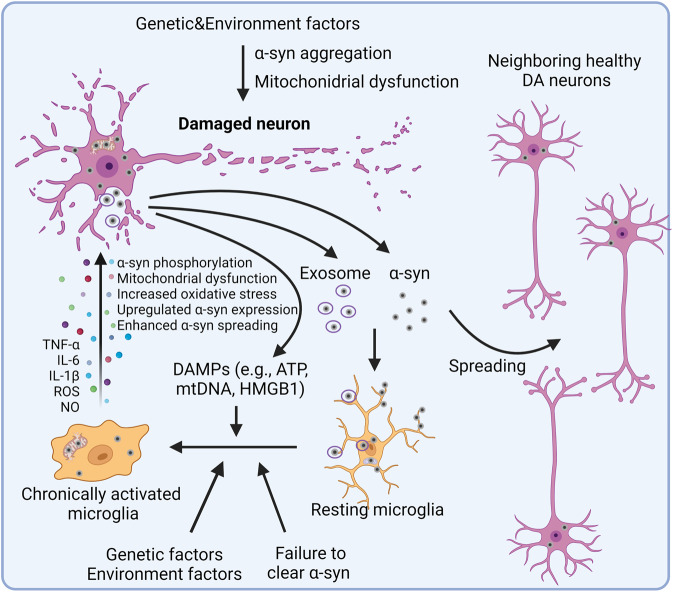
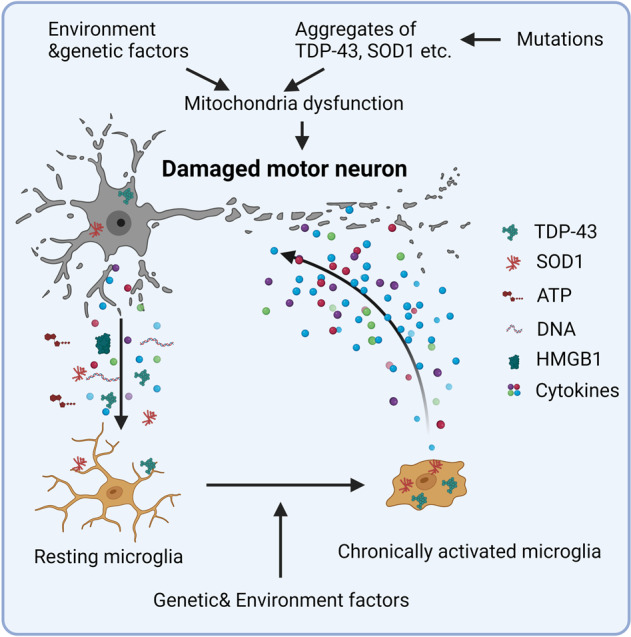
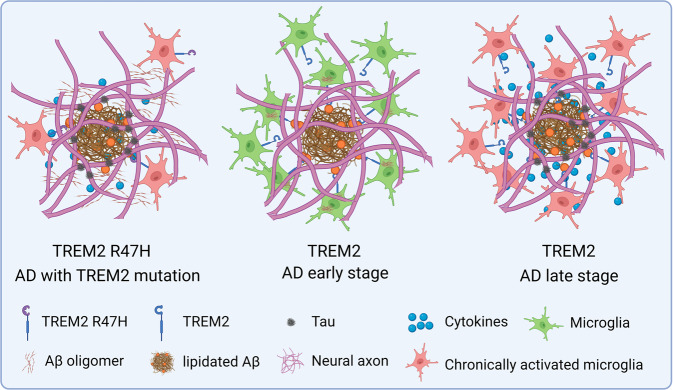
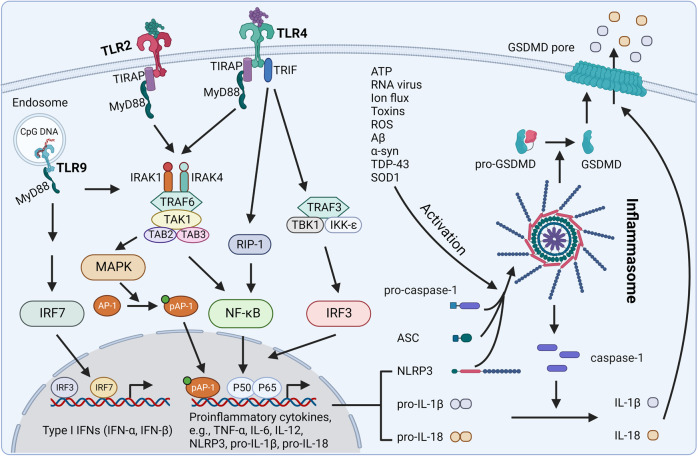
Studies in neurodegenerative diseases, including Alzheimer's disease, Parkinson's disease and Amyotrophic lateral sclerosis, Huntington's disease, and so on, have suggested that inflammation is not only a result of neurodegeneration but also a crucial player in this process. Protein aggregates which are very common pathological phenomenon in neurodegeneration can induce neuroinflammation which further aggravates protein aggregation and neurodegeneration. Actually, inflammation even happens earlier than protein aggregation. Neuroinflammation induced by genetic variations in CNS cells or by peripheral immune cells may induce protein deposition in some susceptible population. Numerous signaling pathways and a range of CNS cells have been suggested to be involved in the pathogenesis of neurodegeneration, although they are still far from being completely understood. Due to the limited success of traditional treatment methods, blocking or enhancing inflammatory signaling pathways involved in neurodegeneration are considered to be promising strategies for the therapy of neurodegenerative diseases, and many of them have got exciting results in animal models or clinical trials. Some of them, although very few, have been approved by FDA for clinical usage. Here we comprehensively review the factors affecting neuroinflammation and the major inflammatory signaling pathways involved in the pathogenicity of neurodegenerative diseases, including Alzheimer's disease, Parkinson's disease, and Amyotrophic lateral sclerosis. We also summarize the current strategies, both in animal models and in the clinic, for the treatment of neurodegenerative diseases.
神经退行性疾病的研究,包括阿尔茨海默病、帕金森病和肌萎缩侧索硬化症、亨廷顿病等,表明炎症不仅是神经退行性变的结果,而且是这一过程中的关键因素。在神经退行性变中非常常见的病理现象蛋白聚集物可以诱导神经炎症,从而进一步加剧蛋白聚集和神经退行性变。实际上,炎症甚至发生在蛋白聚集之前。中枢神经系统细胞或外周免疫细胞中的遗传变异引起的神经炎症可能会在一些易感人群中诱导蛋白沉积。尽管人们对其发病机制仍远未完全了解,但已经提出了许多信号通路和一系列中枢神经系统细胞参与了神经退行性变的发病机制。由于传统治疗方法的效果有限,因此阻断或增强与神经退行性变相关的炎症信号通路被认为是治疗神经退行性疾病的有前途的策略,其中许多策略在动物模型或临床试验中都取得了令人兴奋的结果。其中一些,虽然很少,但已被 FDA 批准用于临床应用。在这里,我们全面回顾了影响神经炎症的因素以及与阿尔茨海默病、帕金森病和肌萎缩侧索硬化症等神经退行性疾病发病机制相关的主要炎症信号通路。我们还总结了目前在动物模型和临床中治疗神经退行性疾病的策略。