Intracellular Parasitism Group, Department of Microbiology, Hellenic Pasteur Institute, 11521 Athens, Greece.
Department of Biological Chemistry, Medical School, National and Kapodistrian University of Athens, 11527 Athens, Greece.
Int J Mol Sci. 2024 Apr 7;25(7):4095. doi: 10.3390/ijms25074095.
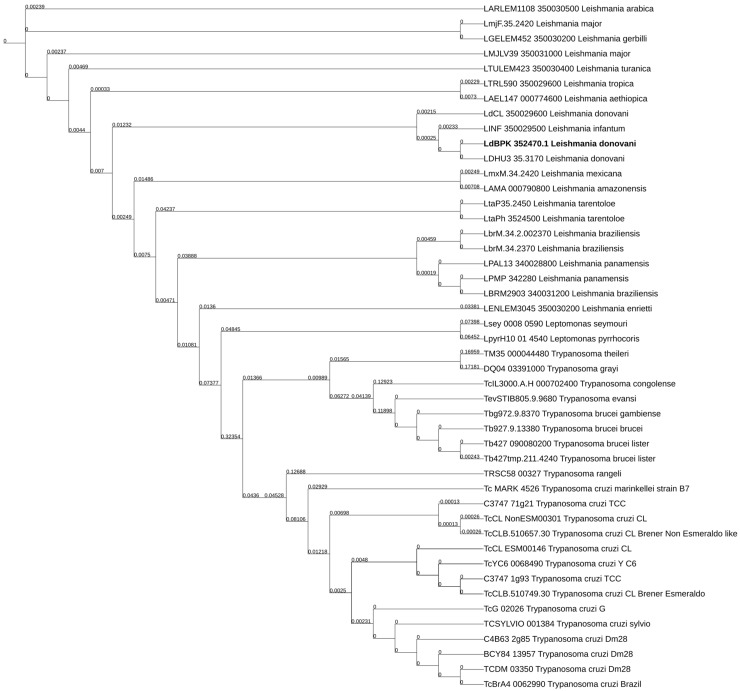
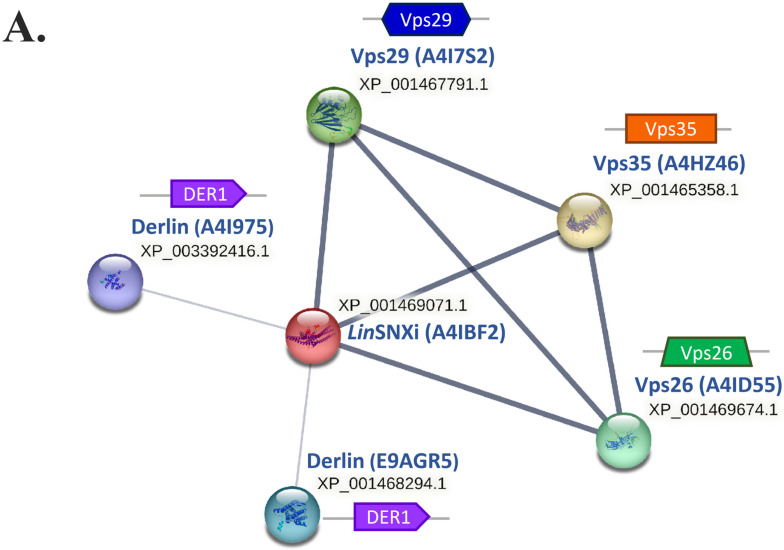
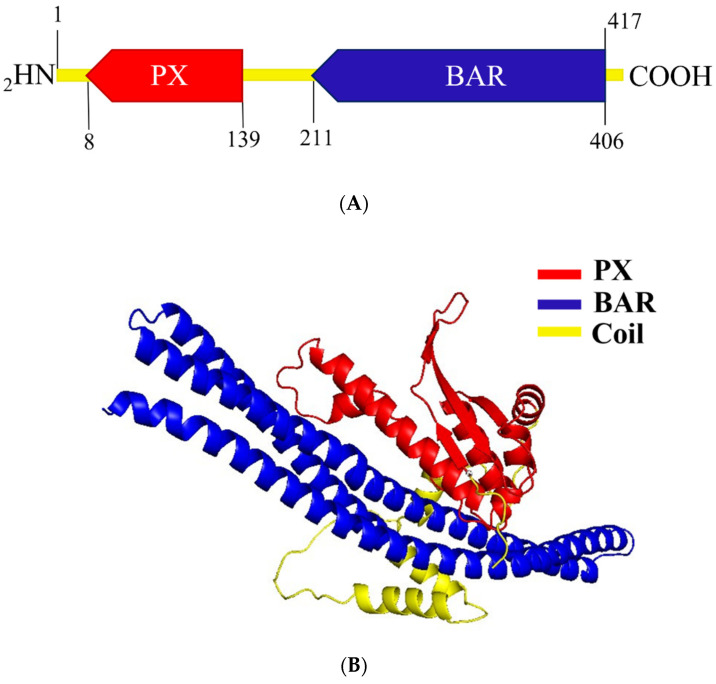
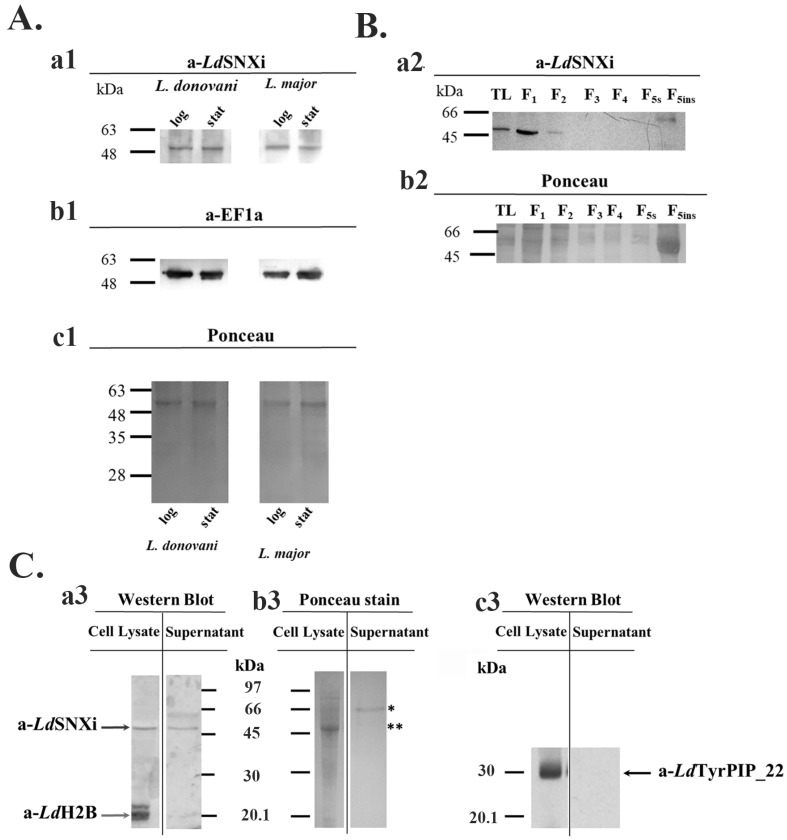
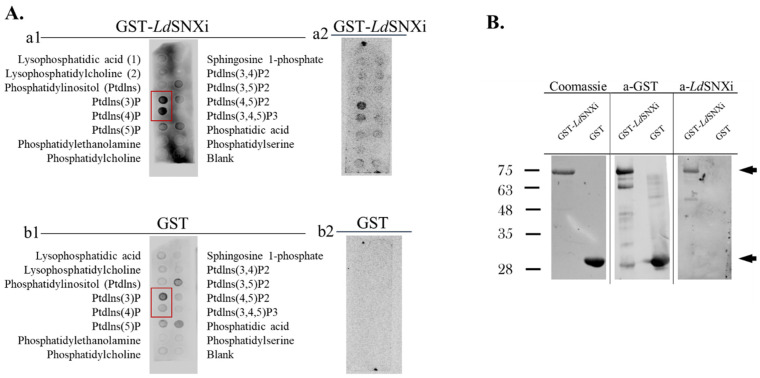
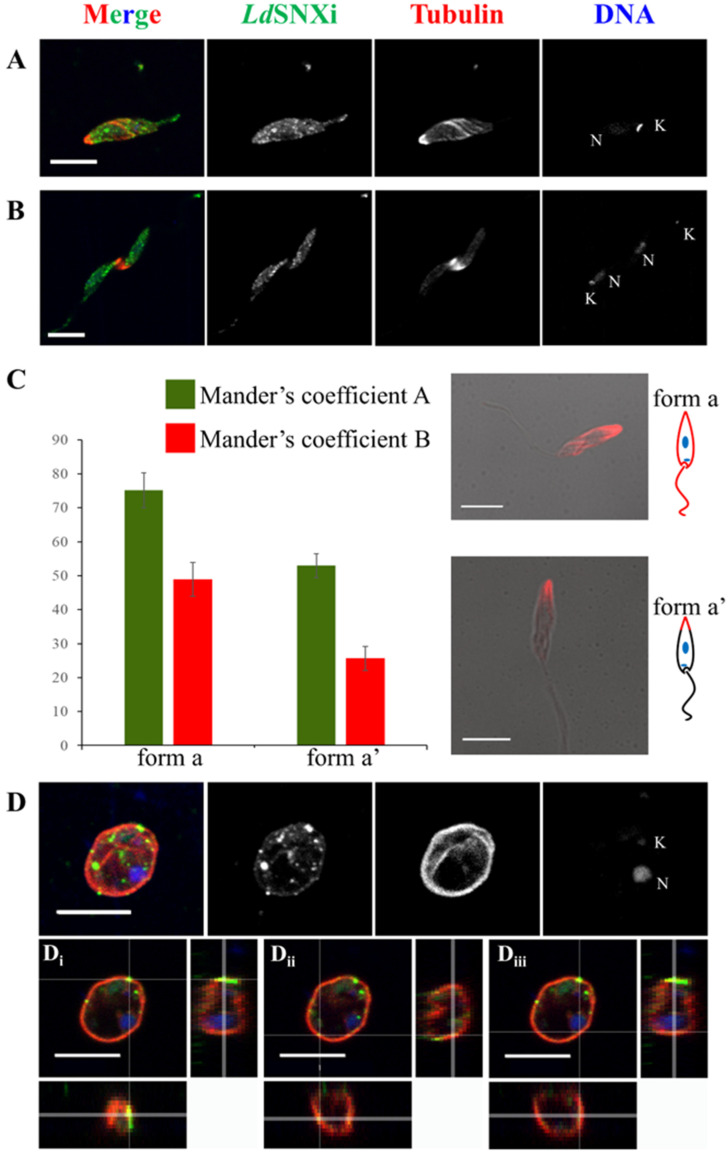
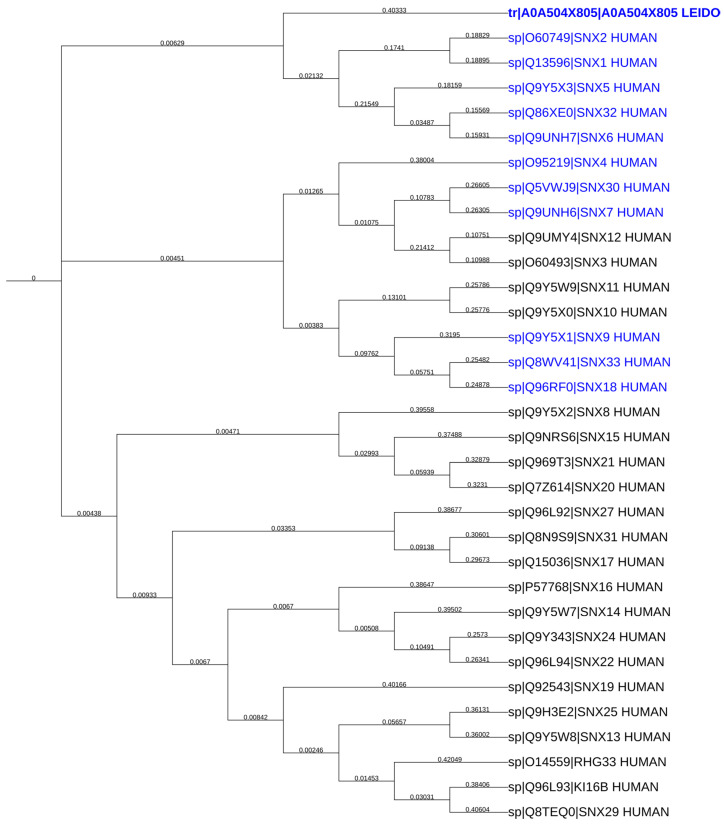
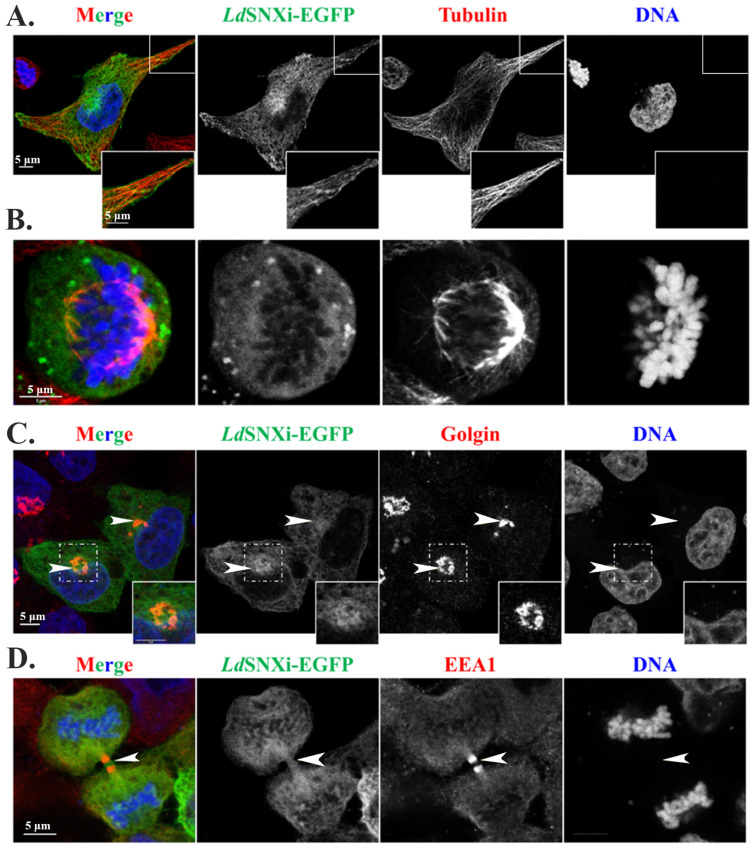
Proteins of the sorting nexin (SNX) family present a modular structural architecture with a phox homology (PX) phosphoinositide (PI)-binding domain and additional PX structural domains, conferring to them a wide variety of vital eukaryotic cell's functions, from signal transduction to membrane deformation and cargo binding. Although SNXs are well studied in human and yeasts, they are poorly investigated in protists. Herein, is presented the characterization of the first SNX identified in protozoan parasites encoded by the BPK_352470 gene. In silico secondary and tertiary structure prediction revealed a PX domain on the N-terminal half and a Bin/amphiphysin/Rvs (BAR) domain on the C-terminal half of this protein, with these features classifying it in the SNX-BAR subfamily of SNXs. We named the BPK_352470.1 gene product SNXi, as it is the first SNX identified in () Its expression was confirmed in promastigotes under different cell cycle phases, and it was shown to be secreted in the extracellular medium. Using an in vitro lipid binding assay, it was demonstrated that recombinant (r) SNXi (rGST-SNXi) tagged with glutathione-S-transferase (GST) binds to the PtdIns3 and PtdIns4 PIs. Using a specific a-SNXi antibody and immunofluorescence confocal microscopy, the intracellular localization of endogenous SNXi was analyzed in promastigotes and axenic amastigotes. Additionally, rSNXi tagged with enhanced green fluorescent protein (rSNXi-EGFP) was heterologously expressed in transfected HeLa cells and its localization was examined. All observed localizations suggest functions compatible with the postulated SNX identity of SNXi. Sequence, structure, and evolutionary analysis revealed high homology between SNXi and the human SNX2, while the investigation of protein-protein interactions based on STRING (v.11.5) predicted putative molecular partners of SNXi in .
分选连接蛋白(SNX)家族的蛋白具有模块化的结构架构,具有 PH 同源(PX)磷酸肌醇(PI)结合域和其他 PX 结构域,赋予它们广泛的各种重要的真核细胞功能,从信号转导到膜变形和货物结合。尽管 SNX 在人类和酵母中研究得很好,但在原生动物中研究得很少。本文介绍了在原生动物寄生虫中首次鉴定的分选连接蛋白,该蛋白由 BPK_352470 基因编码。 生物信息学二级和三级结构预测显示,该蛋白的 N 端有一个 PX 结构域,C 端有一个 Bin/ amphiphysin/Rvs (BAR) 结构域,这些特征将其归类为 SNX-BAR 亚家族的 SNX。我们将 BPK_352470.1 基因产物命名为 SNXi,因为它是在 中首次鉴定的 SNX。 在不同的细胞周期阶段,在 前鞭毛体中证实了其表达,并证明其在细胞外培养基中分泌。 使用体外脂质结合测定,证明带有谷胱甘肽-S-转移酶 (GST) 标签的重组 (r) SNXi (rGST-SNXi) 与 PtdIns3 和 PtdIns4 PI 结合。 使用特异性 a-SNXi 抗体和免疫荧光共聚焦显微镜分析了 前鞭毛体和无鞭毛体的内源性 SNXi 的细胞内定位。 此外,在转染的 HeLa 细胞中异源表达了带有增强型绿色荧光蛋白 (rSNXi-EGFP) 的 rSNXi,并检查了其定位。 所有观察到的定位都表明 SNXi 的功能与其假定的 SNX 身份兼容。 序列、结构和进化分析显示 SNXi 与人 SNX2 具有高度同源性,而基于 STRING (v.11.5) 的蛋白质-蛋白质相互作用研究预测了 SNXi 在 中的潜在分子伴侣。